

Marketers: Improve Campaign Performance with Lift Tests and AI
Pair lift (incrementality) testing with AI preflight creative tests to measure real ad lift, refresh validated creative, and reallocate spend to proven...

The single most effective move you can make is to measure incremental impact first, refresh creative that has been validated before launch, and then reallocate spend toward whatever your tests prove is actually working. Everything else is secondary. Last-click metrics and vanity dashboards will lie to you, so your north star has to be incremental conversions and incremental cost per action, not clicks. From here, I’ll walk through the tactical checklist, the experiment design, and the diagnostic framework that turn this verdict into a repeatable system.
TL;DR:
- Focusing on incremental conversions, ROAS, and cost per action through proper incrementality testing is essential for accurate performance measurement.
- Refresh creative regularly based on tested variants and ensure messaging matches landing pages, as creative impact drives results faster than targeting tweaks.
- Scale budget carefully in small steps, prioritize incremental winners, and run lift studies before major reallocations to avoid wasting spend.
- Run longer and properly powered incrementality tests, especially for long purchase cycles, to ensure reliable results before scaling campaigns.
- Use AI-generated creative paired with synthetic audience feedback to validate messaging pre-launch and track CPA trends weekly to catch fatigue early.
Table of Contents
- What campaign performance improvement actually means
- A prioritized checklist for creative, targeting, bids, and budgets
- Measure what matters: incrementality testing and how to act on it
- Build a testing cadence that respects the data
- Fix the creative impact gap before you blame the algorithm
- Scale budget without wrecking your ROAS
- A 30-minute triage framework for underperforming campaigns
- How preflight testing fits into the optimization loop
- A performance marketer’s take on where teams waste the most time
- Test your next creative before you spend a dollar on it
- FAQ
- Sources
- Primary sources and further reading
What campaign performance improvement actually means
Campaign optimization and campaign reporting are not the same thing. Reporting tells you what happened. Optimization is the discipline of deciding what to do next, based on evidence of what truly caused a result rather than what merely correlated with it. That distinction matters because standard attribution models, especially last-click, tend to credit ads for conversions that would have happened anyway. Someone who already intended to buy clicks your retargeting ad on the way to check out, and the platform happily takes the credit.
That’s why your primary KPIs should be incremental conversions, incremental ROAS, and incremental cost per action (iCPA), the figures that come out of a properly run incrementality test. Click-through rate, conversion rate, and frequency still matter, but as secondary signals that help you diagnose a problem, not as the scoreboard.
- Primary KPIs: incremental conversions, incremental ROAS, iCPA.
- Secondary KPIs: CTR, CVR, frequency, and watch-list signals for fatigue.
- Goal-setting rule: tie every target to revenue or profit, never to an engagement number that doesn’t convert.
Incrementality testing is now considered an industry standard for measuring true advertising impact, because it isolates the lift ads create rather than crediting them for conversions that would have happened anyway, according to Google’s incrementality testing guidance.
A prioritized checklist for creative, targeting, bids, and budgets
Once your measurement foundation is in place, work through these fixes in order of leverage.
- Refresh creative on a schedule, not a whim. Rotate in new variants before performance visibly decays, and test one focused message per ad rather than cramming in three value propositions.
- Match ad messaging to the landing page. If the ad promises a discount, the headline on the page should say the same thing in the same words.
- Exclude recent nonconverters from cold prospecting. Showing the same unconverted audience the same offer for the fourth week in a row burns budget without changing minds.
- Refine segments using lookalikes and retargeting layers instead of broad, undifferentiated targeting that dilutes relevance.
- Move budget toward incremental winners, not top-line winners. A campaign with a great last-click ROAS but weak incremental ROAS is spending your money on people who were buying anyway.
- Scale in small, safe steps. Budget increases in moderate steps avoid resetting the platform’s learning phase and give you a clean read on whether performance holds.
- Reduce landing page friction. Cut form fields, speed up load time, and remove any step that doesn’t directly serve the offer in the ad.
- Align offer intent across the funnel. A cold-traffic ad should land on an educational page, not a hard checkout page, while a retargeting ad can go straight to cart.
These aren’t equally weighted. Creative and message-match changes tend to move the needle fastest because they affect every impression you’re already paying for. Targeting and bid tweaks matter, but they’re refinements on top of a foundation that creative quality and landing page relevance set first.
Measure what matters: incrementality testing and how to act on it
Conversion Lift studies work by splitting your audience into a treatment group that sees your ads and a holdout control group that doesn’t, then comparing the conversion rates between them. The gap is your actual incremental impact, reported as absolute lift, relative lift, incremental ROAS, and iCPA, according to Google Ads’ Conversion Lift documentation. That documentation also flags a detail marketers often miss: conversion lag. If your sales cycle is long, you need a longer study window and delayed incremental conversion modeling, or you will undercount your real lift.
Study design determines whether you can trust the result at all.
- Holdout size is a tradeoff. A bigger holdout gives you a more reliable read but costs you more in foregone conversions during the test.
- Aim for 90%+ study power before you let results change a budget, per Google’s setup guidance for Conversion Lift.
- Run longer than 14 days when your product has a longer consideration or purchase cycle, so delayed conversions have time to surface.
- Choose a conversion event with enough volume to reach statistical power within a reasonable timeframe; a rare event will never get there.
Once a study clears 90% power, the read is simple: if incremental ROAS beats your target, scale the budget behind that campaign; if it’s flat or negative, the clicks you were counting were never incremental in the first place, so pull the spend and test a different creative or audience instead.
Build a testing cadence that respects the data
Structure your experiments so each one gets a fair chance to produce a clean signal.
- Rank tests by impact and feasibility. Creative tests usually beat landing page tests, which usually beat small targeting tweaks, because creative touches every impression.
- Set a minimum run time before you look. Cutting a test short because an early read looks bad or good almost always leads to the wrong call.
- Check sample size before trusting a result. An underpowered test is just noise wearing a confidence number.
- Avoid resetting campaigns mid-learning-phase. Changing budgets, creatives, or targeting too often forces the platform’s algorithm to relearn and tanks efficiency temporarily.
- Run tactical checks every 7 to 14 days on live paid campaigns, save controlled experiments for a monthly cycle, and map out an annual testing plan so studies don’t overlap and cannibalize each other’s learnings.
This cadence keeps you responsive without turning every dashboard glance into an overreaction.
Fix the creative impact gap before you blame the algorithm
Marketing spend has increased, but consumer connection with ads has not kept pace, and the gap comes down to creative quality rather than targeting precision. The 2025 Creative Impact Report found that emotional resonance and focused messaging now drives ROI more than sheer volume of creative output, and recommends leaning on AI to iterate faster while keeping the human judgment that spots what actually lands emotionally.
Fatigue sneaks up gradually, and it rarely announces itself the way people expect.
- CPA tends to rise before CTR visibly drops, so watch cost efficiency as your early warning signal rather than waiting for clicks to fall off.
- Set a refresh threshold, such as a defined percentage rise in CPA over a rolling window, rather than refreshing on a fixed calendar regardless of performance.
- Fewer, sharper messages outperform a wide spread of mediocre variants, which means quality control before launch matters more than raw creative volume.
Validating creative before it spends a dollar is where synthetic persona testing earns its place in the workflow. Tools like AI-generated ad creative paired with simulated audience feedback let you see which variant resonates before it ever reaches a live audience, which shortens the gap between “we made something new” and “we know it works.”
Pro Tip: Track CPA trend lines weekly for each active creative; a sustained rise of even a few percentage points over two weeks is usually your cue to refresh before CTR confirms the problem.
Scale budget without wrecking your ROAS
Scaling spend is where most of the hard-won gains from testing get undone, usually because teams move too fast on numbers that were never incremental in the first place.
- Increase budget in small percentage steps, roughly 20% at a time, so you can observe whether incremental ROAS holds before pushing further.
- Expand horizontally before you expand vertically. Duplicate a winning ad set into a new, similar audience rather than dumping more budget into the same saturated one.
- Consolidate underperforming variants into your best performer once a test confirms which one is actually driving incremental results.
- Use incremental ROAS as your stop or continue signal. If it’s above your target cost of capital, keep scaling; if it’s below, stop and diagnose before adding another dollar.
- Run a lift test before any large budget shift, particularly a reallocation that moves a meaningful share of total spend, because that’s exactly the decision a bad last-click read will sabotage.
Guidance on connecting these moves back to revenue outcomes lines up with the broader principle in DataLakehouse’s marketing analytics guide: plan your ROI scenarios before you scale, not after.
A 30-minute triage framework for underperforming campaigns
When a campaign slips, work through this sequence instead of guessing.
- Check data health first. Confirm tracking fires correctly, attribution windows match your sales cycle, and conversion lag isn’t hiding delayed results.
- Check creative freshness. Look for message-match issues, rising CPA, and how long the current variant has been live.
- Check audience and bid alignment. Compare current CPA against target, and see whether segments have drifted or saturated.
- Apply a quick decision rule. Pause campaigns with broken tracking, iterate on creative or landing pages when the fix is obvious, and run a lift study before touching budget on anything ambiguous.
This sequence surfaces the highest-leverage fix in a single sitting, before you touch a dollar of spend. For broader guidance on turning ROAS problems into budget decisions, OptiArts’ guide to higher ROAS covers similar ground from a budgeting angle.
How preflight testing fits into the optimization loop
Testing media after launch tells you what happened. Testing creative before launch tells you what’s likely to work, which is a gap some AI-powered ad creative platforms aim to close. These platforms generate on-brand ad creative and run it against synthetic buyer personas that simulate psychographic reactions, so a team can see which variant is likely to resonate before any media dollars are committed. That sequencing, validate the creative, then measure incrementality once it’s live, keeps both halves of the optimization loop honest: you’re no longer forced to choose between fast iteration and credible measurement.

A performance marketer’s take on where teams waste the most time
Most teams treat creative refreshes and incrementality tests as separate chores, one for the creative team and one for the analytics team. That split is the real waste. The teams that improve fastest run them as one loop: validate before spend, then measure what spend actually earned, then feed that result straight back into the next creative validation round. Prioritizing incrementality over last-click vanity metrics is the mindset shift that makes every other tactic on this list worth doing.
— Doruk
Test your next creative before you spend a dollar on it
An AI ad creative platform can generate on-brand ad creative and run it against synthetic personas so you see what’s likely to resonate before launch, not after the budget is gone. 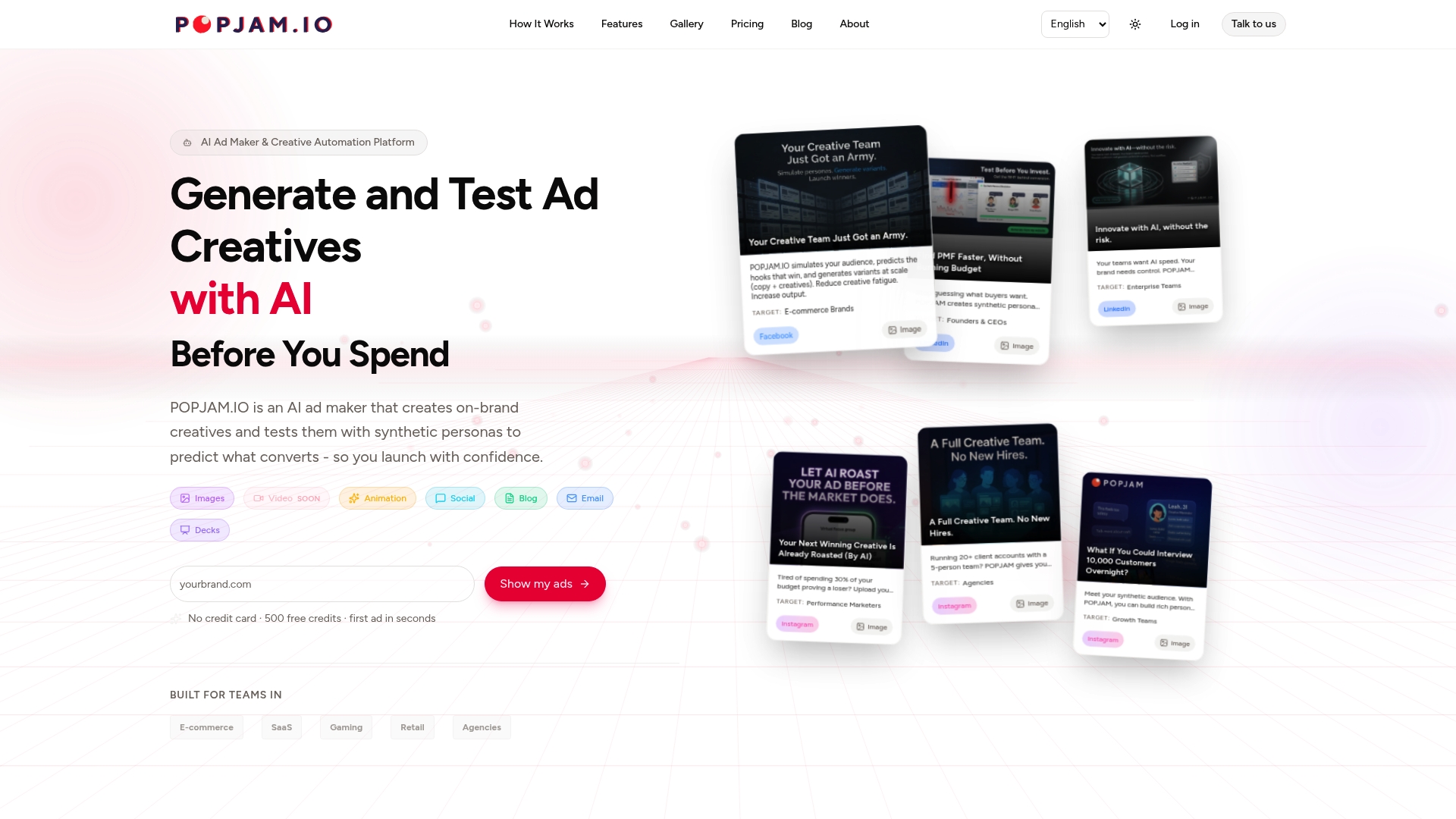
Plans start at the Popjam, including a Free tier to try the workflow on your next campaign.

FAQ
What is the 3-3-3 rule for marketing?
Definitions vary across practitioners, and no single authoritative source defines a universal “3-3-3 rule” for marketing. If you’ve seen it referenced, it’s best treated as informal shorthand rather than an industry standard, so confirm the specific framework with whoever cited it.
What does “campaign performance” mean?
Campaign performance describes how well a marketing campaign achieves its intended business outcome, measured through indicators like incremental conversions, incremental ROAS, and iCPA rather than raw clicks or impressions. The strongest reads come from incrementality testing, which isolates the lift ads actually caused.
What is the 40-40-20 rule in marketing?
It’s a useful rule of thumb for prioritizing where to focus testing effort, though the exact split is a heuristic rather than a measured constant.
Can you give me some examples of performance marketing?
Performance marketing includes pay-per-click search and social ads, affiliate programs, and retargeting campaigns, all tied to measurable actions like clicks, leads, or purchases. Tools like Popjam sit upstream of these channels, validating which creative to run before it enters a paid campaign.
How do you know if a creative needs to be refreshed?
A rising cost per action is typically the earliest signal of creative fatigue, often appearing before click-through rate visibly declines. Set a defined CPA threshold over a rolling window as your refresh trigger rather than waiting for clicks to confirm the problem.
Sources
- Understand your Conversion Lift based on users measurement data - Google Ads Help
- Set up Conversion Lift based on users - Google Ads Help
- Use incrementality testing for effective marketing measurement
Primary sources and further reading
- Understand your Conversion Lift based on users measurement data - Google Ads Help
- Set up Conversion Lift based on users - Google Ads Help
- Use incrementality testing for effective marketing measurement
- Popjam