

Analysts: Prevalidate Creative Before Brand Lift or Conversion Lift
Measurement first guide for analysts comparing Brand Lift and Conversion Lift. Follow a three-phase workflow and prevalidate creative to avoid...

Brand Lift measures perception through surveys. Conversion Lift measures incremental actions through actual conversions. If your campaign goal is awareness, recall, or consideration, run Brand Lift. If your goal is direct-response performance, whether that’s purchases, sign-ups, or app installs, run Conversion Lift. Running big-budget brand campaigns? Consider both, since perception and behavior rarely move in perfect sync.
TL;DR:
- Brand Lift can detect perception changes with as few as a few thousand survey responses, but it may be skewed by response fatigue and demographic biases.
- Conversion Lift requires higher conversion volumes to produce reliable results, especially for low-volume products or niche markets.
- Combining both tests provides a complete view of how creative impacts both brand perception and actual conversions across different campaign types.
- Analyzing lift results should include cost-per-lifted-user and confidence intervals to ensure statistical validity and efficient budget allocation.
- Pre-validating creative with synthetic personas can improve lift study outcomes by ensuring messaging is likely to move the target audience before actual media investment.
Table of Contents
- What Is Brand Lift and How Does It Work?
- What Is Conversion Lift and How Is It Measured?
- Brand Lift vs Conversion Lift: A Side-by-Side Comparison
- When Should You Run Each Test (or Both)?
- How Do Test and Control Groups Actually Get Built?
- How Do You Interpret Lift Study Results?
- What Limits the Accuracy of Lift Studies?
- A Step-by-Step Workflow for Running Lift Studies
- What Actually Moves the Needle Here?
- Pre-Validate Your Creative Before You Spend on Lift Testing
- Sources
- FAQ
What Is Brand Lift and How Does It Work?
Brand Lift is a survey-based test that compares people who saw your ad against a control group who didn’t. Google’s Brand Lift tool serves surveys to both groups and measures the gap in responses around recall, awareness, brand association, and consideration.
That gap is the lift. If 40% of exposed viewers recall your brand versus 25% of the control group, you’ve got a measurable perception shift tied directly to the campaign.
Brand Lift studies typically report several distinct metrics, and understanding each one changes how you act on the results:
- Absolute lift: the raw percentage-point difference between exposed and control group responses
- Relative lift: the percentage increase relative to the baseline, which matters more when baseline awareness is already low
- Lifted users: the estimated number of people whose perception genuinely changed because of the ad
- Cost-per-lifted-user: how much you spent to shift one person’s perception, a metric Google Ads recommends for judging efficiency, not just reach
Run Brand Lift when you’re testing new creative concepts, launching an awareness push, or diagnosing why a campaign feels strong on impressions but weak on recognition. It’s the tool for questions about the mind, not the wallet.
What Is Conversion Lift and How Is It Measured?
Conversion Lift isolates how many conversions actually happened because of your ad, not just alongside it. Instead of surveying opinions, it compares real conversion behavior between a test group that saw ads and a holdout group that didn’t.
Platforms split these groups a few different ways. Google’s Conversion Lift measurement can run user-based splits, auction-level splits, or geo-based splits depending on the campaign type and available instrumentation. Each method has tradeoffs in accuracy and setup complexity, which we’ll get into shortly.
The output isn’t a perception score. It’s a business number, broken down into:
- Incremental conversions: the count of conversions attributable to the ad that wouldn’t have happened otherwise
- Absolute lift: the raw difference in conversion rate between exposed and holdout groups
- Percentage lift: how much higher the exposed group’s conversion rate is, expressed as a percentage
- Statistical confidence: whether the sample size was large enough to trust the result
Conversion Lift earns its keep on direct-response campaigns: lower-funnel promotions, retargeting pushes, anything where you need to know if the ad moved actual sales, not just moved opinions about your brand.
Brand Lift vs Conversion Lift: A Side-by-Side Comparison
Here’s where the two tests split apart in practice, laid out across the dimensions that actually affect how you plan a study.
| Dimension | Brand Lift | Conversion Lift |
|---|---|---|
| What it measures | Perception (recall, awareness, consideration) | Incremental actions (purchases, sign-ups, installs) |
| Data source | Survey responses | Conversion events and platform data |
| Typical channels | Video, display, social awareness campaigns | Search, shopping, retargeting, app campaigns |
| Sample/budget needs | Moderate reach; needs enough survey responses per arm | Often needs larger conversion volume for statistical power |
| Best for | Creative testing, launch campaigns, brand tracking | Direct-response validation, lower-funnel budget decisions |
Notice the sample requirement gap. A Brand Lift study can work with a few thousand survey respondents. A Conversion Lift study on a low-volume product often can’t reach statistical significance at all, which is a planning problem worth solving before you launch, not after you get an inconclusive result.
When Should You Run Each Test (or Both)?
Match the test to the question you’re actually asking, not the one that sounds more impressive in a report.
- Objective is awareness or recall → Run Brand Lift. You’re measuring whether the ad changed minds, and conversions are a lagging, noisier signal for that question.
- Objective is direct response → Run Conversion Lift. Perception surveys won’t tell you if someone actually bought something.
- Objective is a major brand campaign with performance stakes → Run both. Combining Brand Lift, Search Lift, and Conversion Lift shows how the same creative moves perception, search behavior, and conversions together.
- Budget or sample size is thin → Check feasibility first. A geo-lift approach can help when conversion volume is too low for a clean user-based split. Our geo lift test methodology guide walks through the setup.
A product launch usually calls for Brand Lift first (does anyone know this exists?), followed by Conversion Lift once demand-generation spend ramps up. A creative refresh on an existing direct-response campaign usually skips straight to Conversion Lift.
Pro Tip: Before committing budget to either test, run a smaller pilot to confirm your expected effect size is even detectable at your planned sample. An underpowered lift study doesn’t just waste money, it produces a false “no lift” result that can kill a campaign that was actually working.
How Do Test and Control Groups Actually Get Built?
The mechanics behind the scenes determine whether your results are trustworthy or noise.
Platforms build holdouts differently depending on the test type. User-based splits randomly assign individual users to exposed or control groups, which works well when you have enough identifiable users and minimal cross-device leakage. Geo-based splits assign entire regions to test or control, sidestepping user-level tracking problems but introducing geographic confounds if regions differ in seasonality or local demand. Auction-level splits, as Google’s documentation notes, avoid geographic bias entirely but require more advanced instrumentation and platform support to implement correctly.
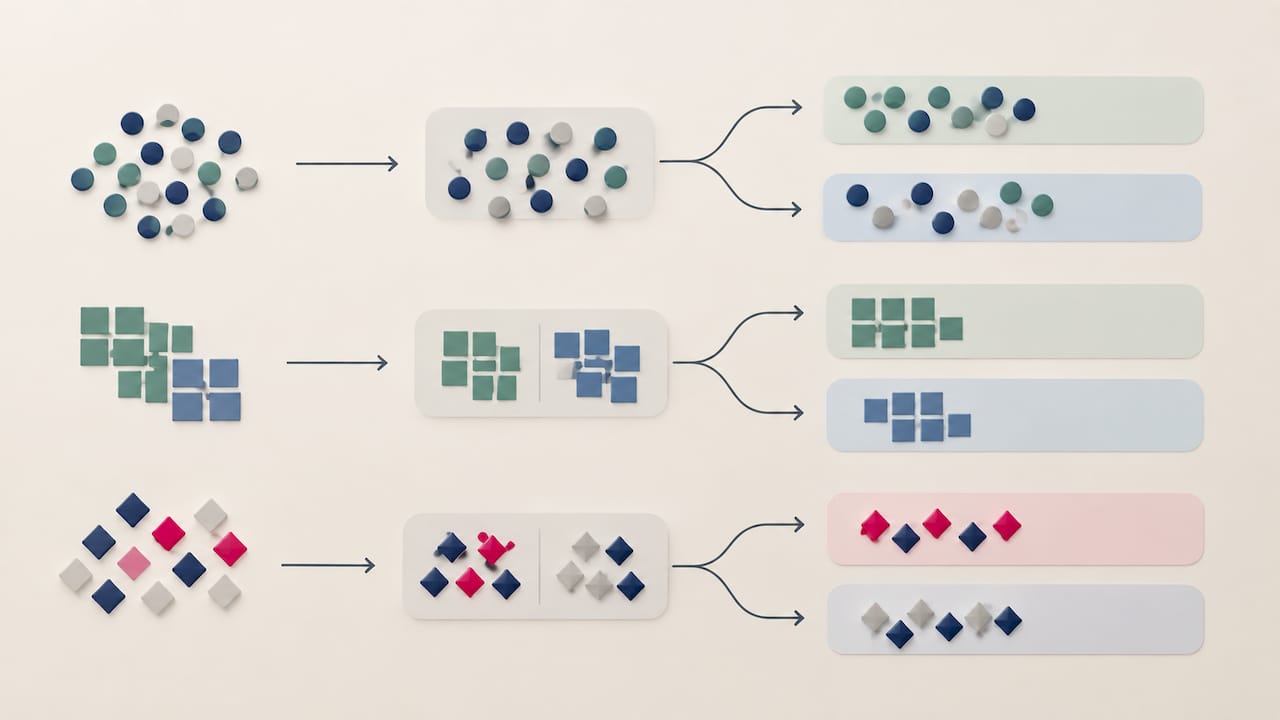
Timing matters just as much as the split method. Brand Lift surveys need enough exposure time for recall to register, but not so much that outside events contaminate the read. Conversion Lift needs a conversion window long enough to capture delayed purchases without running so long that the test loses its statistical edge.
A few conditions reliably produce an inconclusive result:
- Sample size too small relative to the expected effect (common on niche or low-volume products)
- Test duration too short to capture the natural conversion delay
- Uneven exposure between test and control groups due to frequency capping issues
- Overlapping campaigns muddying which channel actually drove the change
Cost-per-lifted-user isn’t just an efficiency metric. It can reprioritize an entire campaign: a campaign with lower absolute lift but a dramatically lower cost-per-lifted-user often deserves more budget than one with flashier top-line numbers.
How Do You Interpret Lift Study Results?
Numbers without context mislead. A 5-point absolute lift sounds small until you realize the baseline was only 8%, which makes the relative lift over 60%.
Run the math both ways. If your control group shows 20% ad recall and your exposed group shows 28%, that’s an 8-point absolute lift and a 40% relative lift. Divide your media spend by the number of lifted users to get cost-per-lifted-user, then compare that figure across campaigns rather than judging any single test in isolation.
Statistical significance and confidence intervals aren’t optional extras here. A lift result without a confidence interval is a guess wearing a lab coat. Before trusting a result, check:
- Whether the confidence interval excludes zero (if it includes zero, you don’t have a real lift)
- The minimum detectable effect the test was actually powered to find
- Sample size per arm, not just total campaign reach
Brand Lift surveys measure perception, not sales, so the most useful move is triangulating a strong recall lift against your actual conversion data over the following weeks. If awareness climbed but conversions stayed flat, that’s a real finding, not a contradiction. It usually means your funnel below the ad has a problem, not your creative.
What Limits the Accuracy of Lift Studies?
Every lift study runs into the same handful of obstacles, and pretending otherwise is how teams end up trusting numbers they shouldn’t.
Privacy changes have hit conversion measurement hardest. Conversion Lift coverage has declined on iOS inventory as device-level tracking restrictions expand, shrinking the addressable sample for user-based splits specifically.
Brand Lift has its own weak points. Survey response rates skew toward certain demographics, and fatigue from repeated survey exposure can quietly degrade data quality over a long-running test.
Cross-channel exposure muddies both tests. Someone who saw your video ad, then your retargeting ad, then a billboard, complicates any clean attribution of which exposure actually caused the lift.
Mitigate these with larger sample sizes where budget allows, tighter holdout design that limits overlap between campaigns, and measurement triangulation, meaning you never lean on one lift study as gospel when a second data source can confirm or challenge it.
A Step-by-Step Workflow for Running Lift Studies
Treat every lift study like a three-phase project, not a single button you press.
- Pre-flight: Define the specific objective (perception or action), pick the one KPI that answers it, estimate whether your expected sample can reach statistical power, and confirm your conversion events or survey pixels are firing correctly before launch.
- In-flight: Monitor response rates weekly if running Brand Lift, watch for delivery imbalance between test and control groups, and flag any creative that’s underperforming so badly it threatens to invalidate the read.
- Post-test: Combine your Brand Lift and Conversion Lift signals if you ran both, build a short readout for stakeholders that leads with business impact, and feed what you learned into the next creative cycle.
Our breakdown on ad feedback analysis and campaign ROI covers how to structure that post-test readout so it actually changes future decisions instead of getting filed away.
Pro Tip: Build your KPI and sample estimate into the media plan before creative is even finalized. Teams that treat measurement as an afterthought almost always end up with a test that’s underpowered by the time someone remembers to check.
What Actually Moves the Needle Here?
Most teams treat Brand Lift and Conversion Lift as competing scoreboards. They aren’t. They’re two instruments measuring different distances on the same road, and the real mistake is running either one on creative that was never going to move anyone in the first place.
My recommendation: combine both signals whenever budget allows, and pre-validate creative before it ever reaches a lift study. Tools using synthetic personas can surface weak concepts early, so the lift study you eventually run is measuring genuinely strong creative instead of confirming what a five-minute gut check would have told you. Fix the creative first. Then measure what’s left.
— Doruk
Pre-Validate Your Creative Before You Spend on Lift Testing
Every inconclusive lift study you’ve ever run probably wasn’t a measurement problem. It was a creative problem wearing a measurement disguise. Ad concepts can be tested against synthetic buyer personas before ad spend, so you walk into a Brand Lift or Conversion Lift study with creative that already has a real shot at moving the needle.
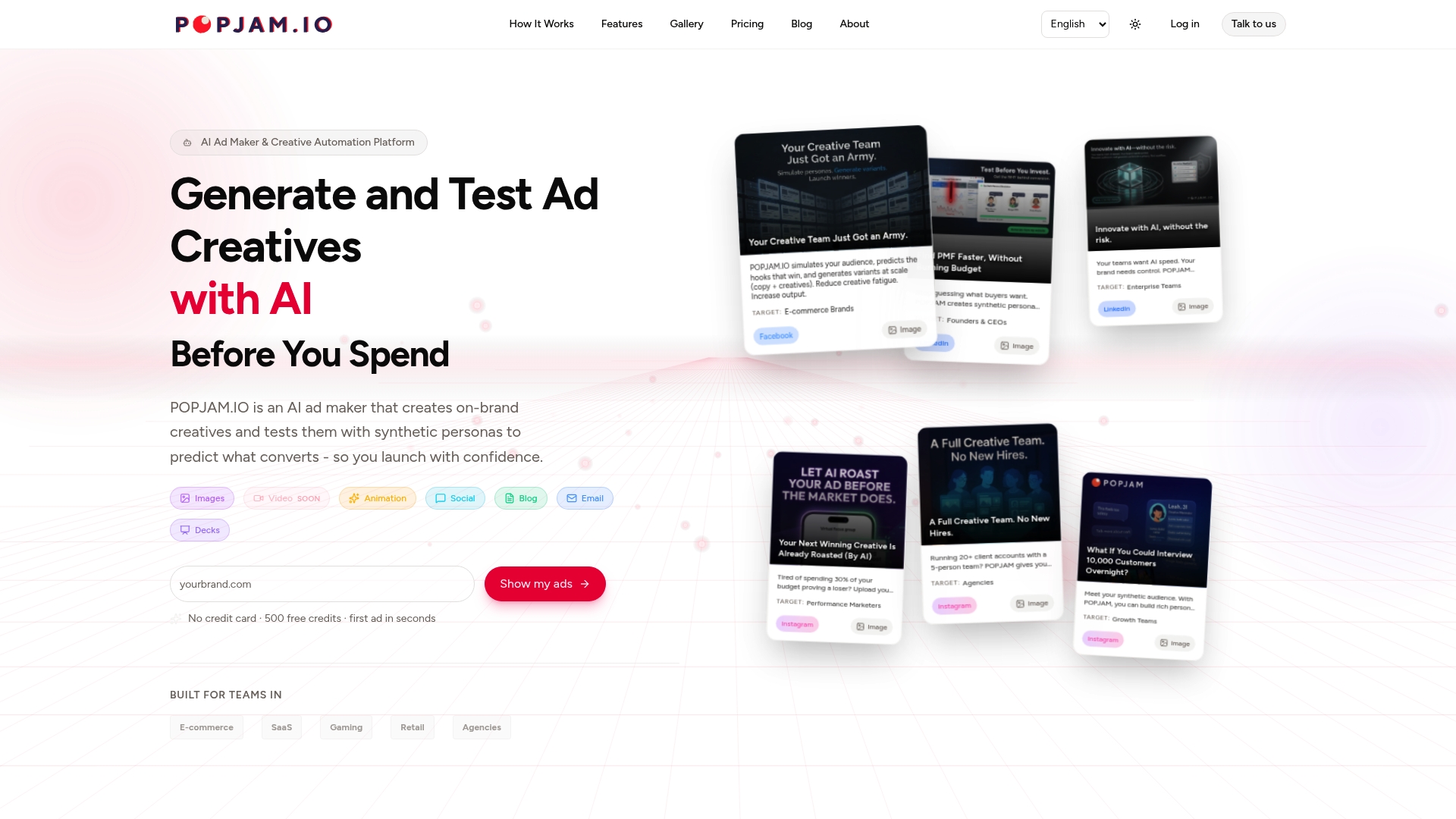
Weak creative doesn’t just underperform, it inflates your cost-per-lifted-user and burns through the budget you needed for a properly powered test. POPJAM’s AI ad generation and testing platform simulates audience reactions and surfaces psychographic feedback before launch, catching the messaging and format issues that would otherwise show up as a disappointing lift result three weeks later. Explore the full feature set or head to Popjam to start testing your next campaign’s creative before you commit real media spend.
Sources
- About Brand Lift - Google Ads Help
- Guide to Google’s Lift Studies: Brand Lift, Search Lift, Conversion Lift | LBBOnline
FAQ
What Are the 5 Levels of Brand Recognition?
Brand awareness is typically described on a spectrum from unaware, through recognition (you know the name if prompted), recall (you remember it unprompted), top-of-mind (it’s your first thought in the category), to brand insistence (you won’t accept a substitute). Brand Lift surveys measure movement along this exact spectrum, most often at the recall and consideration stages.
What Is the Difference Between CVR and CTR?
Click-through rate (CTR) measures how many people clicked your ad out of everyone who saw it. Conversion rate (CVR) measures how many of those clickers actually completed the desired action, like a purchase or sign-up. Conversion Lift goes a step further than CVR by isolating how many of those conversions were truly incremental to the ad.
What Does Conversion Lift Mean?
Conversion Lift measures the increase in conversions directly attributable to an ad campaign by comparing an exposed group against a holdout control group. Google reports this as incremental conversions and percentage lift rather than a simple before-and-after comparison.
What Is a Good Brand Awareness Percentage?
There’s no universal benchmark, since it depends heavily on category maturity, ad spend, and baseline awareness. A more useful question is the size of the lift itself: a double-digit relative lift in ad recall from a single campaign is generally considered a strong signal worth scaling.
Should I Trust Brand Lift or Conversion Lift More?
Neither test is more trustworthy in general. They answer different questions, and pairing them gives you the fullest picture of whether a campaign changed minds, changed behavior, or both.