

Performance Marketers: Preflight Creative Optimization to Protect ROAS
Ops-focused guide for performance marketers on DCO and creative optimization tools. Learn preflight scoring and synthetic persona pretests to stop wasted...

Creative optimization tools use AI to generate, test, and automatically serve the best-performing ad variants across channels, replacing guesswork with data on what your audience actually responds to. The core payoff is scale: instead of hand-building ten ad variations and hoping one works, these platforms produce dozens of personalized versions, score them before launch, and route spend toward what performs. That shift is why creative is now treated as a growth lever, not a production afterthought. The rest of this guide covers the features, evaluation criteria, and rollout steps that make the difference between a tool that sits unused and one that actually changes your numbers.
TL;DR:
- Creative optimization tools rely on AI to generate multiple ad variations and score them before launch, saving time and reducing guesswork.
- These tools deliver the most value on high-volume channels, dynamic inventories, and campaigns requiring frequent refreshes, especially with large product catalogs.
- Key features to evaluate include feed and CRM integration, element-level analytics, transparent scoring logic, and native platform publishing capabilities.
- Testing creative concepts in advance using synthetic audience feedback can prevent wasted ad spend on weak ideas before launching live campaigns.
- Automated workflows and clear ownership are essential for successful rollout, with initial pilots focusing on measurable outcomes and real feed data integration.
Table of Contents
- What Are Creative Optimization Tools and How Does DCO Work?
- Core Features to Look For in Modern Creative Optimization Tools
- How Creative Optimization Improves Campaign Performance
- How to Evaluate and Choose a Creative Optimization Tool
- Implementation and Workflow Best Practices for Creative Optimization
- POPJAM: How an AI-First Creative Optimization Approach Works
- Author Perspective: When to Pilot AI-First Creative Workflows
- Try Creative Testing Before You Spend on Media
- Sources
- FAQ
What Are Creative Optimization Tools and How Does DCO Work?
Dynamic creative optimization, or DCO, is the engine behind most modern creative optimization tools. It works by combining three ingredients: a template (the ad’s visual and copy structure), a feed (product data, pricing, inventory, or audience attributes), and a set of rules that decide which combination gets shown to whom. The system assembles thousands of variants automatically instead of a designer building each one by hand.
AI enters at two points. First, it personalizes: matching creative elements to audience segments based on behavior, location, or purchase intent. Second, it predicts: scoring which variant combinations are likely to perform before any money gets spent, a process vendors describe as pre-flight scoring.
DCO tends to deliver the most value on:
- Feed-driven channels like Meta and Google Shopping, where inventory changes daily
- High-volume social placements (TikTok, Reddit) that punish creative fatigue fast
- Retargeting campaigns where personalization by past behavior lifts relevance
- Email and LinkedIn campaigns segmented by account or persona data
If your catalog has a small number of SKUs and a single audience, DCO is overkill. If you’re running hundreds of products across four platforms, it’s close to mandatory.
Core Features to Look For in Modern Creative Optimization Tools
Not every platform calling itself “AI-powered” actually does the heavy lifting. Here’s what separates a genuine creative optimization tools stack from a template generator with a marketing budget:
- Variant generation across formats. Image, copy, and video generation from a single brief, not just static banner resizing.
- Feed and CRM integration. Personalization at scale requires connecting to your product feed and customer data, not manual uploads every campaign.
- Element-level analytics. You need to know which headline, image, or CTA drove the result, not just which ad won overall.
- Pre-flight scoring with visible logic. A score is only useful if you can see what’s driving it.
- Automation and native publishing. Direct connections to Meta, Google, TikTok, and LinkedIn ad accounts, so winning variants launch without manual export and upload.
- Brand governance controls. Locked fonts, colors, and messaging guardrails so AI-generated variants stay on-brand at scale.
Pro Tip: Ask any vendor to show you the “why” behind a pre-flight score, not just the number. If they can’t explain what drove it, treat the score as a black box, and black boxes are hard to trust with real ad spend.
Fragmented toolstacks are a quiet tax on creative teams. Every time work bounces between a design app, a spreadsheet, and an ad platform, you lose time to context switching. Teams that consolidate around workflows connected to their production suite, similar to how Adobe positions its Creative Cloud integrations, report fewer handoff delays and faster approvals.
How Creative Optimization Improves Campaign Performance
Creative is the input marketers can change fastest, which is exactly why it moves KPIs faster than bid strategy or audience tweaks. Click-through rate, engagement, and ultimately ROAS all respond to creative freshness and relevance before they respond to almost anything else in your account.
Vendors marketing dynamic creative optimization commonly claim that personalized, data-driven variants improve ad recall and engagement compared to static, one-size-fits-all creative. Treat these figures as directional, not guaranteed, since results vary heavily by category, audience size, and how disciplined the testing process is.
The mechanism behind the lift is straightforward: systematic testing catches underperforming variants before they burn budget, and pre-flight scoring lets teams discard low-probability creative before it ever reaches an ad account. Fewer wasted impressions on weak creative means more of your budget touches variants that actually convert. That’s the real lever, not a bigger budget or a smarter bid algorithm.
How to Evaluate and Choose a Creative Optimization Tool
Vendor decks all sound similar. The differences show up when you push past the pitch and ask specific questions. Work through these steps:
- Test integration depth first. Ask for a live demo connecting to your actual product feed, DAM, or CRM, not a sample dataset built to look clean.
- Demand visible scoring logic. A pre-flight score without an explanation of what drove it is a marketing claim, not a decision tool.
- Check element-level reporting. Confirm you can see performance broken down by headline, image, and CTA, not just by overall variant.
- Map the pricing model to your volume. Some platforms charge based on generation volume, user seats, or connected ad accounts, depending on pricing models. Know which one fits your actual usage before you commit.
- Watch for red flags. Closed scoring models, thin channel integrations, and pricing that only appears after a sales call are all signs the platform may not scale with you.
Bring a real campaign brief to every demo. A tool that looks great with a curated sample often stumbles the moment you feed it your messiest, most realistic feed data.
Implementation and Workflow Best Practices for Creative Optimization
Roll out creative optimization tools the way you’d roll out any process change: small, measurable, and with clear ownership. Industry guidance consistently recommends starting with a single pilot campaign and predefined success metrics rather than switching your entire creative pipeline at once.
Before launch, confirm these integration points:
- Your DAM connects cleanly so approved assets flow into the platform automatically
- Product feeds sync in real time, not on a manual export schedule
- Ad accounts across your active channels are linked for native publishing
- Brand rules (colors, fonts, restricted claims) are set up before generation starts, not after
Operationally, define a testing cadence, set guardrails on spend per test cycle, and assign a single owner for creative decisions so results don’t get diluted across too many opinions. Tools with strong proofing and annotation, pinning feedback directly to the asset instead of scattering it across email threads, cut revision loops substantially, especially on video where timecoded comments replace endless back-and-forth.
Pro Tip: Use pre-flight scoring as your first filter in every review meeting. If a variant scores low, don’t debate it in the room, cut it before it eats into meeting time or ad budget.
For teams weighing complementary project tools alongside a creative optimization platform, it’s worth comparing how platforms like Roadbase stack up against monday.com for creative quote tracking and follow-through.
POPJAM: How an AI-First Creative Optimization Approach Works
POPJAM approaches creative optimization from a different angle than most platforms on the market: instead of only scoring creative after it launches, it tests ad concepts against synthetic buyer personas before a single dollar goes to a media platform. That pre-launch simulation gives teams qualitative and quantitative feedback on what’s likely to resonate, closer to a focus group than a live A/B test burning real budget.
Here’s how the creative automation platform maps to the evaluation criteria covered above:
- AI-generated ad creative across images, video, animation, social posts, email, and presentations
- Synthetic persona testing that simulates audience reactions before launch
- Creative performance analytics built to identify what resonates with specific segments
- Native workflow support across Meta, Google, TikTok, LinkedIn, and Reddit
For teams that want the mechanics laid out in more detail, the complete guide to creative automation breaks down how synthetic testing fits into a performance marketing workflow.
Author Perspective: When to Pilot AI-First Creative Workflows
Here’s my honest read: AI-first creative testing earns its place fastest with high-SKU catalogs, frequent creative refreshes, and tight budgets that can’t absorb wasted spend on guesswork. If your team is still shipping one or two campaigns a quarter, a workflow-first tool probably solves more of your real problem than a scoring engine will. Ask yourself one thing before piloting: can you name your current creative fatigue rate? If not, that’s where to start.
— Doruk
Try Creative Testing Before You Spend on Media
If the tools compared above solve project tracking and approvals, POPJAM solves the question that comes before any of that: will this creative actually work? Instead of hoping variants perform after launch, POPJAM tests them against synthetic personas first, so you spot the weak concept before it touches a media budget, not after the invoice arrives.
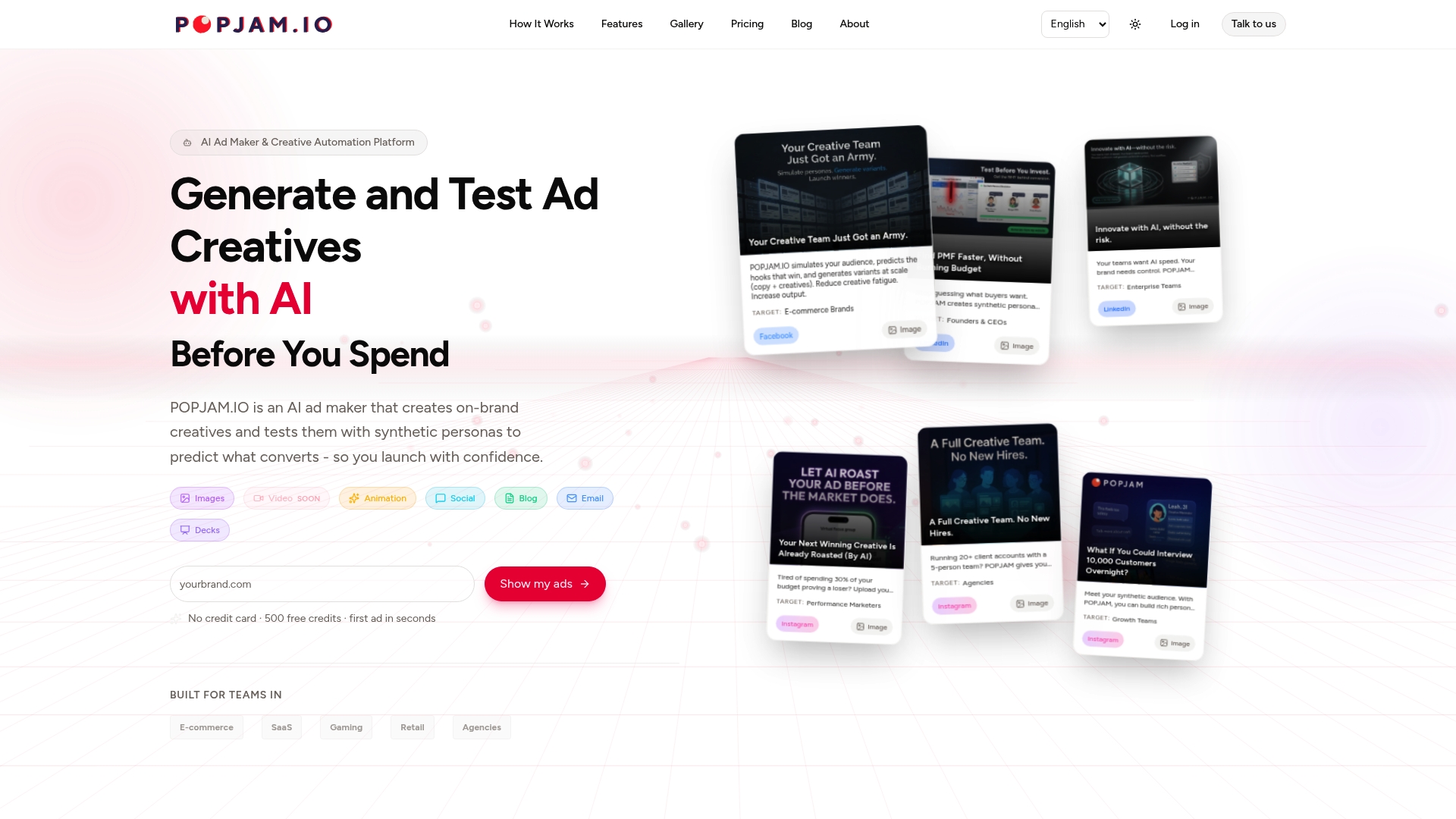
That matters most for performance marketers and agencies juggling constant creative turnover across Meta, Google, TikTok, LinkedIn, and Reddit, where one flat concept can quietly drain a week of spend before anyone notices the drop-off. POPJAM’s AI ad maker generates on-brand variants and runs them through synthetic audience feedback before they go live, giving you a read on what resonates before you commit real dollars.
If you want to see how this works on your own creative, start with the free ad testing tool and run a concept through it before your next launch.
Sources
- Adobe Blog: Workflow management integrations
- Wrike: World-Class Creative Project Management Software
- Sprinklr: Dynamic Creative Optimization Platform
FAQ
What Are the Best Tools for Content Optimization?
The strongest options combine AI-driven variant generation with data on actual performance, whether that’s element-level analytics, pre-flight scoring, or synthetic audience feedback like POPJAM uses to test creative before launch.
What Are the Best Dynamic Creative Optimization Platforms?
The best DCO platforms connect directly to your product feed and ad accounts, offer transparent (not black-box) scoring, and support native publishing across the channels you actually run, including Meta, Google, TikTok, LinkedIn, and Reddit.
Is DCO Only Useful for Large Catalogs?
DCO delivers the most value with high SKU counts or frequent creative turnover, but even smaller catalogs benefit from pre-launch testing that flags weak concepts before spend.
How Long Does It Take to See Results From a Creative Optimization Pilot?
Most pilots start with a single campaign and predefined success metrics, with results expected within the campaign’s typical reporting period.
Do These Tools Replace a Creative Team?
No. They remove guesswork from the process by scoring and testing variants, but a creative team still sets direction, brand voice, and the strategic brief the tools execute against.