
On this page
On this page
The best HeyGen alternative depends on the job. If you need polished avatar presenters for training, look at Synthesia or Colossyan. If you want the cheapest talking-head clips, look at D-ID. If your real goal is ads that perform, you need a tool that also tells you which creative will work before you spend a dollar, and that is where we built POPJAM.
I’ll walk through the main options, what they cost, where each one fits, and the questions to ask before you commit. Prices below come from published comparisons and change often, so confirm them on each vendor’s pricing page before you buy.
TL;DR
- HeyGen is an avatar video tool. Its published entry points are a free plan with 3 watermarked videos, Creator at $29 per month, and Business at $149 per month plus $20 per seat, according to Layer3 Labs’ 2026 comparison.
- Synthesia and Colossyan lean toward training and internal communication. D-ID is the low-cost option. Tavus is usage-based and API-minded.
- For paid social, the gap is validation. Most avatar tools make videos but don’t tell you whether an ad will resonate.
- POPJAM generates on-brand ads and tests them against synthetic buyer personas before launch. Plans start free, then €29 per month.
- Agencies should check multi-client workspaces, asset isolation and approvals before anything else.
Table of Contents
- Why People Look Beyond HeyGen
- HeyGen Alternatives at a Glance
- The Options, One by One
- Where HeyGen Still Makes Sense
- When an Avatar Tool Fits an Ad Workflow
- How to Choose: Six Questions That Matter
- A Quick Look at the Money
- Building a Complete Workflow
- Perspective
- Try POPJAM Before You Commit Budget
- FAQ
- Sources
Why People Look Beyond HeyGen
HeyGen is good at what it does: realistic avatars, voice cloning and translation. So why the search? Usually one of three reasons.
Cost at volume. A ToolChase review from 2026 notes that HeyGen’s free tier is capped at 3 videos a month and that credit-based pricing can get expensive and unpredictable at high volume. If you ship dozens of ad variations a week, credits disappear fast.
Quality consistency. The same review says avatar quality varies, with some clips showing visible artifacts. A talking head that looks slightly off is fine in a tutorial. In a thumb-stopping feed ad, it matters more.

Wrong job. This is the big one. An avatar video tool answers “how do I make a video of a person talking?” Performance marketers ask a different question: “which creative should I put budget behind?” Those are separate problems.
HeyGen Alternatives at a Glance
| Tool | Best for | Published entry price | Ad testing before launch |
|---|---|---|---|
| POPJAM | Generating and validating ads before spend | Free plan, then €29 per month | Yes, synthetic personas |
| Synthesia | Training, compliance, internal comms | About $29 per month | No |
| Colossyan | Training and enablement video | About $28 per month | No |
| D-ID | Lowest-cost talking avatars | From about $5.90 per month | No |
| Tavus | Personalized video through an API | Usage-based | No |
| Creatify | UGC-style ads from product links | Check the vendor’s page | No |
| Superscale | Ad production with publishing and read-back | Check the vendor’s page | Performance read-back after launch |
| Creatopy | Multi-client agency ad building | Check the vendor’s page | No |
The HeyGen, Synthesia, Colossyan and Tavus figures come from Layer3 Labs. Treat every number as a snapshot and check the vendor before you buy.
The Options, One by One
POPJAM: Generate, Then Validate
We’re biased, so here is the plain description. POPJAM is an AI ad maker that creates on-brand ad creatives and then tests them against synthetic buyer personas before they go live. The personas simulate audience reactions, so you get qualitative and quantitative feedback on a creative before it burns budget.
What that looks like in practice:
- Generation of images, video, animation, social posts, email and presentations
- Platform-native exports for Meta, Google, TikTok, LinkedIn and Reddit
- Brand-specific generation, so output matches your look
- Creative performance analytics
- GDPR-compliant audience simulation
It isn’t an avatar presenter tool first. If your ads need a talking spokesperson, you’d pair it with one, or use it for the static, animated and short video formats that make up most paid social rotation. See our AI video ad generator for the video side.
Pricing as published: Free, Starter at €29 per month, Essential at €99 per month, Business at €399 per month, and Enterprise on request. Extra credits are one-off packs: 1,000 credits for €10, 2,000 for €20, 5,000 for €50 and 10,000 for €100. Details are on the pricing page.
Synthesia: The Enterprise Training Pick
Synthesia is the name that comes up most against HeyGen. It is positioned as the enterprise-grade option for training, compliance and internal communication, with SCORM-compliant exports for LMS integration, according to the Clarigital guide. The ToolChase review adds that it is used by over 50,000 companies, with 240+ avatars, 160+ languages and SOC 2 compliance.
That is a strong profile for an HR or enablement team. For a growth team running fifty ad variants a week, it’s less obvious, because nothing in that feature set is about predicting ad performance.
Colossyan: Interactive Learning Video
Colossyan starts at about $28 per month in the Layer3 Labs comparison. Its own marketing pitches it to training and enablement teams, combining AI video with interactive learning. If your video work is onboarding and product education, it’s a natural fit. For ad creative, it’s a side door.
D-ID: Cheapest Way to Get a Talking Head
D-ID comes in at about $5.99 per month in the Layer3 Labs comparison, which makes it the cheapest avatar tool on this list. It suits quick explainers and experiments. It isn’t built around campaign workflows, so you’d handle variants, exports and measurement elsewhere.
Tavus: Personalization Through an API
Tavus is usage-based and aimed at teams that want to generate personalized video programmatically. If you’re sending one-to-one outreach at scale from a CRM, it deserves a look. For broad paid social, usage-based pricing means costs move with volume.
Creatify and Superscale: Ad-First Video Tools
Creatify and Superscale sit closer to the performance marketing world. Both are built around ad production rather than corporate video, with UGC-style formats and a workflow aimed at paid channels. Superscale also publishes to Meta, TikTok and Google and reads performance back after launch. That helps you learn from live spend. It’s a different moment than pre-launch testing, which is where POPJAM works.
Creatopy and Smartly.io: Agency Scale
For agencies, single-brand avatar tools usually run out of road. Creatopy and Smartly.io are often named for multi-client work with siloed brand kits, role-based access and white-labeling. They’re heavier, and they’re built for teams managing many accounts.
Where HeyGen Still Makes Sense
Honest advice: if you need a realistic digital twin of yourself, translated lip-synced video, or presenter-led product explainers, HeyGen is very good. eesel’s 2026 breakdown lists 700+ stock avatars on paid tiers, voice cloning and team features at higher tiers. If that’s your use case, the alternatives above mostly trade features sideways.
The point of this guide is for people whose real job is advertising results. That’s a different search than “AI avatar video.”
When an Avatar Tool Fits an Ad Workflow
Avatar tools shine in a few ad situations:
- Founder-led or spokesperson ads where a face builds trust
- Localization, when the same script must run in many languages
- Explainer ads for complex SaaS products
They struggle where speed and volume of variation matter. Think of a Meta account where you need ten hooks, four visuals and three audiences tested. Rendering a presenter video for each combination is slow, and you still don’t know which one will work.
That’s the “post and pray” trap. You make assets, launch them, and wait for spend to tell you what went wrong. A different category of tool, one that generates and validates, closes that loop earlier.
How to Choose: Six Questions That Matter
Use this checklist before you start a trial.
- What’s the output? Presenter video, UGC-style ads, static images, animation, or all of them?
- Does it validate? Can you learn which creative resonates before launch, or only after spend?
- Which platforms does it export to? Native sizes and specs for Meta, TikTok, Google, LinkedIn and Reddit save hours.
- How do credits behave? Layer3 Labs suggests asking what happens when a credit or minute cap is hit mid-month.
- Who owns what? The same guide recommends asking whether a custom avatar can be reused by anyone on the team or is per-seat, and who owns the likeness and voice clone if you cancel.
- Can it run unattended? Ask whether the API supports unattended generation and how videos are delivered.
Agencies should add one more: workspace isolation. Client A’s fonts, assets and approvals must never bleed into Client B’s projects. Our AI ad generator for agencies page covers how we approach multi-client work.
A Quick Look at the Money
Here’s a worked example for a small e-commerce team that wants to test a batch of ads each month.
On HeyGen’s published Creator plan at $29 per month, you get a bucket of video credits, and per the eesel breakdown that’s 600 credits. Business jumps to $149 per month plus $20 per seat. Add three teammates and the per-seat fees alone are $60 on top.
On POPJAM, Starter is €29 per month and Essential is €99 per month. If you run out of generation capacity, you top up with credit packs, for example 5,000 credits for €50, with no plan change. Credits and plans don’t map one to one across vendors, so compare what a unit actually produces for your formats, not the sticker price.

The cheaper question to ask is: how much of the budget is wasted on ads that never had a chance? Pre-launch testing is designed to cut that waste. Our own write-up on AI ad creative and ROI goes through the thinking.
Building a Complete Workflow
No single tool does everything, and that’s fine. Some teams pair a presenter tool with an ad testing platform. Others want one system covering creation through measurement, and they look at an end-to-end content marketing platform to cover the organic side while a creative tool handles paid.
If you’re comparing the wider field of ad tools beyond video, our guide to the best AI ad creative tools lays out eleven options side by side.
Perspective
I’ve watched too many teams pour a month of work into a gorgeous video, hit publish, and then wait. That’s not a creative process. That’s posting and praying.
When we started building POPJAM, the question wasn’t “how do we make video faster?” Plenty of tools do that now, and HeyGen is one of the good ones. The question was: what if you could turn on the lights before you launch?
So that’s the idea. Our synthetic personas simulate how your target segments react, and you refine the creative based on that feedback. We designed it so that generation and validation live in the same place, with brand-specific output and platform-native exports for Meta, Google, TikTok, LinkedIn and Reddit.
If your job is to make every ad dollar count, I’d start there, and add a presenter tool only if your creative really needs a face. I’d love for you to try it.
Doruk
Try POPJAM Before You Commit Budget
If you’re done guessing, start with the free plan and run your next batch of ad concepts through our synthetic personas. You’ll see which angles land with which segments before anything goes live.
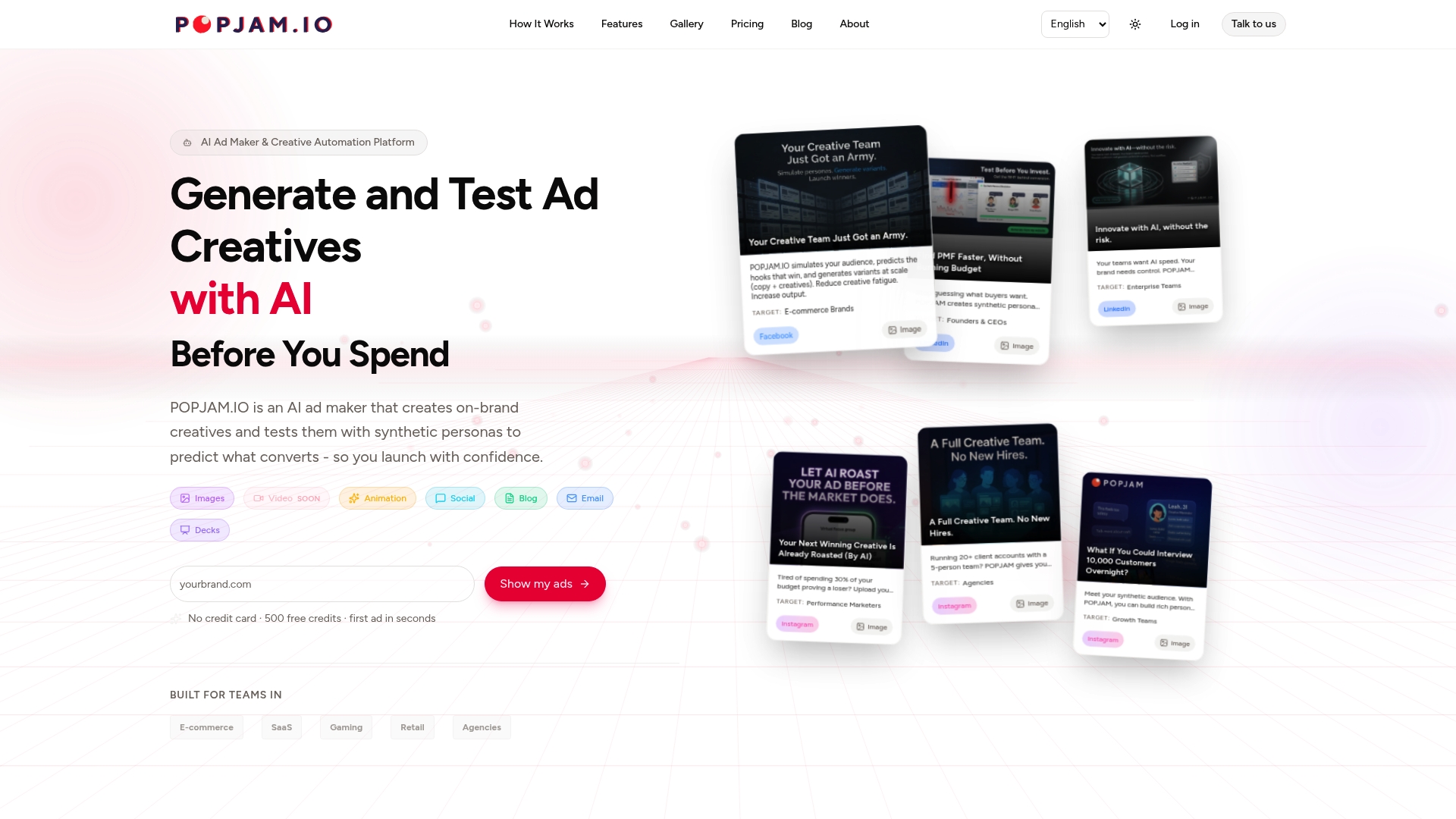
Compare plans on the POPJAM pricing page, or head to popjam.io to see the platform. Prefer to dip a toe in first? Our free ad testing tool is a quick way to see the approach.
FAQ
Is there anything better than HeyGen?
It depends on the job. For presenter videos, HeyGen is among the strongest. For training, Synthesia and Colossyan are popular. For ad performance, a tool that generates and tests creative before launch, like POPJAM, solves a problem HeyGen isn’t designed for.
What is better, Synthesia or HeyGen?
Synthesia is positioned toward enterprise training and compliance, with SCORM exports and SOC 2 compliance. HeyGen leans toward marketing and flexible avatar creation. Pick by use case: internal learning points to Synthesia, marketing explainers and localization point to HeyGen.
What is the cheapest HeyGen alternative?
D-ID has the lowest entry price in the comparisons we reviewed, at about $5.99 per month. If you want to test ad creative rather than only make video, POPJAM has a free plan, and paid plans start at €29 per month.
Which HeyGen alternative is best for agencies?
Look for siloed brand kits, role-based access and approvals that keep each client’s assets separate. Creatopy and Smartly.io are often named for this. POPJAM offers a dedicated setup for agencies running many client campaigns.
Sources
- HeyGen Alternatives 2026: Synthesia, D-ID, Tavus & More (Layer3 Labs)
- Best AI Avatar Generators in 2026 (ToolChase)
- Synthesia: The Complete AI Avatar Video Guide (Clarigital)
- HeyGen pricing (2026): plans, credits, and what you’ll actually pay (eesel)