
On this page
On this page
The best Canva alternative depends on the job. For general design, Adobe Express, Visme and Figma are the closest matches. For paid ads, the real upgrade is a tool that also tells you which creative will work before you spend, and that’s the gap we built POPJAM to fill. Below you’ll find what each option costs, where it shines, and how to pick.
TL;DR
- Adobe Express is the nearest like-for-like swap, with a free plan and a Premium plan at $9.99 per month.
- Visme, Figma and Marq cover presentations, product design and locked-down brand templates respectively.
- Most Canva replacements still only make creative. They don’t tell you whether an ad will land.
- POPJAM generates on-brand ads and tests them against synthetic buyer personas before launch, starting free, with paid plans from €29 per month.
- Pick by workflow: one-off visuals, team brand control, or paid-media performance.
Table of Contents
- Why People Look for a Canva Replacement
- How to Choose Before You Compare
- Canva Alternatives at a Glance
- The Closest General-Purpose Swaps
- Where Design Tools Stop and Ad Tools Start
- What Each Option Costs for a Small Team
- What to Verify Before You Replace Canva
- Our Perspective
- Try Testing Your Ads Before They Run
- How to Pick the Right Tool by Job
- FAQ
- Sources
Why People Look for a Canva Replacement
Canva is great at one thing: getting a decent-looking visual out the door fast. If you know me, you know I’m not here to trash it. Millions of people use it daily for a reason.
But the reasons to look elsewhere are consistent, and they tend to show up once you run real campaigns:
- Team costs add up. One comparison puts Canva’s starting team price at $300 per month for 30 users.
- Brand control at scale. Agencies and multi-brand teams want locked templates, approvals and clean handoffs.
- Ad-specific needs. Platform-native sizes, fast variations and feedback before launch matter more than a library of birthday card templates.
- Creative fatigue. Making more assets is easy. Knowing which ones deserve budget is the hard part.
That last point is the one most “best alternatives” lists skip. They compare template counts. If you buy media, the question is different: will this creative earn its spend?
How to Choose Before You Compare
Save yourself a week of free trials by answering four questions first.
- What are you making? Social posts and flyers, slide decks, product mockups, or paid ads for Meta, Google, TikTok, LinkedIn and Reddit.
- Who touches the file? A solo marketer needs speed. A team needs roles, brand kits and approvals.
- How many variations do you need? Two a month is a design problem. Fifty a week is a pipeline problem.
- How do you know what works? If the answer is “we launch and see,” you’re posting and praying, and that burns budget.
Answer those, and the shortlist below gets very short.
Canva Alternatives at a Glance
Prices below are U.S. list prices as published in the sources linked in each section. Plans change, so confirm on each vendor’s pricing page before you buy.
| Tool | Best for | Free plan | Entry paid price | Tests ads before launch? |
|---|---|---|---|---|
| Adobe Express | Closest all-round swap | Yes | $9.99/month (Premium) | No |
| Visme | Presentations, reports, infographics | Yes (watermark) | $12.25/user/month billed annually | No |
| Figma | Custom design, product teams | Yes | $16/user/month (Professional, monthly) | No |
| Marq | Locked brand templates | Yes | Enterprise via demo | No |
| Adobe Creative Cloud | Pro design and video | Trial | Plans from $9.99/month (single app) | No |
| Pencil | AI video and static ad concepts | No | $119/month | Predicted scores |
| POPJAM | Generating and testing ads | Yes | €29/month (Starter) | Yes, with synthetic personas |
The Closest General-Purpose Swaps
Adobe Express
If you want Canva’s feel with a different company behind it, start here. Adobe Express is a design, photo and video tool for social posts, images, videos and flyers, with brand kits and one-click resize for any channel. It plugs into Photoshop, Firefly and Creative Cloud for teams already in that world.
On price, the free plan is generous: 100,000+ templates, 4,000+ Adobe Fonts and 5GB of storage, compared with 1.6M+ templates on Canva Free. Premium runs $9.99 per month with no annual commitment, 250 monthly generative credits and scheduling to three accounts per social network. Teams starts at $4.99 per license per month for the first year, then renews at $7.99, with a two-seat minimum and annual commitment.
Where it stops: collaboration. One comparison notes that review and approval workflows on Adobe Express need Adobe Workfront, starting at $1,500 per month, or third-party tools. Fine for a small team, a stretch for a busy agency.

Visme
Visme leans toward presentations, reports and infographics. The free plan gives you unlimited projects but adds a watermark and limits export formats, and paid plans start at $12.25 per user per month billed annually, adding AI Designer, Brand Wizard and CRM integrations with HubSpot and Salesforce. A second source lists Starter at $147 per year and Pro at $297 per year per user.
Choose it when your output is decks and data stories more than ad creative.
Figma
Figma is the pick when you have a designer who wants control. Its free plan includes unlimited drafts and up to 150 AI credits per day, and Professional is $16 per user per month on monthly billing, the only tier without an annual contract. The learning curve is steeper than Canva’s. That’s the trade for flexibility.
Marq
Marq (formerly Lucidpress) is built for brand governance. It offers a free tier and Enterprise through a demo, with lockable brand templates, smart fields, CSV and Google Sheets data automation, approval workflows and 10,000+ templates. If your pain is franchisees or regional teams going off-brand, this is the shape of the solution.
Adobe Creative Cloud
When the work is serious design or video, Creative Cloud is the heavyweight. Adobe lists All Apps at US$59.99 per month, Photography at US$19.99 and a single app at US$9.99. Plan names and prices have been shifting, so check Adobe’s current plan page. It’s overkill if you just need ad variations, and it still doesn’t tell you which one will win.
Where Design Tools Stop and Ad Tools Start
Here’s the thing I kept running into as a founder. Every tool above helps you make an ad. None of them help you decide which ad to run. You still publish, wait for the data and pay for the lesson.
There’s solid research on why visuals matter in the first place. If you want the broader case for investing in them, this look at visual content in marketing lays it out. But better visuals only pay off when the right ones get your budget.
That’s why a new category is forming: tools that predict reactions before launch. Zappi’s Amplify AI, launched in July 2026, uses synthetic respondents and machine learning, and matched human survey results 84% of the time in validation across hundreds of advertising studies. It shows where the market is heading: simulate the audience first, spend second.
Pencil
Pencil generates video and static ad concepts from brand assets and attaches a predicted click-through and conversion rate to each. Self-serve tiers start at $119 per month for up to 40 ad generations. Its published Q4 2025 data says ads scoring above 75 beat human-made ads on CTR by an average of 18%. Note that those figures come from Pencil’s own dataset, so treat them as the vendor’s claim, as you would with any vendor.

POPJAM
This is ours, so I’ll tell you plainly how we think about it. POPJAM is an AI ad maker that generates on-brand creative and then tests it against synthetic buyer personas before it goes live. Teams get qualitative and quantitative feedback, psychographic reactions and creative analytics, then export platform-native assets for Meta, Google, TikTok, LinkedIn and Reddit. It covers images, video, animation, social posts, email and presentations, and the audience simulation is built to be GDPR-compliant.
In short: our approach is designed to let you validate ads before any spend, rather than finding out in your ad account.
It isn’t a general-purpose design suite for flyers and menus. It’s built for people who run campaigns: e-commerce brands, SaaS founders, performance marketers, growth teams and agencies.
What Each Option Costs for a Small Team
Price comparisons get messy because every vendor bills differently. Here’s a plain way to look at it.
| Scenario | Likely fit | What you’d pay (published prices) |
|---|---|---|
| Solo marketer, occasional social graphics | Adobe Express Free or Premium | $0 or $9.99/month |
| Two-person team, steady social content | Adobe Express Teams | $4.99 per license/month in year one, two-seat minimum |
| Designer-led team, custom work | Figma Professional | $16 per user/month |
| Paid-media team, weekly ad testing | POPJAM Starter or Essential | €29 or €99/month |
| Agency with several clients | POPJAM Business | €399/month |
POPJAM’s plans are Free, Starter at €29 per month, Essential at €99 per month, Business at €399 per month, and Enterprise on request. If you need more generation on top of a plan, credit packs are one-off: 1,000 credits for €10, 2,000 for €20, 5,000 for €50 and 10,000 for €100. Full details sit on the POPJAM pricing page.
What to Verify Before You Replace Canva
A clean switch comes down to a short checklist. Run through it before you move a single template.
- Exports. Can it output the exact sizes and formats your ad platforms want, without manual resizing?
- Brand controls. How many brand kits, and can you restrict who edits what?
- Variation speed. How long does it take to go from one concept to twenty?
- Feedback loop. Does it predict or test performance, or only produce files?
- Data handling. Where does your brand and audience data go, and does the vendor address GDPR?
- Cost at your size. Per-seat pricing, credits and AI add-ons can double a headline price.
If you want a structured way to run tests once you’ve picked a tool, our creative testing framework walks through it, and the broader ad design tools roundup covers more options.
Our Perspective
Here’s how I see it. For years the creative process went: design something, launch it, wait, learn, repeat. I call it “post and pray,” and I lived it. Every round cost real budget, and the lesson always arrived after the money left.
Design tools got faster and prettier, and that’s wonderful. But speed in making ads without any signal on which ones resonate just means you burn budget faster. That’s why we built POPJAM around a different order of operations: generate, simulate your audience with synthetic personas, refine, then launch.
We designed it so a marketer can see how different psychographic segments might react, what lands and what falls flat, before a dollar goes to Meta or TikTok. Fewer guesses, less creative fatigue, and a team that walks into the launch with a point of view.
Is Canva still a fine place to make a quick social graphic? Sure. But if your job is performance, the tool that helps you decide should sit next to the tool that helps you design. I’d love for you to try it and tell me what you think.
Doruk
Try Testing Your Ads Before They Run
If you’re a performance marketer, growth lead, agency or founder tired of paying for creative lessons, start with the Free plan at POPJAM and generate your first on-brand ads. Then see how they hold up against synthetic personas. Upgrade when volume demands it, or add a credit pack for extra generation.
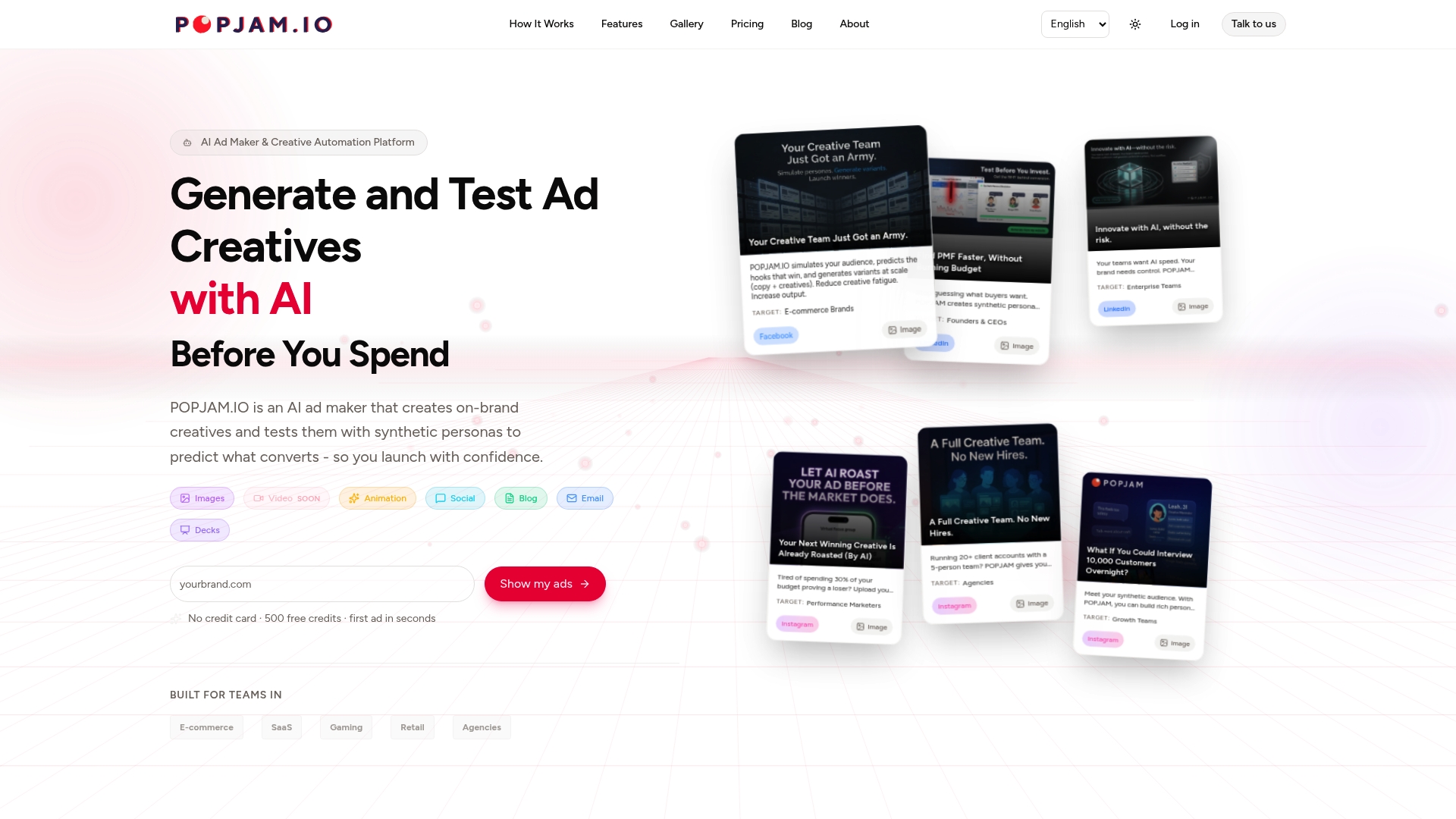
See the AI ad maker in action, or head to the POPJAM homepage to start. Running several clients? Our agency ad generator page shows how teams handle it. For a wider shortlist, see our comparison of AI ad creative tools.
How to Pick the Right Tool by Job
Cut through the noise with this quick map.
- “I need decent graphics, cheaply.” Adobe Express Free or Premium.
- “I make decks and reports.” Visme.
- “I have a designer who wants control.” Figma.
- “I need to lock down brand across many teams.” Marq.
- “I’m a pro doing video and illustration.” Adobe Creative Cloud.
- “I run paid campaigns and want to know what works before I launch.” POPJAM, or Pencil if you want predicted scores on video concepts.
Many teams end up using two tools: one for general design and one for ad creation and validation. That’s perfectly normal, and a good reason to look at cost per job rather than cost per seat.
FAQ
Is there anything better than Canva?
It depends on the job. For custom design, Figma gives more control. For brand governance, Marq is built for it. For paid ads where you want feedback before spending, a tool like POPJAM, which tests creative against synthetic personas, goes a step beyond simply producing files.
Which app is like Canva but free?
Adobe Express has a permanent free plan with 100,000+ templates and 5GB of storage. Figma and Visme also have free tiers, though Visme adds a watermark. POPJAM has a Free plan too, aimed at generating and testing ad creative rather than general graphics.
Do any Canva alternatives predict ad performance?
Yes, a few. POPJAM tests ads against synthetic buyer personas before launch, and Pencil attaches predicted CTR and conversion scores to its outputs. Zappi’s Amplify AI, available in the U.S. and U.K., also predicts reactions with synthetic respondents. Compare how each one works before you commit.
Can agencies replace Canva with something built for multiple clients?
Yes. Look for multiple brand kits, approval steps, fast variation and clean exports. POPJAM’s Business plan is €399 per month and an Enterprise tier is available on request. Our agency page covers the workflow in detail.
Sources
- How much does Adobe Express cost? (Photutorial)
- Free Graphic Design Software: 8 Best Tools for 2026 (Shopify)
- The 2026 Guide to B2B Ad Design Tools for Every Team (SaaS Hero)
- 7 Ferramentas de Design Gráfico para Marketing em 2026 (Nação Digital)
- AI tool aims to predict ad performance before campaigns go live (Communicate Online)
- Adobe Creative Cloud plans
- Visual content in marketing