

Best Bannerflow Alternatives for Marketing Teams in 2026
Discover the top Bannerflow alternatives for 2026. Explore AI-driven solutions like POPJAM.IO that boost creativity and audience testing!

POPJAM.IO is the best Bannerflow alternative for teams that need AI-driven creative generation plus pre-launch synthetic audience testing. If your team is “posting and praying” with live ad spend, that’s the category to start with. Here’s the quick shortlist by use case:
| Alternative Category | Best For | Pricing Posture | One-Line Tradeoff |
|---|---|---|---|
| POPJAM.IO (AI generation + synthetic testing) | Performance teams, e-commerce, SaaS, agencies | Tiered SaaS + credit packs | Generates and validates creatives before spend; no legacy CMP baggage |
| High-volume automation platforms (e.g., Abyssale, Zuuvi) | Teams producing hundreds of banner variants | Mid-market SaaS | Fast at scale, but limited pre-launch validation |
| Performance DCO platforms (e.g., Celtra, Clinch) | Enterprise programmatic buyers | Custom enterprise | Deep feed integration; steep onboarding and cost |
| AI ad creative specialists (e.g., AdCreative.ai, Pencil) | SMB and growth teams | Low-to-mid SaaS | Quick output; lighter on governance and testing depth |
| Enterprise CMPs (e.g., LoopMe, RevJet) | Large media teams with complex ad ops | Custom enterprise | Broad integrations; pricing opacity is a real risk |
| Budget-friendly ad builders (e.g., Creatopy) | Freelancers and small teams | Entry-level SaaS | Accessible and fast; not built for programmatic scale |
The bottom line: Creative automation platforms in 2026 are evaluated on creative automation, API-first feeds, and testing capabilities — not just design quality. The category you pick should match your job-to-be-done, not your favorite feature list.
Key Takeaways
The best Bannerflow alternative is the one that matches your primary job: scale production, validate creatives before spend, or centralize governance — and POPJAM.IO is the strongest option for teams that need all three in one platform.
| Point | Details |
|---|---|
| Match platform to job-to-be-done | Choose by production velocity, testing needs, or governance requirements — not feature count alone. |
| Synthetic testing reduces wasted spend | Pre-launch persona simulation catches losing creatives before live budget is committed. |
| Enterprise pricing is often opaque | Always request a full breakdown of usage-based fees and overages before signing any contract. |
| Migration takes 2–12 weeks | Small teams can switch in 2–4 weeks; enterprise teams with complex integrations need 6–12 weeks. |
| POPJAM.IO covers generation and validation | POPJAM.IO generates on-brand creatives and tests them against Synthetic Personas before launch, across Meta, Google, TikTok, LinkedIn, and Reddit. |
The mindset shift that actually moves the needle
Most teams evaluate creative platforms the wrong way. They demo the editor, count the integrations, and ask about pricing. What they rarely ask is: “How do we know this creative will work before we spend money on it?”
That question is the one that separates teams with strong creative ROI from teams that are perpetually optimizing their way out of a hole they dug at launch. The platforms that let you simulate audience response before going live aren’t just a nice feature addition. They represent a fundamentally different philosophy: test the idea, not the budget.
The shift toward Creative Infrastructure Platforms that link creative output to performance data isn’t a trend. It’s the direction the entire market is moving. Teams that adopt synthetic testing now will have a compounding advantage over teams that are still running blind A/B tests on live traffic a year from now.
If you’re evaluating Bannerflow alternatives, the question isn’t just “which tool is cheaper” or “which has more templates.” It’s “which platform helps me stop wasting spend on creatives that were never going to work?” That’s the frame worth keeping.
Table of Contents
- What are the best Bannerflow alternatives right now?
- How do these platforms compare across key features?
- How do you choose the right Bannerflow alternative for your team?
- Switching from Bannerflow: a practical migration checklist
- Why synthetic audience testing changes your creative ROI
- Which alternative should you actually pick by team type?
- POPJAM.IO gives you generation and validation in one place
- FAQ
What are the best Bannerflow alternatives right now?
The honest answer is that the right alternative depends on team size and goals, not on which platform has the longest feature list. Here’s how each category actually performs.
POPJAM.IO: AI generation plus synthetic pre-launch testing
POPJAM.IO sits in its own category. It generates on-brand ad creatives across Meta, Google, TikTok, LinkedIn, and Reddit, then tests them against Synthetic Personas built from real psychographic profiles before a single dollar of live budget is spent. That “test before you spend” loop is what separates it from every other option on this list. Pricing runs on a tiered SaaS model with usage-based credit packs for additional generation, which means you’re not locked into a bloated enterprise contract from day one.
Pros:
- Pre-launch synthetic audience testing reduces wasted spend
- Covers images, video, animation, social posts, email, and presentations
- GDPR-compliant audience simulation built in
- Transparent tiered pricing with no hidden enterprise minimums
Cons:
- Newer platform; fewer legacy ad server integrations than established CMPs
- Credit-based model requires usage planning for high-volume teams
High-volume automation platforms (Abyssale, Zuuvi)
These platforms are built for teams that need to produce hundreds or thousands of banner variants fast. Abyssale, for example, offers a Figma-to-production plugin and a PSD exporter that connects design assets directly to automated production pipelines. Zuuvi focuses on HTML5 banner production with a clean editor. Both sit in the mid-market SaaS range.
Pros:
- Excellent production velocity for multi-format campaigns
- Design tool integrations (Figma, Adobe) reduce handoff friction
Cons:
- Limited or no pre-launch audience validation
- Testing features are typically A/B only, not synthetic
Performance DCO platforms (Celtra, Clinch)
Dynamic Creative Optimization platforms like Celtra and Clinch are built for programmatic buyers who need real-time data feeds driving creative variants. They connect to ad servers, DSPs, and CM360 natively. The tradeoff is cost and complexity. Both carry custom enterprise pricing, and onboarding timelines can stretch weeks.
Pros:
- Deep DCO and data feed support
- Strong programmatic and ad server integrations
Cons:
- Custom pricing with potential hidden usage fees (a pattern common across enterprise CMPs)
- Overkill for teams not running programmatic at scale
AI ad creative specialists (AdCreative.ai, Pencil)
AdCreative.ai and Pencil use AI to generate ad variants quickly, targeting SMB and growth-stage teams. They’re affordable and fast, but neither offers the depth of synthetic persona testing or the governance controls that larger teams need.
Pros:
- Low entry cost; fast creative output
- Good for rapid concept generation
Cons:
- Limited brand governance and approval workflows
- Lighter integration with enterprise ad stacks
Enterprise CMPs (LoopMe, RevJet)
LoopMe and RevJet serve large media teams with complex ad operations. Both offer broad integrations and audience intelligence features. Vendor maturity and support posture vary significantly across this category, and funding and company size can hint at long-term platform stability.
Pros:
- Broad ad tech integrations
- Audience data and optimization features built in
Cons:
- Opaque pricing is the norm; expect custom quotes
- Heavy implementation lift
Budget-friendly ad builders (Creatopy)
Creatopy (formerly Bannersnack) is the accessible option. It’s a clean online banner maker with a solid template library, suitable for small teams or freelancers. It’s not built for programmatic scale or API-driven automation.
Pros:
- Low cost; easy to learn
- Good template variety for static and animated banners
Cons:
- Not designed for bulk API generation or DCO
- Limited testing and governance features
Pricing callout: Expect three pricing shapes across this market: custom enterprise quotes (Celtra, Clinch, LoopMe, RevJet), mid-market tiered SaaS (Abyssale, Zuuvi, Creatopy), and tiered SaaS with usage credits (POPJAM.IO, AdCreative.ai). Review platforms consistently flag opaque enterprise pricing as a top buyer concern — always request a full breakdown of usage-based fees before signing.
How do these platforms compare across key features?
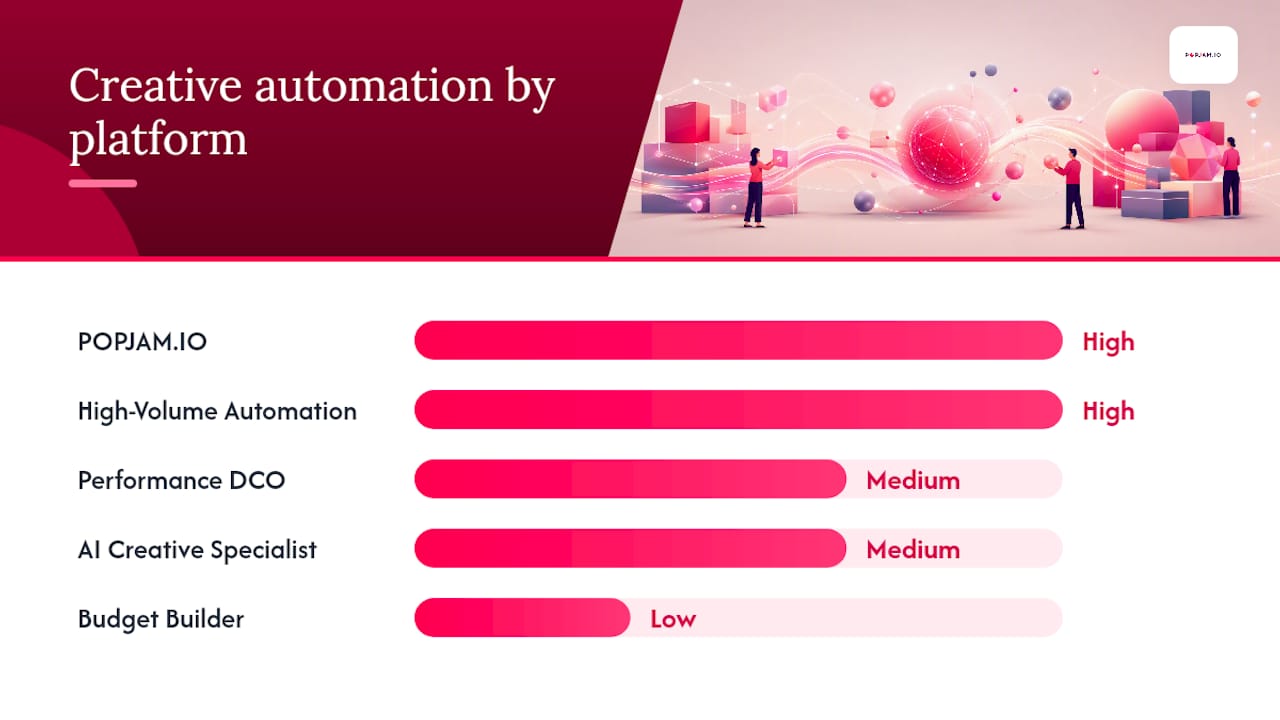
Multiple review platforms group Bannerflow alternatives into the same recurring categories: creative management platforms, DCO/performance platforms, and AI creative tools. The table below maps those categories across the dimensions that matter most to buyers in 2026.
| Dimension | POPJAM.IO | High-Volume Automation | Performance DCO | AI Creative Specialist | Enterprise CMP | Budget Builder |
|---|---|---|---|---|---|---|
| Best for | Performance teams needing generation + testing | Volume-focused creative teams | Enterprise programmatic | SMB / growth teams | Large media ops | Freelancers / small teams |
| Pricing | Tiered SaaS + credits | Mid-market SaaS | Custom enterprise | Low-to-mid SaaS | Custom enterprise | Entry-level SaaS |
| Creative automation | High (AI generation, bulk, API) | High (template-driven bulk) | Medium (feed-driven) | Medium (AI variants) | Medium | Low |
| DCO / data feeds | Medium (growing) | Low-Medium | High | Low | High | Low |
| Integrations | Meta, Google, TikTok, LinkedIn, Reddit | Figma, Adobe, ad servers | CM360, DSPs, ad servers | Meta, Google | Broad ad tech | Basic export |
| Testing features | High (synthetic personas + A/B) | Low (A/B only) | Medium (live DCO) | Low | Medium | Low |
| Ease of use | High | High | Medium | High | Low-Medium | High |
| Support | Tiered by plan | Tiered by plan | Dedicated enterprise | Self-serve | Dedicated enterprise | Self-serve |
| Brand governance | Medium-High | Medium | High | Low | High | Low |
Cost callout: Hidden fees are a documented risk in this market. Teams should verify usage-based fees and overage charges before committing to any enterprise contract. Platforms with transparent tiered pricing give you a cleaner baseline for budget planning.
How do you choose the right Bannerflow alternative for your team?
Start with your job-to-be-done, not the feature checklist. There are three core jobs in this market: scale production, validate creatives before spend, or centralize governance. Pick the category that solves your primary job first.
Decision framework by priority:
- Production velocity — How many variants do you need per week? If it’s hundreds, you need bulk generation and API access.
- Pre-launch testing — Do you want to know if a creative will resonate before it hits live traffic? Synthetic testing (POPJAM.IO) or live DCO (Celtra, Clinch) are your two paths.
- Integration compatibility — Does the platform connect to your existing ad server, DSP, or CM360 setup? Verify this before demoing.
- Pricing transparency — Aligning platform choice to budget and technical requirements beats choosing on feature count alone. Ask for a full pricing breakdown including overages.
- Security and brand governance — Enterprise teams need role-based permissions, approval workflows, and audit trails.
- Vendor support — Check whether dedicated account management is included or costs extra.
Questions to ask every vendor:
- What are the API rate limits and bulk generation caps?
- Does the platform support pre-launch testing, and how does it work?
- What ad servers, DSPs, and programmatic platforms does it integrate with natively?
- How granular is the reporting? Can it connect to your existing analytics stack?
- What’s the onboarding timeline, and what does the SLA cover?
- Are there security certifications (SOC 2, GDPR compliance)?
Red flags to watch for:
- Pricing that requires a sales call just to get a ballpark number
- No API or feed support for automated creative workflows
- No pre-launch testing capability of any kind
- Brand governance limited to basic folder permissions
For vertical-specific teams, tool selection often comes down to audience fit as much as feature fit. Niche marketing teams in sectors like medical aesthetics face the same core tradeoff: production speed vs. creative validation depth.
Switching from Bannerflow: a practical migration checklist
Migration complexity scales with team size. A small team of two to five people can typically complete a platform switch in two to four weeks. An enterprise team with complex ad ops, multiple integrations, and hundreds of live templates should budget six to twelve weeks minimum.
Step-by-step migration plan:
- Run a pilot campaign with synthetic testing. Before moving live traffic, use pre-launch ad testing to validate your top creative concepts on the new platform. This catches messaging and format issues before they cost you budget.
- Bulk import and template setup. Use design tool integrations where available. Figma-to-production plugins and PSD exporters can accelerate this step significantly for design-heavy teams.
Timeline callout:
Pro Tip: Run parallel campaigns on both platforms for two to four weeks before fully cutting over. Compare performance metrics side by side so you have a clean baseline, and you won’t be flying blind if something breaks during the transition.
Why synthetic audience testing changes your creative ROI
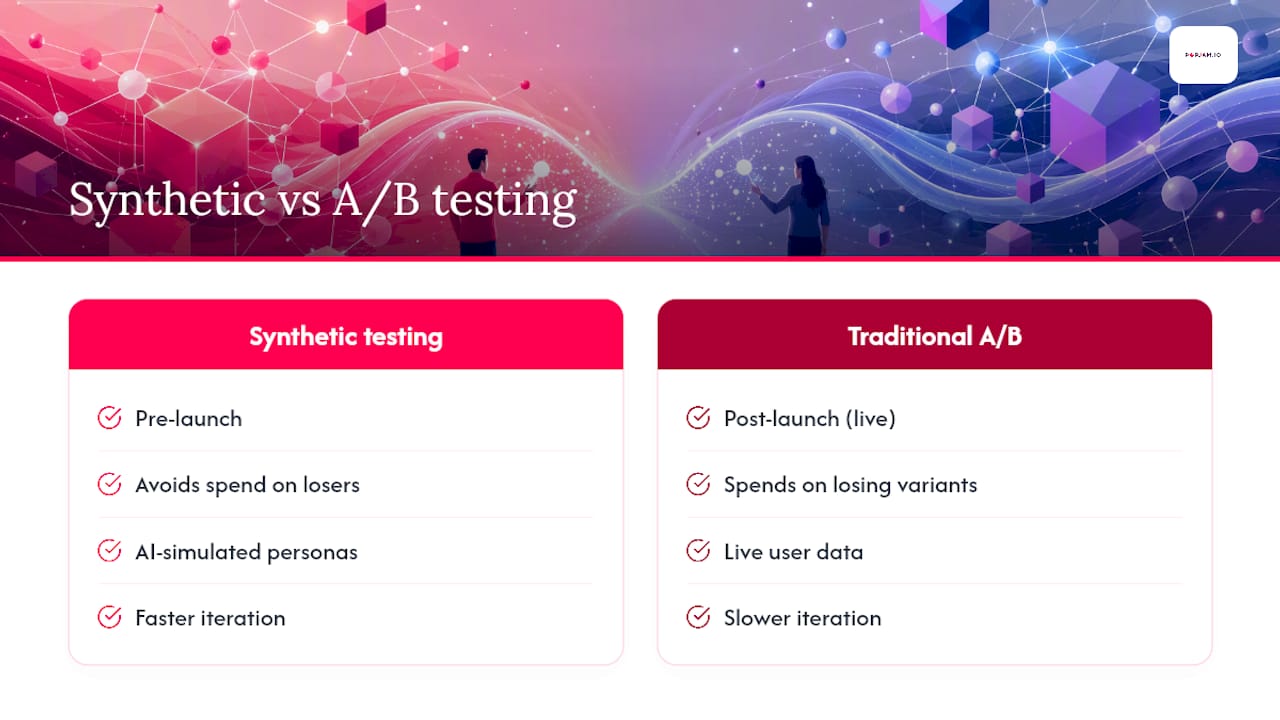
Pre-launch synthetic testing is the single biggest shift in how performance teams approach creative production right now. The core idea is simple: instead of spending live budget to find out which creative resonates, you simulate audience reactions before the campaign goes live. Industry analysis confirms the market is moving toward Creative Infrastructure Platforms that link creative output directly to campaign performance via machine learning, and synthetic testing is the mechanism that makes that link actionable before spend.
Traditional A/B testing is valuable, but it requires live traffic to generate signal. That means you’re spending real money on the losing variant while the test runs. Synthetic testing flips that sequence. You collect qualitative and quantitative feedback from AI-simulated buyer personas built on real psychographic profiles, refine the creative, and only then commit live budget. The result is faster iteration and less wasted spend on concepts that were never going to land.
POPJAM.IO is built around this workflow. Its Synthetic Personas simulate how different audience segments respond to an ad before it goes live, covering images, video, animation, and social posts across every major platform. That’s a fundamentally different capability than what most top ad design software offers.
Pro Tip: Add a synthetic testing step between creative brief and live launch. Even a single round of persona feedback on your top two or three concepts will surface copy and visual issues that A/B testing would have caught at a cost.
Research note: Practitioners increasingly prioritize synthetic audience testing to validate concepts before spending live budgets, treating it as a complement to, not a replacement for, live optimization. The platforms that support both are the ones worth evaluating seriously in 2026.
Learn more about building this into your workflow in POPJAM.IO’s guide on scaling creative marketing with AI.
Which alternative should you actually pick by team type?
Small marketing teams on a budget should start with a budget-friendly ad builder like Creatopy for static and animated banners, or move directly to POPJAM.IO if pre-launch validation matters more than raw volume. The tiered pricing makes it accessible without an enterprise commitment.
Fast-growing performance teams needing DCO should evaluate POPJAM.IO first for its synthetic testing advantage, then look at performance DCO platforms if real-time feed-driven creative is a hard requirement. The two approaches are complementary, not mutually exclusive.
Large enterprises needing governance and deep integrations will likely need an enterprise CMP or performance DCO platform for their core ad ops stack. POPJAM.IO can sit alongside that stack as the creative generation and pre-launch validation layer.
Agencies managing multi-client workflows should look at POPJAM.IO’s agency-specific creative automation capabilities, which are built for multi-client production and testing at scale. Budget-friendly builders won’t cut it once client volume grows past a handful of accounts.
POPJAM.IO gives you generation and validation in one place
Most platforms on this list do one thing well: produce creatives fast, or optimize them live. POPJAM.IO does both, and it adds something none of the others offer at this price point: pre-launch synthetic audience testing that tells you whether your creative will resonate before a single dollar of live budget is committed.
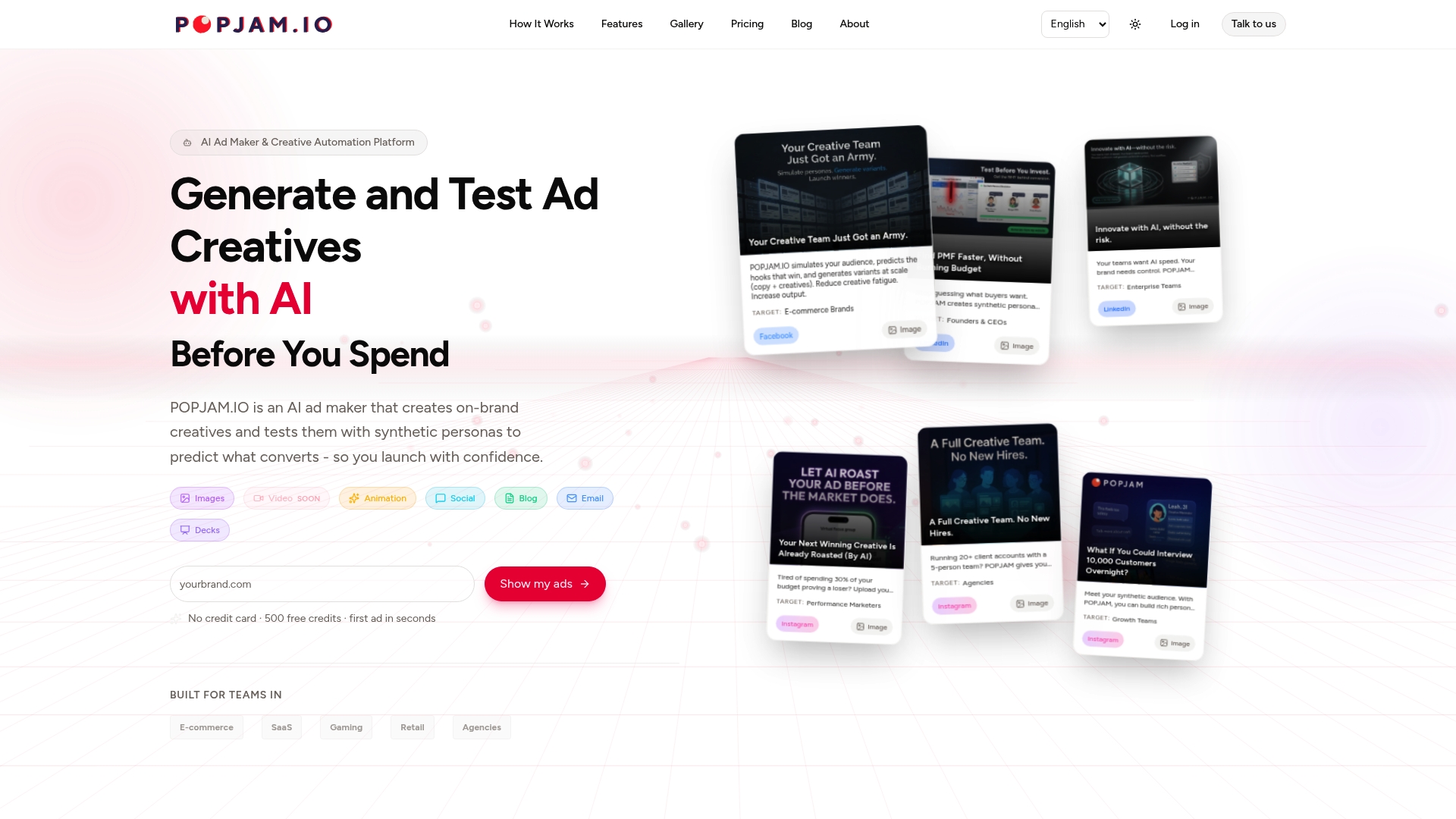
For performance teams, e-commerce brands, and agencies tired of launching creatives and hoping for the best, POPJAM.IO’s AI ad generation and testing platform is the place to start. You get on-brand creative generation across every major platform, Synthetic Personas built from real psychographic profiles, GDPR-compliant simulation, and transparent tiered pricing with no surprise enterprise minimums.
The fastest way to evaluate it is to run a small pilot: generate three to five creative concepts, test them against your target persona, and compare the feedback to what you’d normally launch blind. Start your free pilot on POPJAM.IO and see the difference a pre-launch testing step makes before you commit to a full platform switch.
Sources and further reading
- BannerFlow Alternatives: 2026 Guide | ITQlick
- Top BannerFlow Alternatives, Competitors
- Best BannerFlow Alternatives & Competitors in 2026
- BannerFlow - 2026 Company Profile, Team, Funding & Competitors - Tracxn
- Bannerflow alternatives 2026 | OMR Reviews
- BannerFlow Alternatives & Competitors - SaaSHub
- figma.com
- exchange.adobe.com
FAQ
What is the best free Bannerflow alternative?
Creatopy offers an entry-level plan suitable for small teams and freelancers. For teams that want AI generation with a free trial, POPJAM.IO offers a pilot option before any paid commitment.
Does POPJAM.IO replace Bannerflow entirely?
POPJAM.IO covers AI creative generation, pre-launch synthetic testing, and multi-platform deployment across Meta, Google, TikTok, LinkedIn, and Reddit. Teams that rely heavily on programmatic DCO with real-time data feeds may want to pair it with a dedicated DCO platform.
How long does it take to migrate from Bannerflow?
Small teams typically complete a migration in a few weeks. Enterprise teams with complex integrations and large template libraries should plan for several weeks to multiple months, including a parallel-run period for performance comparison.
What should I ask vendors about pricing before switching?
Always ask for a full breakdown of usage-based fees, overage charges, and any costs tied to additional users or ad server connections. Opaque enterprise pricing is a documented issue across this market, so get the full cost picture in writing before signing.
Do Bannerflow alternatives support synthetic audience testing?
Most do not. Synthetic pre-launch testing, where AI-simulated buyer personas evaluate creatives before live spend, is a capability specific to platforms like POPJAM.IO. Standard alternatives offer A/B testing on live traffic or DCO-driven optimization, which requires real budget to generate signal.