

Text to Advertising: Best AI Tools for 2026
The fastest way to turn a product description into a live ad is to use an AI text-to-advertising tool. These platforms take your text input and produce platform-ready copy for Google, Meta, TikTok, and beyond in seconds. The three tools worth knowing in 2026 are BestHunt.ai Ad Text Generator, InVideo AI Ad Generator, and POPJAM.IO AI Ad Maker. Each solves a different part of the ad creation problem, and the right pick depends entirely on what you need from your campaigns.
AI ad copy generation has moved well past novelty. The real value is speed plus variation: you get multiple headline and description combinations instantly, which feeds the machine learning algorithms that ad platforms use to surface the best performer. That loop used to take weeks of manual writing and testing. Now it takes minutes.

Here’s a quick look at how the three leading tools stack up:
| Tool | Best For | Key Features | Platform Integrations | Languages Supported | Pricing Model |
|---|---|---|---|---|---|
| BestHunt.ai Ad Text Generator | Marketers needing fast, multi-platform text ad copy | Multi-format copy generation, tone controls, customization options | Google Ads, Meta, LinkedIn | Multiple | Freemium / paid tiers |
| InVideo AI Ad Generator | Teams needing video and text ads from one tool | Text-to-video, static ad creation, prompt-based generation | Meta, YouTube, TikTok | Multiple | Subscription tiers |
| POPJAM.IO AI Ad Maker | Businesses wanting pre-launch creative validation | AI creative generation, Synthetic Personas, psychographic feedback, pre-launch testing | Meta, Google, TikTok, LinkedIn, Reddit | Multiple | Subscription SaaS, credit packs |
How do the top text-to-advertising platforms compare?
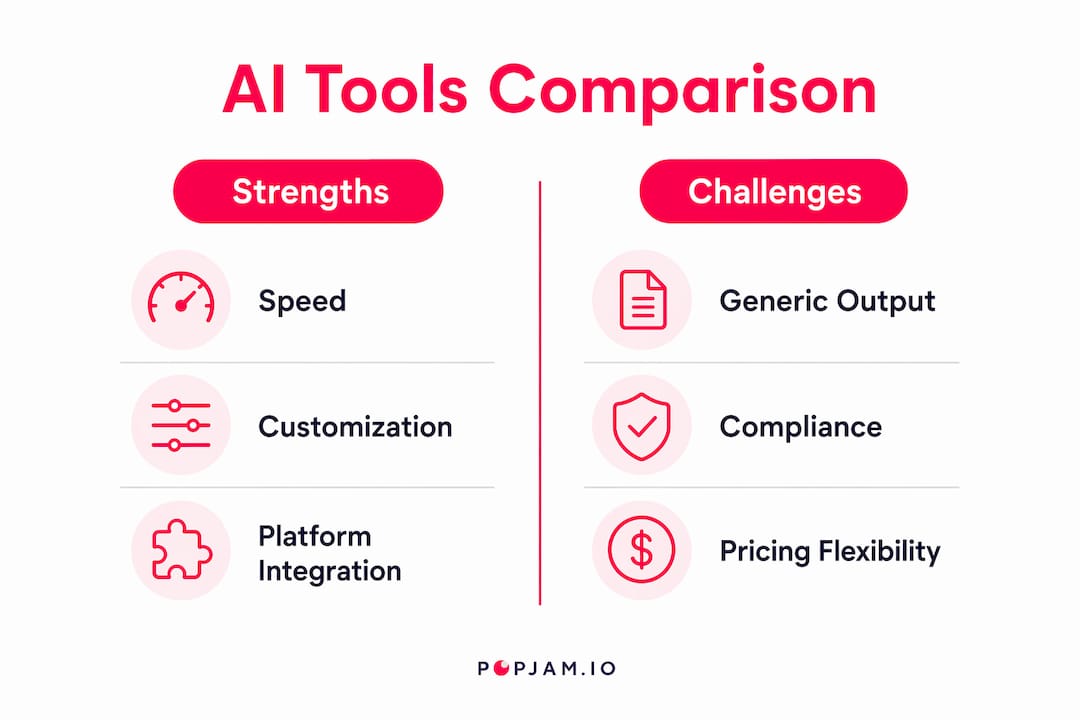
The three tools occupy genuinely different positions in the workflow, so comparing them on features alone misses the point. Think of it as a spectrum from “generate fast” to “generate and validate.”
BestHunt.ai Ad Text Generator sits at the generation end. You feed it a product description, pick a tone and platform, and it outputs multiple copy variants quickly. It’s built for marketers who need volume, especially across Google Search and social placements, without a steep learning curve. The customization controls let you dial in brand voice, which matters when you’re managing several clients or product lines at once.
- Strengths: fast output, multi-platform formatting, accessible for solo marketers
- Best fit: PPC managers and freelancers who need copy at scale
InVideo AI Ad Generator extends the concept into video. You can start from a text prompt, a product URL, or an image, and the platform builds both static and video ad formats from that input. For teams running Meta and TikTok campaigns where video is the dominant format, that integration removes a whole production step.
- Strengths: combined video and text output, prompt-based creation, broad format support
- Best fit: social media teams running mixed-format campaigns
POPJAM.IO AI Ad Maker goes further than generation. After creating your ad creatives, you can test them against Synthetic Personas built from real psychographic profiles before spending a dollar on media. That pre-launch validation loop is genuinely different from what the other two offer. For e-commerce brands, SaaS companies, and agencies tired of “posting and praying,” it’s the tool that turns on the lights before the campaign goes live. You get qualitative and quantitative feedback on which creative resonates with which audience segment, across Meta, Google, TikTok, LinkedIn, and Reddit.
- Strengths: synthetic audience simulation, pre-launch testing, psychographic feedback, multi-channel creative generation
- Best fit: businesses and agencies that want data-backed decisions before committing ad spend
How to use AI text-to-advertising tools effectively
Getting good output from any of these platforms comes down to what you put in and how you structure the testing cycle. Here’s what actually works:
- Write specific inputs. Vague prompts produce generic copy. Include your product name, core benefit, audience, and the action you want the user to take. “Running shoes for marathon training, free shipping, shop now” beats “athletic footwear.”
- Generate multiple ad copy variants per ad group. Ad platforms rotate variations automatically and surface the best performer based on click-through data. More variants means more signal for the algorithm.
- Match copy to your landing page. Ad-to-page relevance directly affects quality score and bounce rate. If your ad promises a 20% discount, that offer needs to be visible the moment someone lands on your page.
- Respect platform character limits. Google Search ads cap headlines at 30 characters and descriptions at 90. AI tools that auto-format for each platform save you from manual trimming, but always review the output before publishing.
- Integrate with your existing ad platform. Tools that connect directly to Google Ads or Meta Business Manager cut the copy-paste step and reduce errors in the upload process.
Pro Tip: Use AI generation as an experimentation engine, not a one-and-done writer. Run the variants, pull the performance data after two weeks, feed the winning angles back into your next prompt, and repeat. That feedback loop compounds over time.
What use cases does automated ad copy generation actually solve?
Automation earns its place in specific scenarios where speed, volume, or consistency would otherwise be bottlenecks.
- PPC search campaigns: Writing 3–4 headline and description combinations for every ad group manually is tedious. AI handles the volume while you focus on keyword strategy.
- Social media ads: Text ads that resist ad blockers and load instantly perform well alongside visual formats. AI tools generate the copy layer for both static and video social ads.
- SMS and text message advertising: Short, high-impact messages sent during business hours drive strong engagement. AI can draft these quickly, though compliance with opt-in rules (more on that below) is non-negotiable.
- Retargeting campaigns: Retargeting audiences need fresh messaging so they don’t tune out. AI makes it practical to rotate copy regularly without burning out your copywriting team.
- Localized campaigns: Personalized or geo-specific copy at scale is nearly impossible to write manually. AI tools that support multiple languages and tone variations make localization achievable for mid-size teams.
- Product launch blitzes: When you need 20 ad variants across 5 platforms in 48 hours, AI generation is the only realistic path.
Best practices, pitfalls, and what the data says
A few principles separate campaigns that work from ones that waste budget.

Ad copy and landing page coherence is non-negotiable. Google’s quality score depends on expected click-through rate, ad relevance, and landing page experience together. A brilliant headline that leads to a mismatched page tanks your score and your conversion rate simultaneously.
Rotating variants feeds the algorithm. Generating 3–4 different versions per ad group gives Google’s and Meta’s machine learning enough signal to identify the best performer. Single-variant ad groups leave performance gains on the table.
SMS compliance is a legal issue, not just a best practice. The TCPA and CAN-SPAM regulations require verified opt-in consent before you send any promotional text message. Non-compliance leads to fines and carrier blocking. If you’re using AI to generate SMS ad copy at volume, your opt-in storage and consent verification process needs to be airtight.
Dynamic Search Ads need guardrails. DSAs automatically generate ads from your website content, which is powerful but risky. Without strict controls over which pages get indexed, your ads can appear for irrelevant or off-brand queries.
Stat to know: Google Search text ads cap each headline at 30 characters and each description at 90 characters, and tools that follow the standard Google text ad structures optimize ad copy for relevance and performance. AI tools that auto-format output to these specs prevent the most common copy rejection errors before they happen.
What criteria actually matter when evaluating these tools?
Not every AI ad copy tool is worth your time. Here’s what to look at before committing to a platform:
Accuracy and output quality. Does the tool produce copy that sounds like your brand, or does it output generic filler? Test it with a real product brief and see if the output needs heavy editing. If you’re rewriting more than 50% of every output, the tool isn’t saving you time.
Customization depth. Can you set tone, audience, platform, and call-to-action type? The best tools let you constrain the output so it fits your brand voice without manual cleanup. Look for controls over formality, urgency, and message angle.
Platform integrations. A tool that exports directly to Google Ads or Meta Business Manager is worth more than one that gives you a text file to copy manually. Check whether integrations are native or require a third-party connector like Zapier.
Languages supported. If you run campaigns in multiple markets, confirm the tool generates quality output in each language, not just English with a translation layer bolted on.
Pricing model fit. Subscription tiers work well for teams with consistent volume. Credit-based or pay-as-you-go models suit agencies with variable workloads. Check whether the free tier is genuinely useful or just a demo.
Red flags to watch for when choosing a tool
Some warning signs are easy to miss until you’re already locked in.
Watch out for tools with no real integration story. If the only export option is copy-paste, you’ll spend more time on manual work than the tool saves. Similarly, platforms that claim to support “all ad formats” but only produce generic paragraph copy aren’t actually platform-aware.
Be skeptical of tools with no testing or feedback layer. Generating copy is step one. Knowing whether that copy will actually perform before you spend money is step two. Most tools stop at step one. If pre-launch validation matters to your workflow, check whether the platform offers any form of creative testing or audience simulation.
Also, check the compliance story for SMS use cases. A tool that generates text message ad copy without prompting you to verify opt-in consent is a liability, not an asset. The TCPA penalties for non-compliant SMS campaigns are real, and “the AI wrote it” is not a defense.
Finally, watch for lock-in on proprietary formats. If your creative assets only live inside the tool’s ecosystem and can’t be exported cleanly, switching platforms later becomes painful.
POPJAM takes ad testing where other tools stop
Most text-to-advertising tools hand you the copy and wish you luck. POPJAM does something different: it lets you test your creatives against Synthetic Personas before a single dollar goes to media.
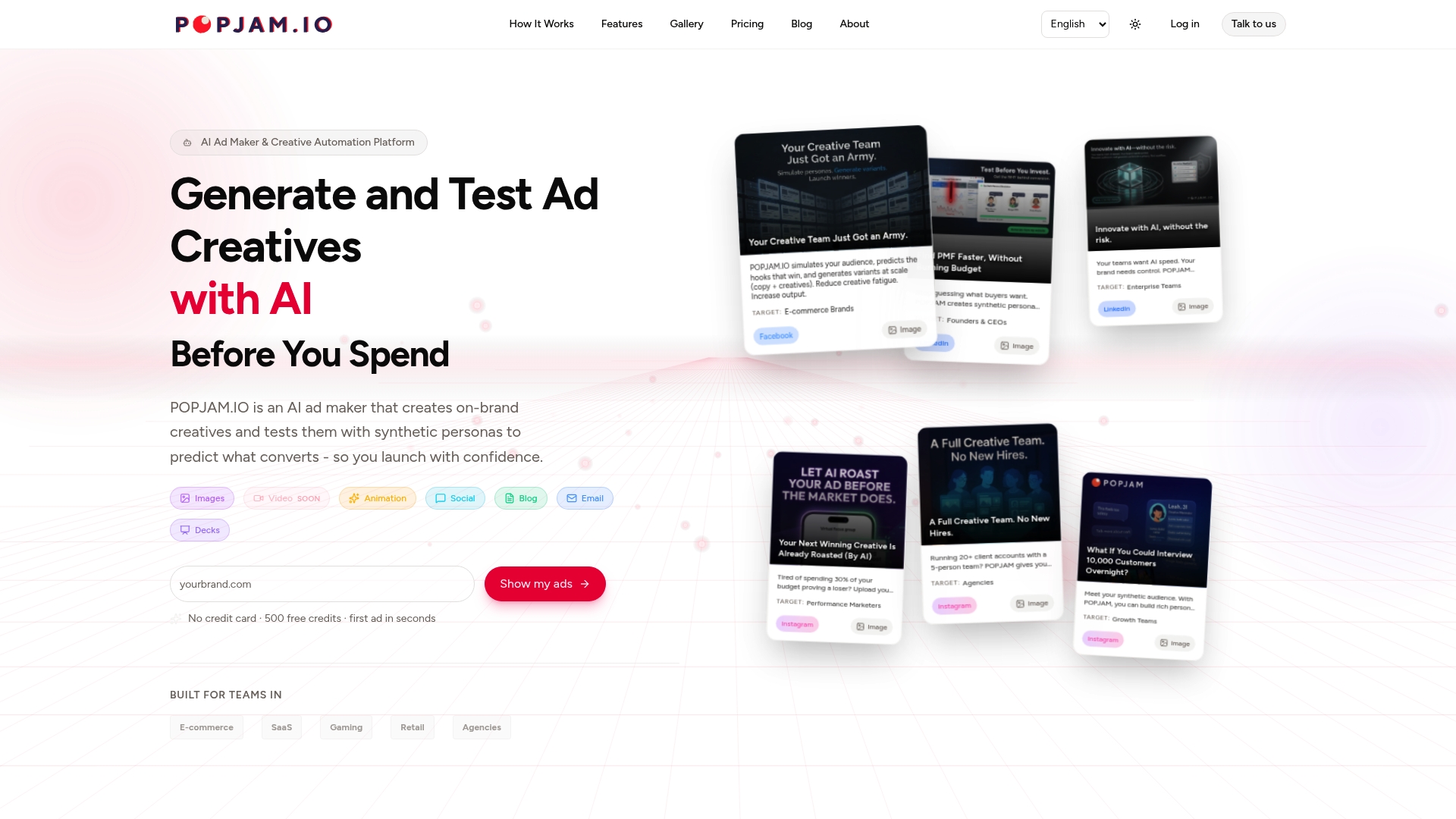
For e-commerce brands, SaaS teams, and agencies, that pre-launch validation loop changes the economics of ad creative entirely. Instead of running a live campaign to find out which variant resonates, you get psychographic feedback from simulated audience segments first. POPJAM generates on-brand ad creatives across Meta, Google, TikTok, LinkedIn, and Reddit, then gives you qualitative and quantitative data on what’s working and why. It’s the difference between heads-down creative production and actually knowing your ad will land. If you’re ready to stop burning budget on untested creatives, the POPJAM AI Ad Maker is worth a serious look.
Key Takeaways
The most effective text-to-advertising approach in 2026 combines AI-powered copy generation with pre-launch creative testing to reduce wasted ad spend and improve campaign performance.
| Point | Details |
|---|---|
| Generate multiple variants | Produce 3–4 ad copy versions per ad group so platforms can optimize toward the best performer. |
| Match copy to landing pages | Ad-to-page relevance affects quality score and bounce rate directly, not just user experience. |
| Respect character limits | Google Search headlines cap at 30 characters and descriptions at 90 characters; auto-formatting tools prevent rejection errors. |
| SMS compliance is mandatory | TCPA and CAN-SPAM require verified opt-in consent before any promotional text message is sent. |
| POPJAM adds pre-launch testing | POPJAM’s Synthetic Personas deliver psychographic feedback on creatives before live spend, reducing wasted budget. |