

Marketers: Prelaunch Incrementality Testing Ads Validated Live
Incrementality testing ads, in the pre-launch sense that matters most to performance teams today, means running your creative concepts against AI-built synthetic personas before a single dollar hits Meta, Google, or TikTok. The verdict is simple: it kills weak concepts before they burn media budget, and it works best as a fast screening layer, not a replacement for live measurement. Platforms in this category exist specifically to make that screening repeatable.
TL;DR:
- Synthetic persona pre-testing reliably predicts which creative variants will perform better across different audience segments but cannot forecast exact costs or long-term performance.
- Building accurate personas requires real customer data, including demographic, psychographic, and purchase behavior signals, and they should be regularly recalibrated to prevent bias drift.
- Conducting a small live test with your top pre-test winner is essential to validate predictions, by comparing actual click and conversion metrics against forecasted scores over multiple campaigns.
- Testing two to five variants at a time, each isolating one variable, helps identify the most resonant creative without introducing confounding factors.
- Platforms like POPJAM streamline the entire process, enabling rapid testing, ranking, and validation of creative concepts against synthetic personas within minutes.
Table of Contents
- When Should You Run a Pre-Launch Incrementality Test?
- How Do You Run a Pre-Launch Persona Test Step by Step?
- How Do You Build Personas That Predict Real Behavior?
- What Can Persona-Based Ad Testing Actually Predict?
- How Do You Validate Predictions Against Live Campaign Data?
- Why Teams Adopting Persona Pre-Testing Are Pulling Ahead
- Put This Workflow to Work With POPJAM
- Sources
- FAQ
When Should You Run a Pre-Launch Incrementality Test?
Not every campaign needs a pre-test, but some situations make skipping one a costly gamble. You should run one when you’re launching a genuinely new creative concept, entering an unfamiliar audience segment, working with a tight media budget that can’t absorb a failed launch, or testing top-of-funnel messaging where first impressions decide everything.
Before you start, you need three things ready:
- A few controlled creative variants that isolate one variable each (hook, visual, CTA, or offer)
- A precise persona brief describing the segments you’re actually targeting, not a generic buyer personas for targeted marketing success profile
- A defined target metric you want the test to predict, whether that’s click intent, message clarity, or purchase interest
You’ll know a test worked when you see a clear ranking gap between variants, a signal that repeats across subsegments rather than one lucky group, and no red flags around policy or brand risk. If the top two variants score within a point of each other, that’s not a winner. That’s a coin flip dressed up as data.
How Do You Run a Pre-Launch Persona Test Step by Step?
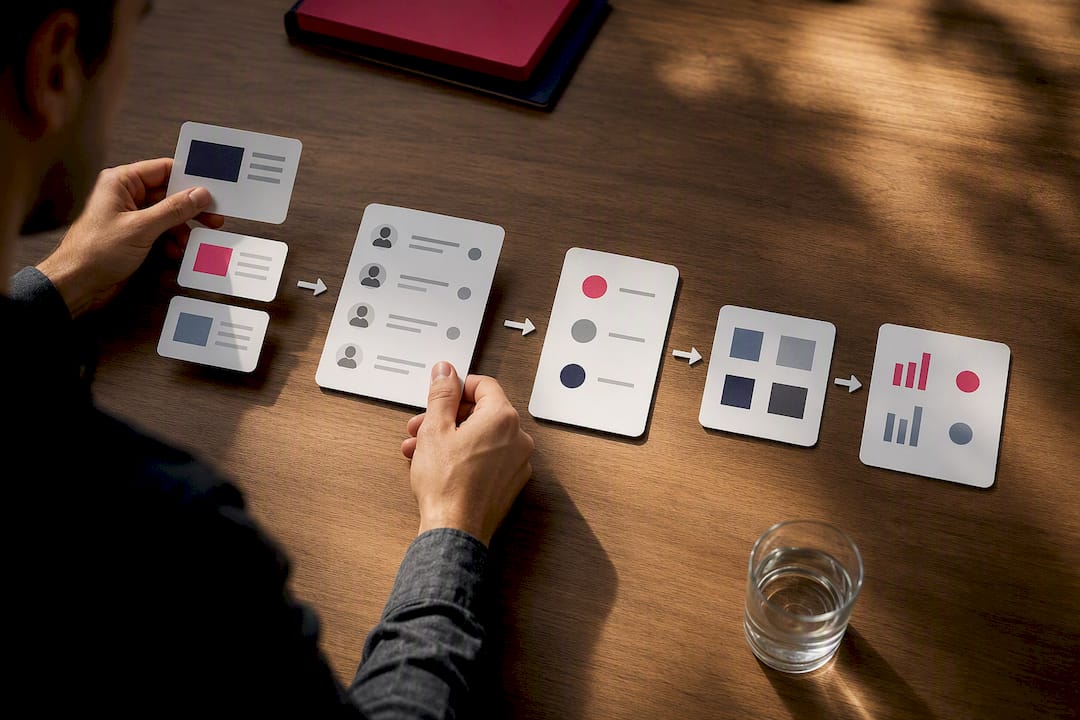
The workflow behind synthetic persona pre-testing follows five stages, and according to neuroflash’s breakdown of the process, the whole cycle can run in hours rather than the weeks a traditional focus group demands.
1. Prepare controlled variants and a hypothesis. Change one variable per test. If you swap the headline and the image at the same time, you’ll never know which one moved the needle. Write down what you expect to happen before you run anything. That prediction becomes your baseline for judging whether the test actually taught you something.
2. Build and calibrate your persona panel. Match the panel to your real campaign targeting, not a rough approximation of it. Pull in demographics, psychographic traits, purchase history patterns, and lookalike-seed characteristics that mirror the audience you’ll actually buy media against. A panel built loosely around “millennials who like fitness” will give you loose answers.
3. Run the test and collect both scores and commentary. Predicted engagement and conversion-intent numbers matter, but the qualitative responses matter more. When three personas independently flag the same confusing phrase in your copy, that’s a stronger signal than any single numeric score. Forrester’s research on synthetic personas points to exactly this kind of use case: concept testing and multi-segment comparison in a single pass.
4. Pick the top-ranked variant and document why. Don’t just record the winner. Write down the reasoning: which segment responded best, what specifically drove the gap, and what you’ll test next. Stage your runner-up variants for a second round instead of discarding them. Today’s silver medalist often becomes next month’s winner with one tweak.
5. Validate with a small live batch. Take your top pre-test performer and run it against a limited, real media spend. Compare predicted rankings to actual click-through and conversion behavior. This is the step teams skip when they’re in a hurry, and it’s the step that separates a program that improves over time from one that stalls.
Pro Tip: Run your persona panel against last quarter’s actual winning ad as a control. If the panel correctly ranks your known winner above your known losers, you can trust its read on new creative. If it doesn’t, recalibrate before you test anything else.
How Do You Build Personas That Predict Real Behavior?
Ground every persona in real data wherever you can. First-party survey responses, CRM segments, and existing customer research all make better raw material than a marketer’s best guess about “what a busy parent wants.” Map each persona field directly to the targeting signals your ad platform actually uses, so the test speaks the same language as your media buy.
A trustworthy persona profile typically includes:
- Demographic and firmographic basics: age range, income band, job title, company size where relevant
- Purchase behavior signals: past buying triggers, price sensitivity, typical research window
- Psychographic detail: values, pain points, and the specific language they use to describe their problem
- Lookalike-seed mapping: a clear link between the persona and a real audience segment your platform can target
Forrester frames synthetic personas as decision engines that speed up creative iteration, not replacements for the traditional buyer personas your team already relies on. That distinction shapes how you calibrate. Run spot checks against known internal segments to confirm the panel’s outputs track with what you already know to be true. When well calibrated against real survey data, synthetic panels have reached roughly 85 to 95 percent aggregate parity with human panels in vendor reports and internal tests, with one double-blind test citing a 95 percent correlation.
Governance matters just as much as construction. Monitor for bias drift as you add new personas, restrict who can edit panel definitions, and recalibrate on a regular cadence, quarterly at minimum, so your panels don’t quietly drift out of sync with your actual customers.
What Can Persona-Based Ad Testing Actually Predict?
Pre-tests are genuinely strong at some things and genuinely weak at others, and confusing the two is where most teams get burned.
They predict relative ranking well. If Variant A consistently outscores Variant B on attention and message clarity across multiple subsegments, that ranking tends to hold. They’re also good at surfacing message resonance gaps between segments, showing you that your value-focused hook lands with price-sensitive shoppers but falls flat with premium buyers.
What they don’t predict: exact cost-per-acquisition, live auction dynamics, long-term creative fatigue, or CPM volatility. Daily Intel’s coverage of synthetic panel testing notes that pre-testing can’t simulate the auction itself or the fatigue that sets in after thousands of repeated impressions.
Common failure modes to watch for:
- Poorly defined panels that don’t actually mirror your target audience
- Testing multiple uncontrolled variables at once, which muddies which change caused which result
- Overtrusting raw numeric scores instead of weighing them against qualitative comments and consistency across runs
Use the scores as a compass pointing toward the stronger concept, not as a spreadsheet forecast of exact performance.
How Do You Validate Predictions Against Live Campaign Data?
Closing the loop is the step that turns a pre-test tool into a genuine measurement strategy. Design your validation batch with just enough budget to generate real signal, typically enough impressions to observe meaningful click and conversion patterns within a few days.
Log predicted engagement and intent scores alongside actual CTR, CVR, and CPA once the live batch runs. Compare the two over several campaigns rather than judging on one launch, since tracking that prediction-versus-actual gap over time is what builds real trust in the method and tells you where your persona profiles need adjustment.
- Log predicted vs. actual for every validated batch, not just the wins
- Recalibrate persona fields when the gap widens on a specific segment
- Track parity as a rolling average, not a single campaign snapshot
Pro Tip: Keep a simple spreadsheet with one row per test: predicted winner, actual winner, and the gap. After ten rows, you’ll see exactly which persona traits need recalibration.
Why Teams Adopting Persona Pre-Testing Are Pulling Ahead
The teams getting the most out of this approach treat synthetic personas the way Forrester describes them: as decision engines, not oracles. They run tests fast, log everything, and stay honest about the gap between predicted and actual performance instead of treating the first score as gospel.
That discipline is rarer than it should be. Plenty of teams adopt a testing tool, get excited about the speed, and stop validating against live results within a month. The parity numbers vendors report, often in the 70 to 95 percent range according to Daily Intel’s analysis, only hold up when calibration stays disciplined. Platforms like this earn their keep by making that discipline easy to maintain rather than a separate chore bolted onto the workflow.
— Doruk
Put This Workflow to Work With POPJAM
This platform gives you a fast way to run this entire workflow without stitching together three separate tools. Generate on-brand creative variants, build a calibrated synthetic persona panel matched to your real targeting, and score every concept before it touches a live budget, all inside one platform.
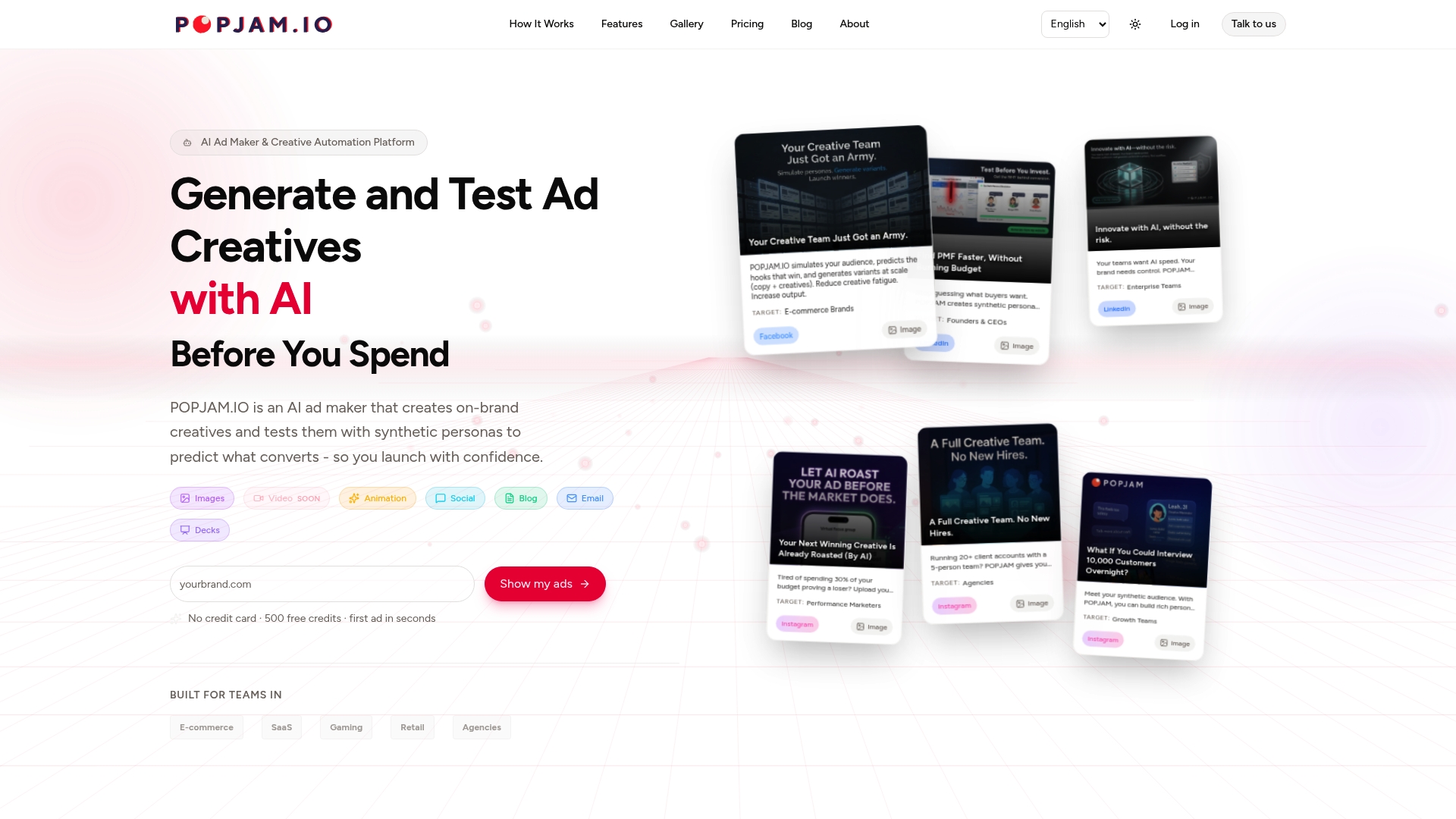
If you’ve been relying on gut instinct or waiting weeks for a focus group to tell you what a headline change actually did to resonance, this closes that gap. POPJAM’s AI Ad Maker generates and tests creatives against synthetic buyer personas in the same session, so the ranking gap you need to make a launch decision shows up in minutes, not after your media budget is already spent. Agencies managing multiple client accounts can start with the agency-focused workflow built for exactly this kind of repeatable, cross-client testing. You can start a free trial and run your next creative concept through a persona panel before it ever reaches a live audience.
Sources
For deeper detail on the research behind this workflow, see Forrester’s take on synthetic personas as decision engines, GWI’s overview of audience intelligence, and neuroflash’s guide to pre-testing ad creatives with AI panels. POPJAM’s own blog covers what synthetic personas are and how to test creatives before launch in more depth.
- Synthetic personas redefine how audience knowledge is activated across the organization
- AI Ad Pre-Testing: Synthetic Panels Before You Spend | Daily Intel Service
FAQ
What Is Incrementality Testing for Ads?
In the pre-launch sense, it means testing ad creative variants against AI-built synthetic personas before spending media budget, so you can rank concepts by predicted resonance and cut weak ones early.
How Accurate Are Synthetic Persona Predictions?
Well-calibrated panels have reached roughly 85 to 95 percent aggregate parity with human panels in vendor reports and internal tests, though accuracy depends heavily on how closely the panel mirrors your real audience.
Can Synthetic Personas Predict Exact CPA or CPM?
No. Pre-tests are strong at ranking creative variants by attention and clarity but cannot simulate auction dynamics, CPM volatility, or long-term fatigue.
How Many Creative Variants Should I Test at Once?
Two to five variants per test works best, with each variant isolating a single changed element like the hook, visual, or call to action.
How Do I Validate a Pre-Test Prediction?
Run your top-ranked variant against a small live media batch, then compare predicted engagement scores to actual CTR and CVR to measure the prediction-versus-actual gap over several campaigns.