

Marketing Automation Systems: A 2026 Guide for Marketers
Marketing automation systems are software platforms that automate, personalize, and coordinate marketing campaigns across multiple channels from a single interface. The industry term is “marketing automation platform,” and it covers everything from email sequences to AI-driven customer journey management. These platforms unify behavioral, transactional, and identity data to trigger the right message at the right moment. Done well, they replace manual campaign work with real-time decisioning that scales without adding headcount.
What are marketing automation systems and how do they work?
Marketing automation systems are defined by three core functions: data unification, campaign execution, and performance measurement. They pull customer data from multiple sources, build unified profiles, and use those profiles to trigger personalized messages across channels. The result is a single platform that replaces a stack of disconnected point solutions.
The market splits into two clear tiers. Entry-level platforms focus on basic email automation and list segmentation, which works well for small businesses with straightforward needs. Enterprise-grade platforms integrate diverse data sources into real-time customer profiles and support complex, multi-channel journeys. Choosing the wrong tier is one of the most common and costly mistakes marketing teams make.
At the core of any effective system is a Customer Data Platform, or CDP. A CDP collects behavioral signals, purchase history, and identity data, then makes that data available for real-time campaign decisions. Without a CDP layer, personalization stays shallow and campaigns default to batch-and-blast logic.

Pro Tip: Before evaluating any platform, map every data source your team uses. CRM records, web analytics, and e-commerce transactions all need to feed the system cleanly. Platforms that cannot ingest your existing data will create new silos, not eliminate them.
How does agentic AI change marketing automation?
Agentic AI is the biggest shift in marketing automation software in the past three years. Agentic AI platforms autonomously execute multi-step tasks, analyze performance, and recommend optimizations without manual intervention. That means a campaign that once required a marketer to monitor, adjust, and relaunch can now run and self-correct in real time.
The practical benefits are significant:
- Predictive lead scoring ranks contacts by purchase likelihood, so sales teams focus on the highest-value prospects.
- AI-driven content generation produces subject lines, copy variants, and send-time recommendations at scale.
- Autonomous journey triggers respond to buyer intent signals and activate cross-channel sequences without human input.
- Performance optimization reallocates budget and messaging weight based on live engagement data.
Agentic AI platforms analyze buyer intent signals and trigger cross-channel journeys autonomously, enabling personalized, non-linear marketing in real time. That capability closes the gap between what a customer does and what they receive next, often within seconds.
The catch? Agentic AI needs guardrails. Frequency caps and brand rules prevent off-brand messaging and subscriber fatigue. Without them, an autonomous system can over-message a segment, erode trust, and damage deliverability. Human oversight is not optional. It is the difference between AI that builds relationships and AI that burns them.
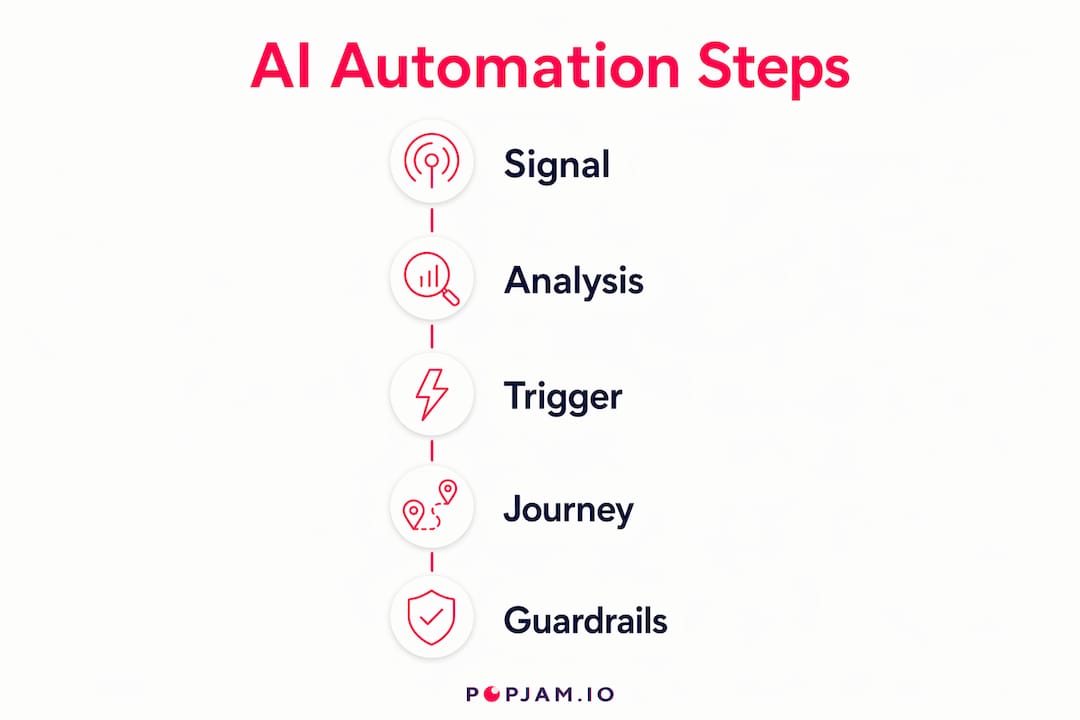
Pro Tip: Set hard frequency caps before you activate any agentic workflow. Define your brand voice rules in writing and load them into the platform as constraints. Treat these guardrails the same way you treat a budget cap: non-negotiable.
What channels and features do top marketing automation platforms unify?
The best marketing automation tools centralize every customer-facing channel in one place. Unified data orchestration across email, SMS, push notifications, in-app messaging, and paid media is the foundation of effective real-time personalization. When channels operate in separate systems, customers receive contradictory messages and teams waste time reconciling data.
The table below shows how channel coverage typically differs across platform tiers:
| Feature | Entry-level platforms | Enterprise platforms |
|---|---|---|
| Email automation | Yes | Yes |
| SMS and push notifications | Limited | Full |
| In-app and paid media sync | Rarely | Yes |
| Real-time CDP integration | No | Yes |
| AI-driven journey triggers | No | Yes |
| Behavioral segmentation | Basic | Advanced |
The integrated CDP is what separates a true marketing automation platform from a glorified email tool. It collects behavioral audience data from every touchpoint and makes it available for campaign decisions in milliseconds. That speed matters because customer intent signals decay fast. A cart abandonment trigger that fires six hours late is far less effective than one that fires in six minutes.
Paid media sync is the most underused feature in enterprise platforms. When your automation system shares audience segments directly with Meta or Google, you can suppress recent purchasers from acquisition ads and retarget lapsed customers without manual audience uploads. That alone reduces wasted ad spend significantly.
Pro Tip: Audit your current channel stack and identify every place customer data lives. The goal is to eliminate any channel that cannot feed data back into your central platform. One-way data flows are a sign of a broken architecture.
How to implement marketing automation systems successfully
Implementation is where most teams underestimate the work. Full integration typically takes 3–6 months, including staff training and workflow optimization. Teams that expect a plug-and-play experience often end up with an expensive system that nobody uses correctly.
Follow these phases to get it right:
- Data hygiene first. Teams spend 30–50% of initial setup time on data preparation. Clean your CRM, deduplicate contacts, and standardize field formats before connecting any platform. Dirty data fed into automation produces automated spam, not personalization.
- Map your tech stack. Identify every tool that needs to integrate with the platform. CRM, e-commerce, analytics, and ad platforms all need defined data flows. Document what data moves where and how often it syncs.
- Assign a dedicated platform owner. Lack of dedicated platform ownership leads directly to underutilization. This person owns the integration, trains the team, and governs data quality on an ongoing basis.
- Build workflows in phases. Start with high-impact, low-complexity journeys: welcome series, cart abandonment, and win-back campaigns. Prove ROI before building complex multi-branch sequences.
- Train the full team. Marketing, sales, and customer success all interact with the platform. Siloed training produces siloed usage. Run cross-functional sessions so every team understands how data flows and what triggers what.
The AI-powered CRM automation examples that deliver the strongest results share one trait: a single owner who treats the platform as a product, not a tool. That person iterates, tests, and improves workflows continuously rather than setting them up once and walking away.
Pro Tip: Build a simple data dictionary before go-live. List every field your platform uses, where it comes from, and what it triggers. This document saves hours of debugging when something breaks and is the first thing a new team member should read.
How do marketing automation systems drive efficiency and boost campaign results?
The business case for marketing automation is direct. Personalized automation across email, SMS, and push can increase revenue by up to 20% through optimized send times and tailored customer journeys. That number reflects what happens when the right message reaches the right person at the right moment, at scale.
The efficiency gains show up in several ways:
- Cart abandonment sequences recover revenue that would otherwise be lost, with no manual effort after initial setup.
- Win-back campaigns re-engage lapsed customers using behavioral signals to time outreach precisely.
- Lead nurturing workflows move prospects through the funnel with content matched to their stage and intent.
- AI SDR agents nurture leads 24/7, unifying data and automating pipeline progression without sales team involvement.
Marketing automation as a data orchestration layer reduces the latency and operational friction of managing separate systems. When campaign execution and customer data live in the same platform, teams spend less time on manual data pulls and more time on strategy. That shift is where the real productivity gain comes from.
Real-time decisioning is the feature that separates modern platforms from legacy tools. Static campaigns send the same message to everyone on a schedule. Real-time systems respond to what a customer just did, whether that is viewing a product page, abandoning a checkout, or opening a competitor’s email. Dynamic, intent-driven journeys that respond to live behavior signals consistently outperform static, linear campaigns.
Key Takeaways
Marketing automation systems deliver the strongest ROI when they function as a unified data and campaign layer, not just an email scheduling tool.
| Point | Details |
|---|---|
| Data hygiene is foundational | Clean, unified customer data is required before any automation produces reliable personalization. |
| Agentic AI needs guardrails | Frequency caps and brand rules prevent AI from over-messaging or drifting off-brand. |
| Implementation takes 3–6 months | Assign a dedicated platform owner and train all teams to avoid underutilization. |
| Channel unification drives results | Connecting email, SMS, push, and paid media in one system enables real-time, cross-channel personalization. |
| Revenue uplift is measurable | Personalized automation can increase revenue by up to 20% through optimized journeys and send times. |
Why I think most teams are using automation wrong
Here is the uncomfortable truth I keep running into: most marketing teams treat their automation platform like a fancier email tool. They build a welcome series, set up a cart abandonment flow, and call it done. The platform sits at 20% of its potential while the team wonders why ROI is flat.
The teams that actually win with automation treat it as their core data orchestration layer. Every customer signal, from a product page view to a support ticket, feeds back into the platform and shapes what that customer receives next. That is a fundamentally different mental model. It requires investment in data quality, platform ownership, and a willingness to design AI-driven customer journeys that respond to intent rather than follow a script.
I am also cautious about the agentic AI hype. The capability is real and the efficiency gains are genuine. But I have seen teams hand over full campaign control to AI agents without defining brand rules or frequency limits, and the results were predictably bad. Subscriber fatigue, deliverability drops, and off-brand messaging that took months to recover from. AI is a force multiplier, not a replacement for strategic thinking.
The teams I respect most invest as much in data quality and platform governance as they do in the platform itself. They know that real marketing ROI comes from clean data, clear ownership, and continuous iteration. Not from buying the most expensive platform and hoping it figures things out.
— Doruk
POPJAM takes your automation strategy further
Your marketing automation system handles the when and who. POPJAM handles the what. Once your journeys are live, the creative you put in front of customers determines whether they convert or scroll past.
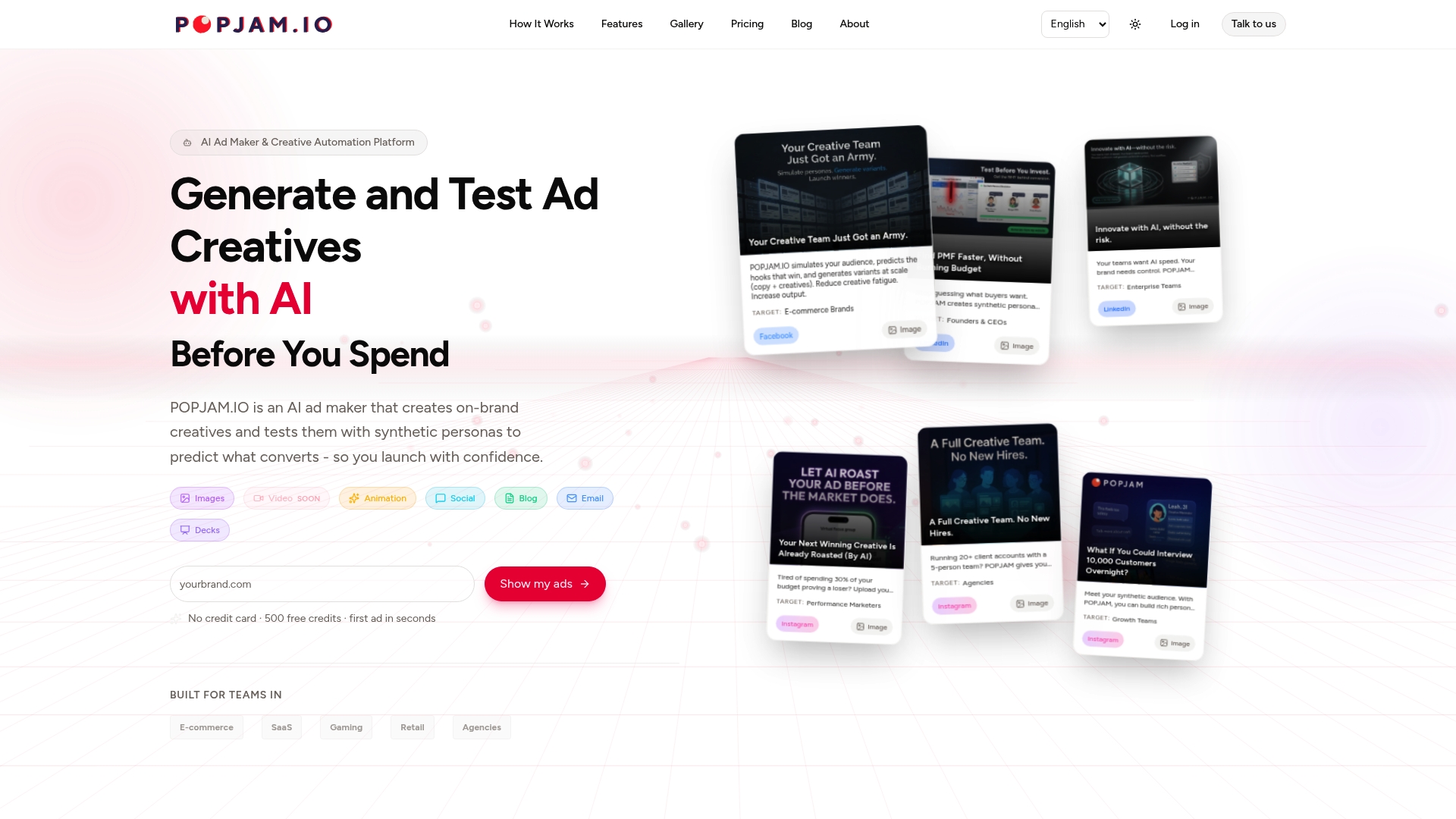
POPJAM’s AI ad generator builds on-brand ad creatives and tests them against Synthetic Personas before a single dollar of budget goes live. You get psychographic feedback on what resonates with your target segments, so you enter every campaign with evidence, not assumptions. For e-commerce brands, SaaS teams, and agencies running paid media alongside their automation workflows, POPJAM closes the loop between audience data and creative performance. Try it free at POPJAM.IO.
FAQ
What is a marketing automation system?
A marketing automation system is a software platform that automates campaign execution, unifies customer data, and personalizes messaging across channels like email, SMS, and push notifications. It replaces manual marketing tasks with real-time, data-driven workflows.
How long does it take to implement marketing automation software?
Full implementation typically takes 3–6 months, covering data integration, staff training, and workflow optimization. Teams that skip data hygiene or lack a dedicated platform owner consistently see longer timelines and weaker results.
What is the difference between a CDP and a marketing automation platform?
A Customer Data Platform collects and unifies customer data from all sources into a single profile. A marketing automation platform uses that data to execute campaigns. Many enterprise platforms now include CDP functionality natively.
What are the benefits of marketing automation for small businesses?
Marketing automation for small business primarily saves time by replacing manual email sends and follow-ups with triggered workflows. Entry-level platforms offer basic segmentation and email automation that can meaningfully improve lead nurturing without requiring a large team.
How does integrating CRM with marketing automation improve results?
Integrating CRM with marketing automation eliminates handoff friction between sales and marketing by sharing lead data, behavioral signals, and pipeline status in real time. That alignment means leads receive relevant content at every stage without manual coordination between teams.