

The Facebook Ad Testing Recipe That Actually Produces Winners
The most reliable facebook ad testing recipe is this: isolate one variable, run it through Meta Experiments or the Creative Testing feature so traffic never overlaps, and hold off on declaring a winner until you hit your budget and sample-size benchmarks. Skip any one of those three, and your “winning” ad is often just noise wearing a green checkmark.
Here’s what that looks like in practice, before we get into the why:
- Split traffic properly. Meta Experiments or Creative Testing keeps each variant’s audience separate, so one ad isn’t quietly siphoning delivery from another.
- Change one thing at a time. Test concept, format, or audience persona before you bother with headline or CTA tweaks. Those move the needle far less.
- Fund it right. Budget roughly $20 or more per day per variant, and let the test run at least 7 days or until you’ve collected around 25 conversions per variant, whichever comes later.
- Keep testing a habit, not an event. Split spend roughly 80/20 between proven winners and new tests, continuously, not in one-off bursts.
Key Takeaways
Reliable Facebook ad testing depends on isolating one variable, meeting per-variant budget and conversion thresholds, and filtering weak concepts before they ever reach live spend.
| Point | Details |
|---|---|
| Isolate one variable | Test concept, format, or audience separately, never together, to keep results readable. |
| Fund tests properly | Budget $20 or more per day per variant and run at least 7 days or 25 conversions per variant. |
| Use the right Meta tool | Choose Experiments for high-stakes decisions and Creative Testing for faster concept comparisons. |
| Expect a realistic hit rate | Plan for roughly 5 to 7 percent of tested ads to become genuine winners. |
| Pre-filter with POPJAM | POPJAM’s synthetic persona testing screens weak concepts before they consume live test budget. |
Table of Contents
- What Is Facebook Ad Testing and Why Rigor Matters
- Pre-Launch Checklist for a Valid Ad Experiment
- A/B Experiments, Creative Testing, or a Directional Test?
- Which Variable Should You Test First?
- How to Set Up a Clean Test in Ads Manager
- How Much Should You Budget Per Test?
- Reading the Data: Confidence Scores and the Three Ways Tests Fail
- How Often Should You Test, and When Do You Scale?
- Where AI Pre-Testing Fits Before You Spend a Dollar Live
- Why Most Testing Advice Undersells the Filtering Problem
- Test Smarter Before You Spend a Dollar Live
- Sources
- FAQ
What Is Facebook Ad Testing and Why Rigor Matters
Facebook ad testing is the practice of running controlled comparisons between ad variants (creative, copy, audience, or placement) to find which version drives the best results before you scale spend behind it. That sounds obvious. It’s also where most advertisers quietly waste thousands of dollars, because “testing” without structure just means running two ads and eyeballing which one feels better.
Real ad testing, the kind that produces repeatable winners instead of lucky flukes, borrows its logic from clinical trial design: one variable, one control, enough sample size to trust the result. Facebook gives you the tools to do this correctly through Meta’s A/B Testing feature, which splits your audience so variants don’t compete with each other for the same eyeballs. Skip that structure and you’re not testing, you’re guessing with extra steps.

Pre-Launch Checklist for a Valid Ad Experiment
Before you hit publish on any test, run through this sequence. It takes ten minutes and it saves you from the single most common mistake in Facebook ad testing: launching something you can’t actually learn from.
- Pick one north-star metric and one variable. Decide up front whether you’re optimizing for CTR, cost per lead, or ROAS, and choose the single element you’re changing (creative, audience, or landing page). Never both.
- Choose your testing mode. Meta Experiments for a definitive answer, Creative Testing for faster ad-level comparisons, or a directional test if traffic is thin.
- Set your budget and minimum run time. Plan for at least $20 per day per variant and a 7-day minimum before you look at results.
- Decide how you’ll record and act on the data. Know in advance what confidence level or conversion count will trigger a scale decision, so you’re not making that call emotionally on day three.
A/B Experiments, Creative Testing, or a Directional Test?
Meta gives you three real options, and picking the wrong one is how a lot of “inconclusive” tests happen.
Meta Experiments A/B Test is the most rigorous of the three. It randomly splits your audience so each variant gets a clean, non-overlapping slice of traffic, which means the difference in results actually reflects the difference between your ads rather than an algorithm favoring one ad set over another. This is the mode to use for high-stakes decisions, like choosing a hero creative before a major seasonal push because Meta reports a confidence score you can act on.
The Creative Testing feature works at the ad level rather than the campaign level, which makes it faster to set up when you just want to compare a handful of creative concepts. The tradeoff: it requires a daily budget (not lifetime) and certain bid strategy constraints, and it intentionally prevents the kind of ad-level auto-optimization that would otherwise starve your slower-starting variants of delivery before they’ve had a fair shot.
Directional testing means running variants side by side without formal Experiments tooling, usually because your account doesn’t have enough volume to justify a full structured test. It’s acceptable when speed matters more than precision, but expect more noise in the results. You’re reading tea leaves, not lab data, so weight any “winner” here with appropriate skepticism until it proves itself with real spend.
- Use Experiments when the decision is expensive or permanent.
- Use Creative Testing when you’re comparing several creative concepts quickly.
- Use directional testing only when your account can’t yet support a proper split, and treat the result as a hypothesis, not a verdict.
Which Variable Should You Test First?
Not all variables are created equal, and testing the wrong one first is how advertisers burn a testing budget without learning anything useful.
Creative concept and offer changes move performance more than anything else you can touch. Swapping the visual asset, the core hook, or the offer itself (a discount versus free shipping, for instance) tends to produce the biggest swings in results, which is why creative is consistently identified as the highest-leverage variable to test before anything else. Format and audience persona come next: video versus static, or a broad audience versus a tightly defined lookalike, both shift outcomes meaningfully.
Hook and copy changes matter, but they typically produce smaller, incremental lifts rather than dramatic swings. A punchier headline might squeeze out a few extra points of CTR. It rarely turns a losing ad into a winning one. Landing page match deserves its own slot on your priority list too. An ad that promises one thing and lands somewhere that doesn’t deliver on it will underperform no matter how good the creative is, so treat page relevance as a testable variable in its own right, not an afterthought.
- Concept and offer: highest impact, test first.
- Format and persona: second priority, meaningful but more incremental.
- Hook and copy: smaller lifts, useful for refinement once the concept wins.
- Landing page match: often overlooked, frequently the reason a “winning” ad underperforms downstream.
Pro Tip: If you only have budget for one test this month, test two completely different creative concepts against each other, not two versions of the same ad with a different headline. You’ll learn far more, far faster.
How to Set Up a Clean Test in Ads Manager
Getting the setup right is what separates a test you can trust from one you’ll have to throw out. Follow this sequence every time:
- Define your metric and your single variable. Write it down before you touch Ads Manager. If you can’t state “I’m testing X while holding everything else constant” in one sentence, you’re not ready to launch.
- Duplicate the ad set or campaign as required by your chosen tool. Experiments will often prompt you through this; Creative Testing works within an existing structure but at the ad level.
- Keep targeting, placement, and budget structure identical across variants. The only thing that should differ is the variable you’re testing. Any other difference contaminates your read.
- Configure your testing mode’s specific settings. For Creative Testing, that means setting a daily budget and confirming your bid strategy meets the tool’s requirements before you launch.
- Launch and then leave it alone. Do not pause a variant, swap a headline, or nudge the budget mid-test. Every edit resets the clock on what you’re actually measuring.
- Let the test run its full designated window. Resist the urge to check results daily and act on day-two noise.
- Pull the raw metrics once the window closes. Record cost per result, conversion count, and confidence score for every variant before you make a call.
The internal discipline here matters more than the tool itself; for marketers looking to optimize spend, stop wasting ad spend with precision targeting and intent data to enhance campaign results. A perfectly configured Experiment ruined by a mid-test edit on day four is worse than a simpler directional test left completely alone, because at least the directional test gives you a clean, if noisier, read.
How Much Should You Budget Per Test?
Underfunding a test is the fastest way to generate a false winner. If a variant hasn’t spent enough or gathered enough conversions, its early lead is just as likely to be random variance as a real signal.
Start with roughly $20 or more per day per variant as a baseline for most small and mid-sized accounts, and aim for around 25 conversions per variant before you trust the comparison. If your funnel doesn’t produce that much conversion volume in a reasonable window, target roughly 50 optimized events per week per variant instead, which keeps Meta’s delivery system out of the exploratory phase where results swing wildly.
| Account Situation | Budget Guidance | Target Signal |
|---|---|---|
| Low-volume or new account | $20+/day per variant | 25+ conversions per variant, or 50+ optimized events/week |
| Established account, clear CPA target | Scale budget to hit CPA target within test window | 25+ conversions per variant minimum |
| Low conversion volume overall | Same per-variant budget | Shift to higher-funnel metrics like CTR or landing page views |
| Ongoing testing program | 20% of total ad spend | Continuous flow of 25+ conversions per active test |
When conversion volume genuinely can’t support this pace, shift your measurement to a higher-funnel metric such as click-through rate or landing page views. You lose some precision, but you still get a directional read without burning weeks of budget waiting for conversions that never arrive in volume.
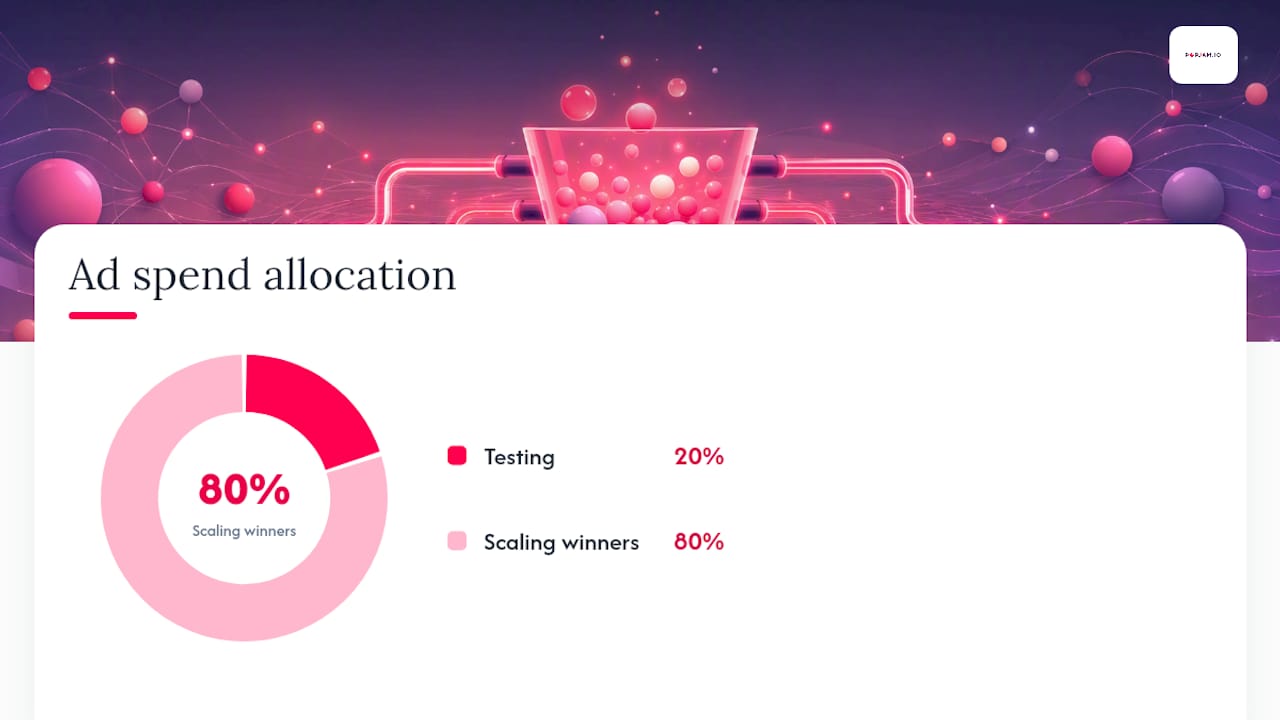
The 20/80 rule: allocate roughly 20 percent of total ad spend to active testing and 80 percent to scaling proven winners. This keeps your pipeline of new concepts alive without starving the campaigns already making you money.
Reading the Data: Confidence Scores and the Three Ways Tests Fail
Meta’s Experiments tool reports a confidence score for A/B tests, and knowing how to read that number is where a lot of advertisers trip up. Many practitioners treat roughly 65 percent confidence as a directional threshold worth acting on for lower-stakes decisions, but a permanent creative direction or a major budget shift deserves a materially higher bar before you commit real money to it.
Three failure modes explain almost every “my test didn’t work” complaint:
- Underpowered tests. Too little budget or too short a runtime means the sample size never reaches a point where the result is trustworthy. Fix it by extending the window or increasing daily spend per variant.
- Contaminated tests. Changing more than one variable, or editing a live variant mid-test, muddies the comparison so you can’t attribute the result to anything specific. This is exactly why Meta’s Experiments tooling exists: it forces the kind of structural discipline that ad-hoc testing rarely maintains on its own.
- Premature calls. Declaring a winner on day two because one ad is “clearly ahead” almost always backfires once the full sample comes in. Early leads regress toward the mean far more often than marketers expect.
Most tests that “fail” were never actually underpowered by Facebook’s algorithm. They were underpowered by the marketer who pulled the plug three days early because one variant had a good morning.
If your test comes back inconclusive, the fix usually isn’t a new hypothesis. It’s more budget, more time, or a cleaner setup on the same one.
How Often Should You Test, and When Do You Scale?
A testing program that works isn’t a campaign you launch once a quarter. It’s a weekly habit. Active advertisers running real testing programs typically push through 5 to 10 new creative concepts per week, each with 2 to 3 variants, adjusted down for smaller accounts with tighter budgets.
Set your expectations honestly here: across audited accounts, roughly 5 to 7 percent of tested ads become genuine winners, which works out to about one winner for every 15 to 20 ads you put through the process. That’s not a discouraging number. It’s the actual cost of finding the ads that will carry your account for the next few months.
- Keep the 80/20 spend split: 80 percent to proven winners, 20 percent to active testing, adjusted by account size and risk tolerance.
- Watch frequency and ROAS on your winners. When frequency climbs and ROAS starts sliding, that’s creative fatigue setting in, and it’s your cue to rotate in a fresh concept from the testing pipeline.
- Treat testing as insurance against fatigue, not just a search for a single silver bullet. Even a proven winner has a shelf life.
Where AI Pre-Testing Fits Before You Spend a Dollar Live
Every failure mode above gets worse when you’re testing weak concepts to begin with. If half your test batch was never going to work, you’re spending real budget just to confirm what a sharper filter could have told you for free.
That’s the gap Popjam was built to close. It generates on-brand ad creative and then runs those concepts against synthetic buyer personas before anything touches live spend, producing psychographic feedback on which angles, hooks, and formats are likely to resonate with a given segment. The practical workflow looks like this: generate a batch of concepts, run them through synthetic persona testing to cut the weakest candidates, then validate your shortlist in Meta Experiments with real budget. Pre-testing with simulated personas narrows the field before you ever pay for an impression, which means the 5 to 10 concepts you push live each week are already the strongest of a larger pool, not a random draw.
Pro Tip: Run your synthetic persona tests on concept and hook variations specifically. That’s the layer where AI feedback tends to be most predictive, before you ever get to the smaller copy tweaks Meta’s live testing handles well on its own.
Why Most Testing Advice Undersells the Filtering Problem
Most facebook ad testing guides treat every test as equally worth running, as if the only variable that matters is how rigorously you set up the split. That’s incomplete. The bigger cost center in most accounts isn’t sloppy test setup, it’s the sheer number of weak concepts that get full budget and a full week just to confirm they never had a chance.
A 5 to 7 percent hit rate is the honest cost of testing real ideas against a real market. But that number assumes every tested ad had a legitimate shot. In practice, a chunk of most testing batches are concepts that anyone with a clear read on the target buyer could have flagged as unlikely before spending a dollar. That’s not a Meta problem. It’s a filtering problem, and it’s the one conventional testing advice mostly ignores because there hasn’t historically been a good way to solve it before launch.
This is where I think the industry’s testing playbook needs an update, not a replacement. Meta Experiments and Creative Testing remain the correct tools for validating what actually works with real audiences. Nothing simulates real human purchase behavior perfectly. But pairing that live rigor with a pre-launch filter, something that stress-tests concepts against a range of buyer psychographics before they burn budget, is the difference between a 5 percent hit rate and something meaningfully higher. Prioritize the filter first. Then let Meta’s tools do what they’re actually good at: confirming the winner with real money on the line.
Test Smarter Before You Spend a Dollar Live
POPJAM gives you the one thing Meta’s native testing tools can’t: a way to know which concepts are worth spending on before any budget goes live. Instead of burning a full week and $20-plus per day per variant to confirm a concept was weak all along, you generate on-brand creative and run it against synthetic buyer personas first, cutting the losing angles before they ever reach a real audience.
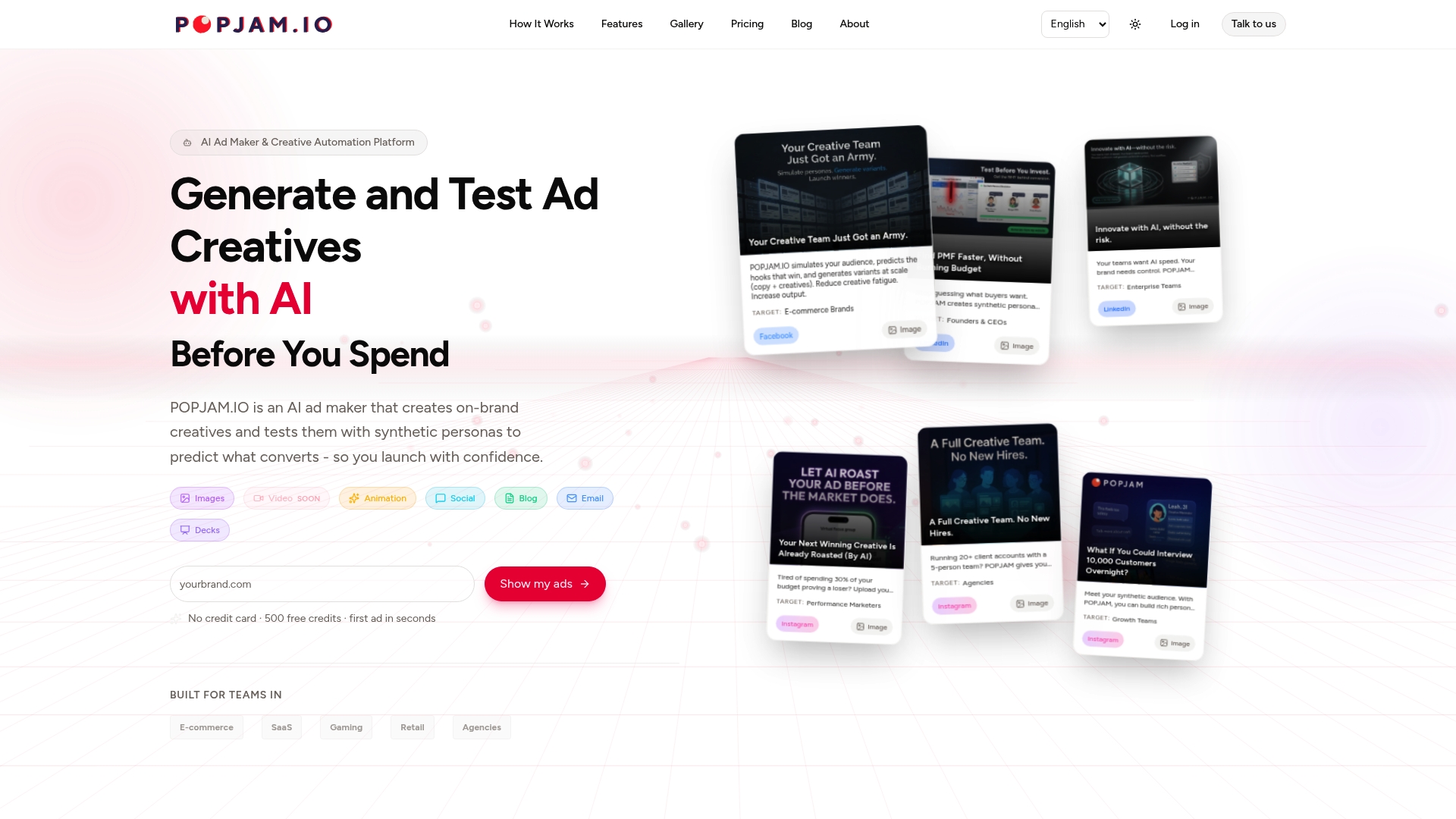
That pre-filter changes the math on everything covered above. Fewer live tests wasted on concepts that never had a shot means your 20 percent testing budget stretches further and your winner-to-tested-ad ratio climbs closer to the top end of that 5 to 7 percent range instead of the bottom. If you’re running the kind of continuous testing cadence this article recommends, that efficiency compounds every single week.
Start by exploring the AI ad maker to see how creative generation and pre-launch testing work together, or check out the platform’s best AI ad creative tools breakdown if you’re still comparing options before committing your testing budget.
Sources
- Optimize your ad campaigns with A/B Testing.
- Facebook Ad Creative Testing: A Step-by-Step Guide | AdAdvisor
- Facebook Ads Creative Testing: Variants, Budget, Hit Rate - Opascope
FAQ
Is $10 a Day Enough for Facebook Ad Testing?
Ten dollars a day per variant usually isn’t enough to gather a reliable signal within a reasonable window. Practitioner benchmarks point to $20 or more per day per variant as a more realistic starting point for reaching 25 conversions in a 7-day test.
Is A/B Testing Worth It on Facebook?
Yes, when it’s set up correctly with one isolated variable and enough budget to hit meaningful sample size. Meta’s own A/B Testing tool exists specifically to prevent the delivery overlap that makes informal comparisons unreliable.
How Much Do Facebook Ads Cost Per 1,000 Views?
Cost per impression varies widely by industry, audience, and season, and no single figure applies across accounts. Budget planning for testing should focus on per-variant daily spend and conversion thresholds rather than a fixed CPM target.
Are Facebook Ads Worth It in 2026?
Facebook ads remain worth running for most e-commerce and service businesses, provided testing is structured rather than ad-hoc. Accounts that test methodically and expect a 5 to 7 percent winner hit rate tend to scale more efficiently than those relying on guesswork.
How Can I Reduce Wasted Spend on Weak Ad Concepts?
Screening concepts before they go live, using tools like POPJAM’s synthetic persona testing, cuts down on the number of low-potential variants that consume live test budget. That leaves your Meta Experiments budget focused on concepts with a genuine shot at winning.