

Top 6 Best AI Ad Generator Alternatives 2026
Producing large volumes of high-quality ad creatives quickly eats up time and budget for marketing teams and agencies. Many ad generator tools either lock advanced features behind pricey plans, limit team collaboration, or require tedious manual setup to get effective results. This comparison explains pricing, workflow automation, and collaboration features for six AI ad generator alternatives so marketing teams and agencies can choose the right fit for their creative workflow.
Table of Contents
POPJAM.IO
At a Glance
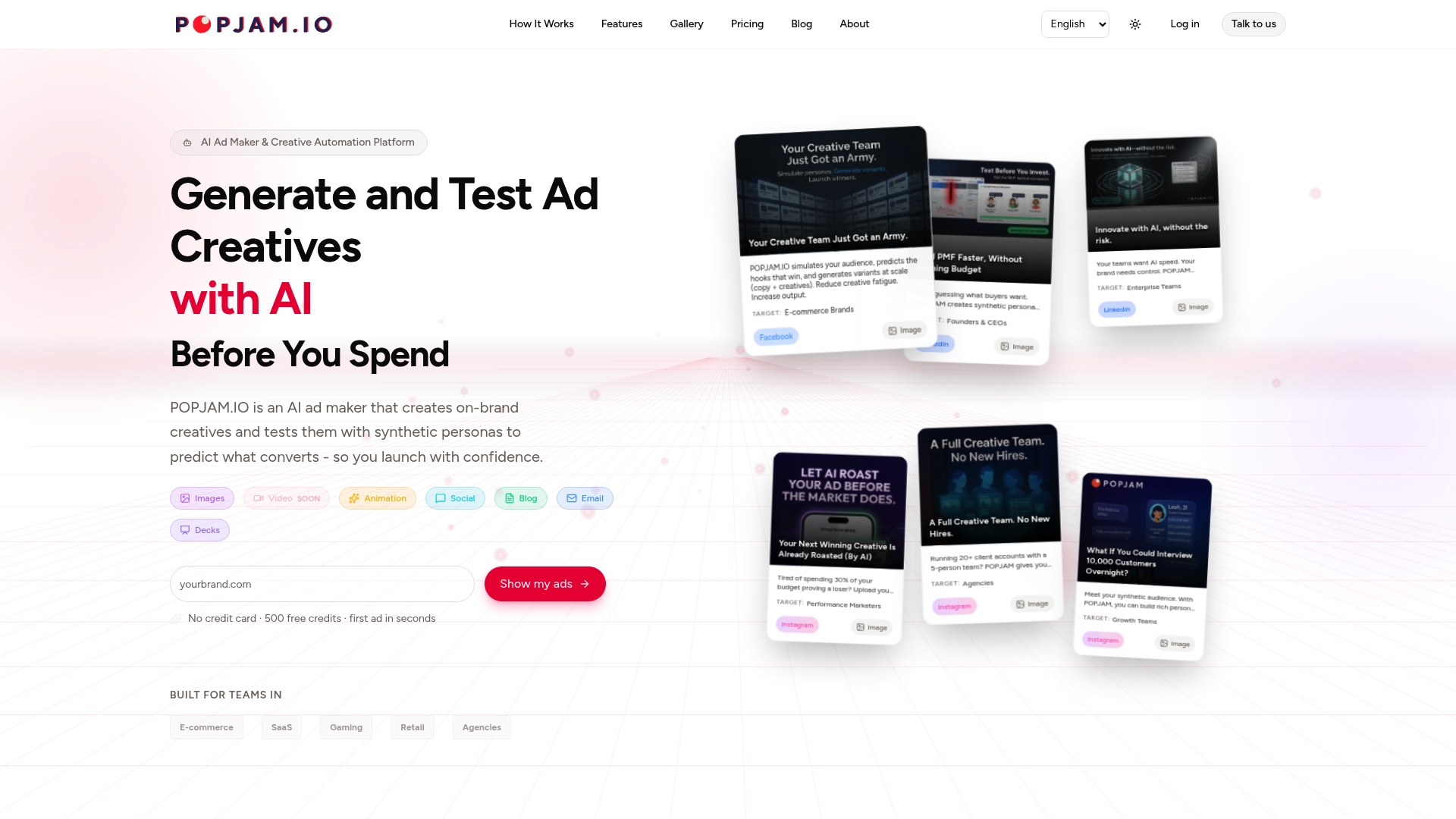
Pre launch validation uses synthetic buyer personas to simulate audience reactions before you spend ad budget. POPJAM generates creatives across images, video, animations, decks, social posts, and emails with built in editing tools. That lets teams test multiple creative angles and pick validated assets before campaign launch.
Core Features
AI models generate ad variants tailored to segments and output platform native files for Meta, Google, TikTok, LinkedIn, and Reddit. The system creates synthetic personas from automated research and runs simulated surveys and A/B tests for pre launch validation. Users export validated ads directly to ad accounts and continue edits in the platform.
Key Differentiator
Its synthetic audience simulation validates creatives before spend, which reduces creative fatigue and lowers wasted ad budget. Simulations produce psychographic feedback so teams can refine messaging and visual composition without live tests. That targeted simulation is the primary mechanism that separates validation from guesswork.
Pros
Pre launch testing with synthetic persona simulation cuts wasted spend by letting you eliminate poor concepts before they run. The platform delivers platform native outputs across images, video, animations, decks, social posts, and email, which simplifies publisher uploads. Teams get automatic creative variations, collaborative workflows for agencies, and a GDPR compliant setup that avoids using real customer data.
Cons
- Validation accuracy may vary depending on input data and simulation models.
Who It’s For
Marketing teams, creative agencies, startup founders, and performance marketers will get the most value from POPJAM.IO. It fits e-commerce brands and SaaS companies that test many ad concepts and need faster creative QA. Agencies managing multiple clients gain collaborative workflows and exportable, platform native assets.
Unique Value Proposition
Direct export of validated creatives to Meta, Google, TikTok, LinkedIn, and Reddit removes a manual handoff step. When your team picks winners inside POPJAM.IO, the assets move to publisher formats without rework. That shortens launch prep and preserves the psychographic learnings captured during simulation.
Real World Use Case
A digital marketing agency generated dozens of ad variants for a retail client and ran persona simulations to rank concepts. They chose the top creatives and exported them to channels for launch. Campaign setup time fell and the team avoided spending on low performing concepts.
Pricing
Pricing starts at €99/month for the Essential plan and moves to €399/month for the Business plan. Enterprise customers receive custom quotes and additional credits are available for purchase. Purchased credits expire after 1 year.
Website: https://popjam.io
Mintly
At a Glance
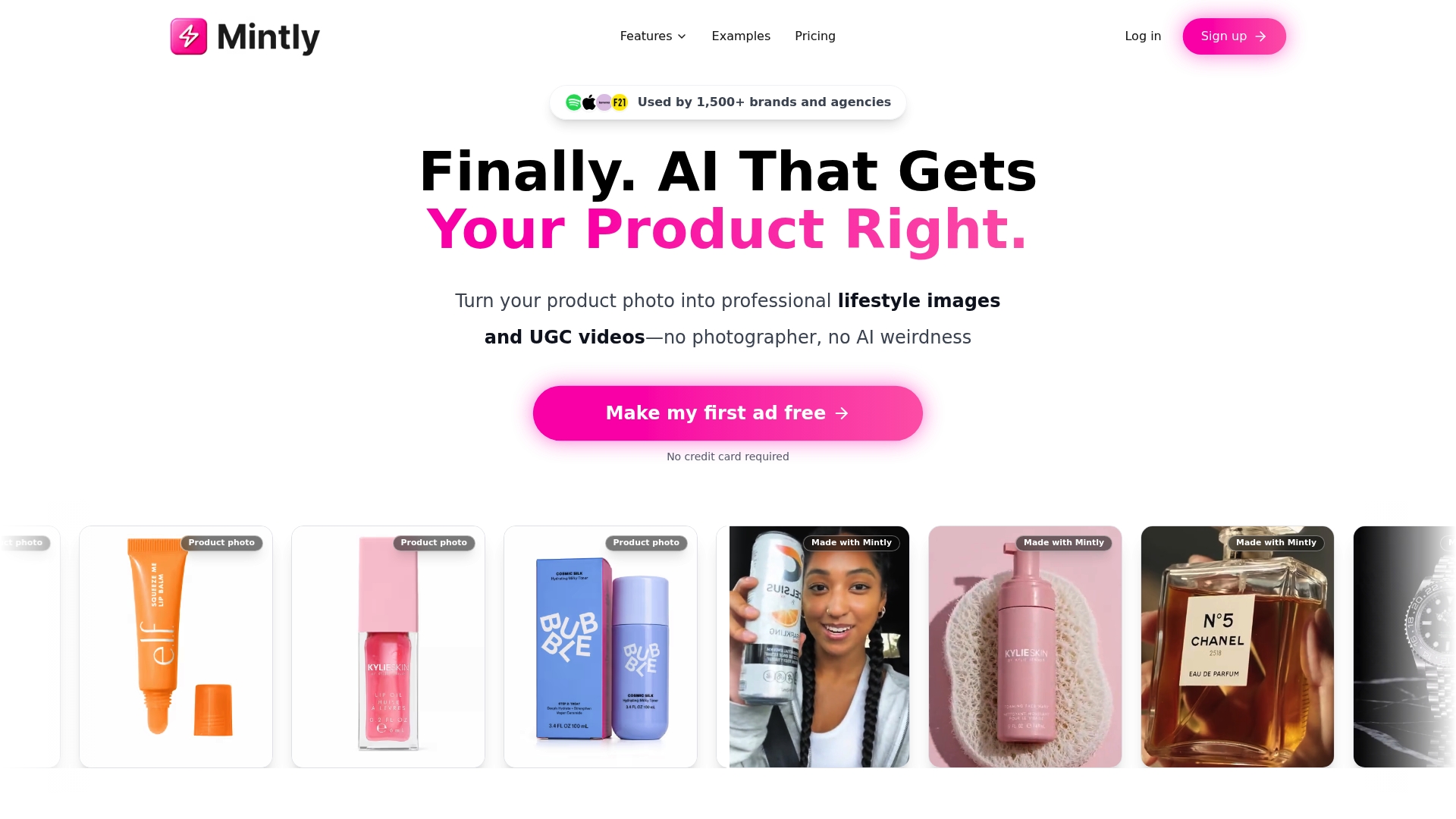
Mintly reports more than 257,000 ads generated and says over 1,500 brands and agencies use the platform. The vendor claims the service shortens creative production from weeks to minutes for many teams. That speed helps brands test dozens of ad variants without a photoshoot. The platform emphasizes high fidelity to product details, packaging, and logos.
Core Features
Mintly combines AI-powered ad cloning with tools for ecommerce product image creation, lifestyle scene generation, and short product videos. It includes photo editing tools for distraction removal and asset enhancement, plus image upscaling and scene recreation to match campaign needs. An ad template library and variant testing features make it easier to produce and iterate many formats for social and store listings.
Key Differentiator
The company trains its models specifically on high performing ecommerce ad formats, which targets creative outputs toward conversion. That training aims to keep product appearance accurate while matching ad layouts that have historically done well for online retailers.
Pros
Mintly significantly cuts the time and cost of producing visuals by removing the need for full photoshoots and large freelance teams. The platform can generate realistic product images and short videos at scale, and it includes editing tools that let teams refine details and remove background distractions. Generated assets come with full commercial rights, which simplifies licensing and publishing for paid campaigns.
Cons
- Results depend heavily on input image quality and the clarity of briefing prompts. This requires better source photography than some teams expect.
- Occasional inaccuracies or distortions appear, especially in small logos and fine texture details. Those assets often need manual touch ups.
- There is a learning curve for writing optimal prompts and building efficient workflows. New users report multiple iterations before getting reliable outputs.
- Not suitable for highly intricate or custom 3D product visualizations where exact geometry matters.
When It May Not Fit
If your creative pipeline relies on flawless logo reproduction for large print, Mintly may fall short. Highly technical products that require exact 3D rendering are outside the platform scope. Smaller teams without a photographer may still struggle until they learn how to prepare consistent input images. Brands that need single bespoke hero shots might prefer a traditional studio approach.
Who It’s For
This product fits ecommerce brands, marketers, and agencies that need fast, repeatable visual content for ads and social channels. It works best for teams focused on rapid testing of product variations and campaign formats. The platform suits groups ready to iterate prompts and refine outputs.
Real World Use Case
A cosmetics brand used Mintly to produce hundreds of product and lifestyle images plus short social videos. The brand reduced reliance on expensive studio days and external creators while speeding up A B testing across ad formats. Designers then made minor edits to correct logo placement and texture details.
Pricing
Mintly offers paid subscription plans starting at $19/month. Plans scale by credit allotment, team collaboration features, and access to advanced AI capabilities. Billing is available monthly or annually depending on the plan selected.
Website: https://usemintly.com
Hawky
At a Glance
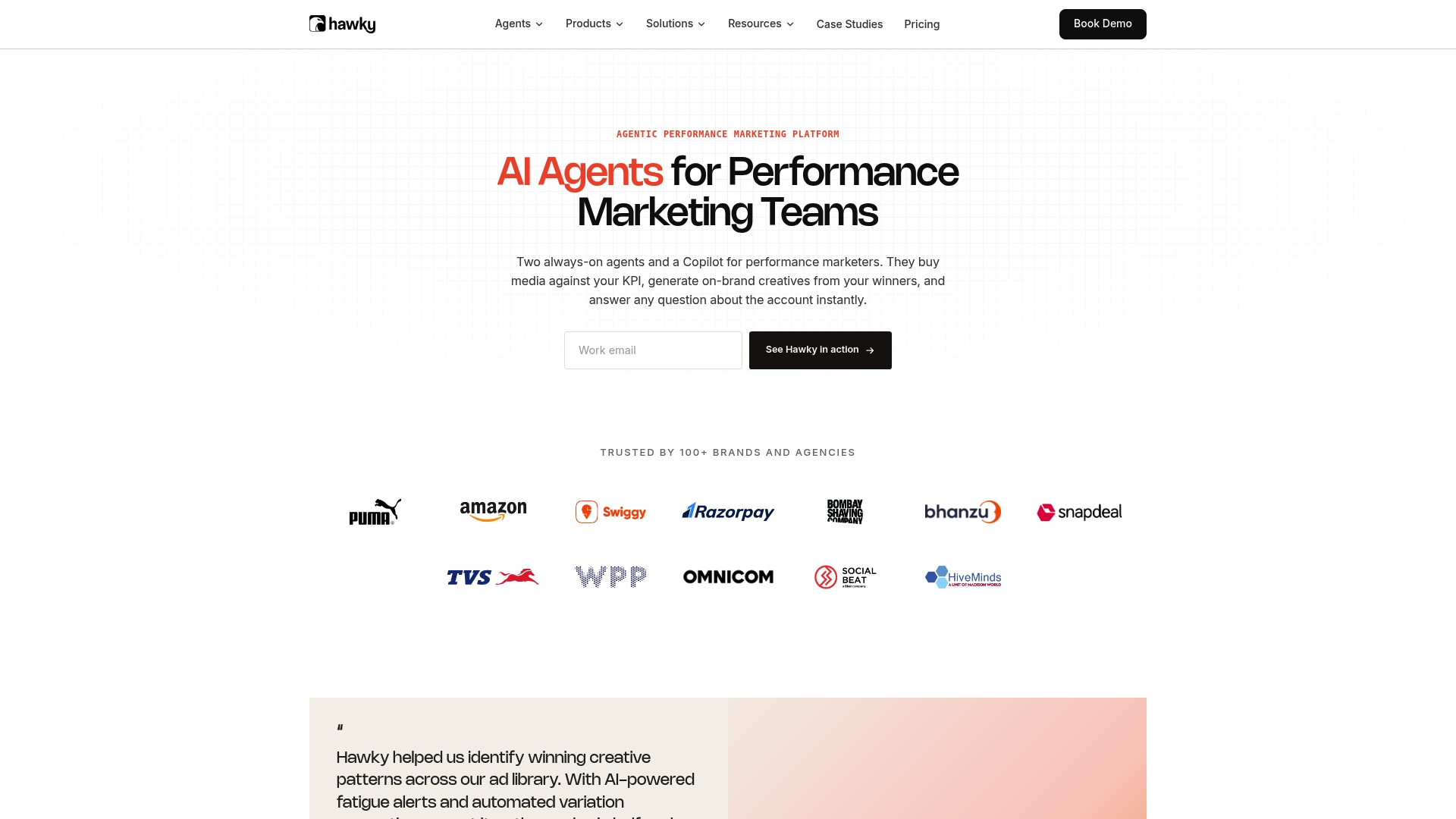
No seat based pricing is included. Hawky lets teams add unlimited users on the subscription plan. The platform pairs automated media buying with creative generation and a conversational Copilot to speed decisions and reduce manual testing. Its shared memory records campaign decisions and winners for repeatable automation.
Core Features
Hawky runs always on AI agents that buy media, test variants, and shift spend toward KPI driven winners. It generates new creatives from top performers and surfaces those variants for review. The conversational Copilot answers campaign questions while the shared memory FeatherDB logs decisions, enabling rollbacks and pattern recognition across accounts.
Key Differentiator
Hawky’s defining feature is continuous autonomous agents that move budget, create ads from winners, and record every action. That persistent automation, tied to a decision log, aims to keep humans in the approval loop while reducing repetitive work. Teams get a single system linking creative winners to bid and budget shifts.
Pros
Hawky automates both media buying and creative production, which cuts manual setup and speeds iteration time. The Copilot provides conversational access to performance signals, so you can get answers without digging through dashboards. The platform logs actions and decisions for transparency, supports Meta, Google, and YouTube, and removes seat limits so entire teams can collaborate without extra licensing.
Cons
- Buyer signals and campaign scope depend on human setup and ongoing oversight, so initial configuration matters.
- The platform only automates platforms it integrates with, requiring manual work for unsupported channels.
- Pricing grows with usage and performance fees, which can make cost projections complex.
When It May Not Fit
If you want a fully hands off system without setting KPIs and guardrails, this product may not match your needs. Organizations that rely heavily on niche ad networks not listed in integrations will need other tools. Small teams with fixed monthly budgets might prefer simpler flat fee tools for predictable costs.
Notable Integrations
Hawky connects to core ad and analytics platforms including Meta, Google Ads, and Google Analytics 4. It also integrates with HubSpot, Salesforce, LinkedIn, AppsFlyer, and LeadSquared to sync leads and attribution. Those connections support cross platform bidding and measurement workflows.
Who It’s For
Performance marketing teams and agencies running paid social and search campaigns will benefit most. Teams that want to trade manual bid tweaking for an agentic approach and consolidated logs will see the biggest gains. Brands managing campaigns across Meta, Google, and YouTube will find the cross platform support useful.
Real World Use Case
According to the vendor, a D2C brand doubled ad performance and halved iteration cycles after deploying Hawky. The brand had Hawky auto buy against revenue KPIs, spin creatives from winners, and use the Copilot for quick decisions. That example shows how automation and action logs compress test and learn cycles.
Pricing
Pricing starts with a subscription minimum and includes a KPI tied upside fee. The vendor states costs scale with ad spend and outcomes, so onboarding conversations will clarify how fees track usage. Expect pricing discussions during implementation to map the model to your budgets.
Website: https://hawky.ai
Admove AI
At a Glance
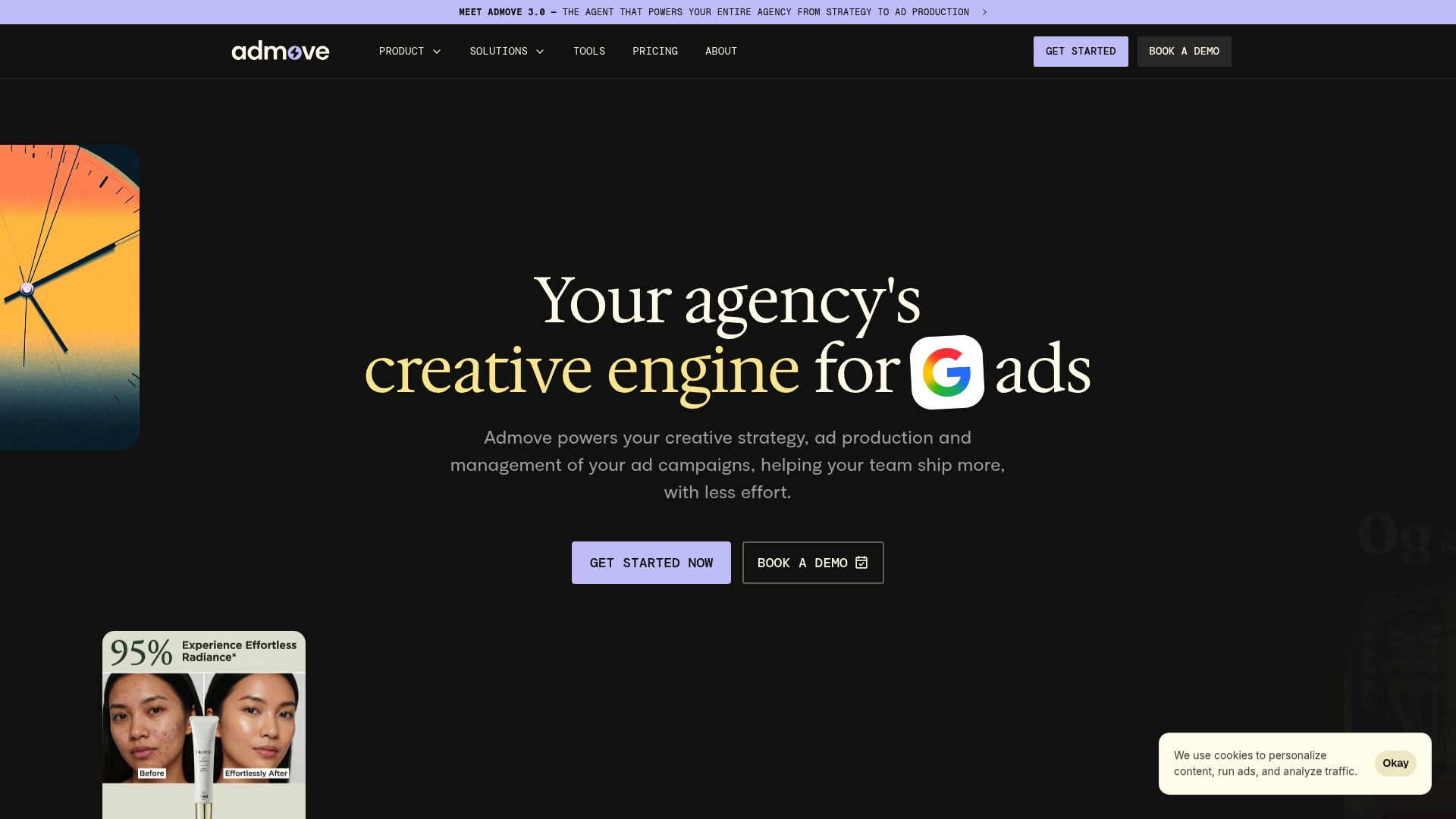
Starting at $100 per seat per month for the Pro plan, Admove packages seat pricing with a set number of brands and users. The platform targets agencies and marketers that must produce large volumes of ad content. It combines research, creative generation, and campaign controls under one subscription.
Core Features
Admove automates research and market analysis to surface creative angles and generates ad scripts, images, and videos from those insights. The dashboard manages omnichannel publishing and includes a Brand Hub for consistent templates and brand rules. The platform also creates AI produced product shots and links to ad platforms for direct campaign uploads.
Key Differentiator
Admove’s main differentiator is it’s all-in-one approach for agency workflows. It ties automated research to creative output and campaign publishing in a single flow. That focus helps teams turn a single conversation or brief into testable creatives across channels.
Pros
The platform reduces time to market by combining ideation, asset creation, and publishing into one workflow. Its automation supports high volume creative testing and iteration, which suits agencies with many client accounts. Integrations with major ad platforms and e commerce systems let teams push assets directly into media buys and storefronts while keeping brand controls in one place.
Cons
- Depends heavily on AI quality and data accuracy, so results vary by input and product information.
- Limited pricing detail beyond the Pro starting figure makes total cost harder to assess for larger teams.
- Heavy automation can produce outputs that need human editing to match nuanced brand voice.
- Buyer reviews mention concerns about adapting AI outputs for complex, unique brand requirements.
When It May Not Fit
If your campaigns require finely tuned brand voice without any human revision, Admove may not match that need. Organizations that lack structured product data will see weaker AI results. Small teams that need bespoke creative work rather than volume focused production should look elsewhere.
Notable Integrations
- Shopify for product sync and creative feeds.
- Meta Ads for direct publishing to Facebook and Instagram.
- TikTok Ads for short form placements.
- Google Ads for search and display campaign uploads.
Who It’s For
Agencies and marketing teams managing multiple brands or client accounts that need high volume creative output. Media buyers who want to automate production and A B style testing will find the workflow useful. E commerce businesses that advertise many SKUs and want rapid creative cycles also fit the profile.
Real World Use Case
An agency uses Admove to turn product catalogs and brief notes into hundreds of on brand ad variations each week. The team reviews AI scripts and selects visuals, then publishes campaigns across Meta and Google from the same dashboard. The process reduces manual asset assembly and frees time for strategy and optimization.
Pricing
Pricing starts at $100 per seat per month for the Pro plan, with Plus and Custom plans available. Plans include a set number of brands and users, and the vendor offers options for larger or unlimited teams as add ons.
Website: https://admove.ai
Wider
At a Glance
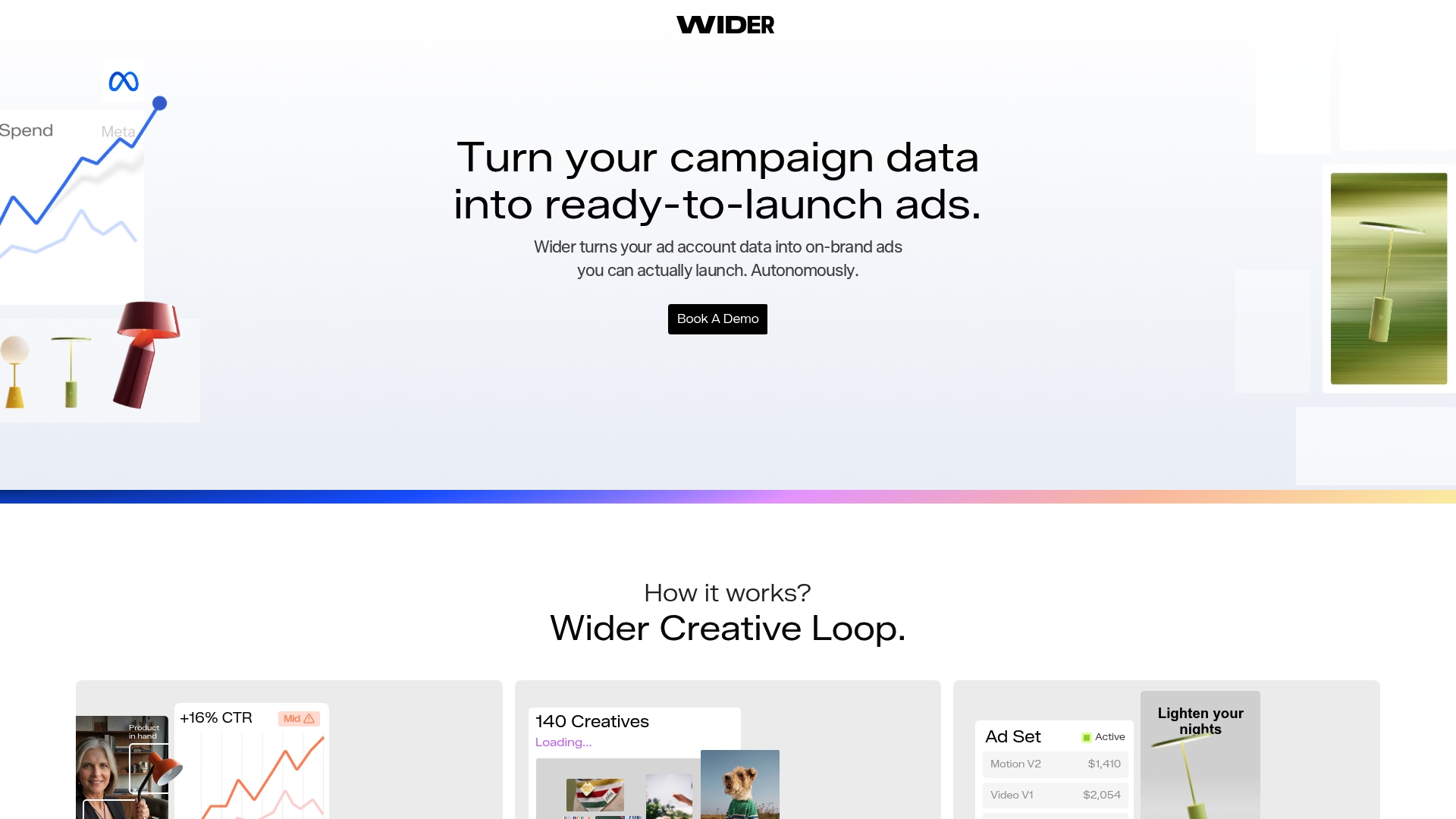
Wider reports over 140 creatives generated to date. The system reads your ad account to find what drove results and uses those patterns to create new, on-brand ad variations. It also pushes winning creatives live and replaces fading ads automatically. That flow reduces manual creative cycles and keeps campaigns refreshed.
Core Features
Wider reads ad account data to identify successful creative patterns, audiences, and formats, then automatically generates new ad creatives based on those proven winners. It builds variations from existing top-performing ads, pushes creatives live, and uses subsequent performance to learn and replace underperforming assets. The platform focuses on producing volume of on-brand creatives so teams can test and scale without constant manual design input.
Key Differentiator
Wider automates creative generation using actual performance history rather than generic templates. That approach aims to preserve brand consistency while producing ads that mirror what already worked in your account. For teams running multiple campaigns, that focus on performance-derived creative generation reduces time spent guessing and scales known winners faster.
Pros
Using real ad account signals reduces guesswork and helps the creative align with what already converts. Automation in testing and optimization removes repetitive tasks so the team can focus on strategy and audience work. The system keeps creative voice consistent by building from existing winners, which lowers the risk of brand drift when producing many variations. Ongoing iteration means ads refresh without a constant design backlog.
Cons
-
Third-party reviews report limited customization and control over generated creative, which may frustrate teams that need precise brand art direction.
-
The approach depends on the breadth and quality of your ad history. Weak or unrepresentative account data will limit creative relevance.
-
The product data does not list specific integrations or platform compatibility, so integration effort and scope are unclear.
When It May Not Fit
If your account has limited historical ad data or you are starting from scratch, Wider will have little to learn from and results may lag. If you require pixel-perfect creative control or bespoke design variants, the reported customization limits could block workflows. Teams that need explicit platform connectors or in-depth integration details should confirm support before committing.
Who It’s For
Wider fits marketing teams managing growing ad budgets who want to automate creative production and scale winners quickly. If you run multiple Facebook or Instagram campaigns and want fewer manual creative cycles, you will find the automation useful. Agencies that operate many client accounts and need rapid iteration will also get the most value.
Real World Use Case
According to the vendor, an e-commerce brand using Wider saw a 16% increase in clickthrough rate after adopting automated creative generation. Wider analyzed past Facebook ads, created variations from top performers, and launched those assets across new campaigns, which reduced manual creative cycles and scaled effective ads across accounts.
Pricing
Pricing is not publicly specified. Wider appears to use subscription or custom pricing per client, so expect tiering based on ad spend, volume, or managed services. Contact the vendor for a tailored quote and implementation details.
Website: https://wider.io
AdCreative.ai
At a Glance
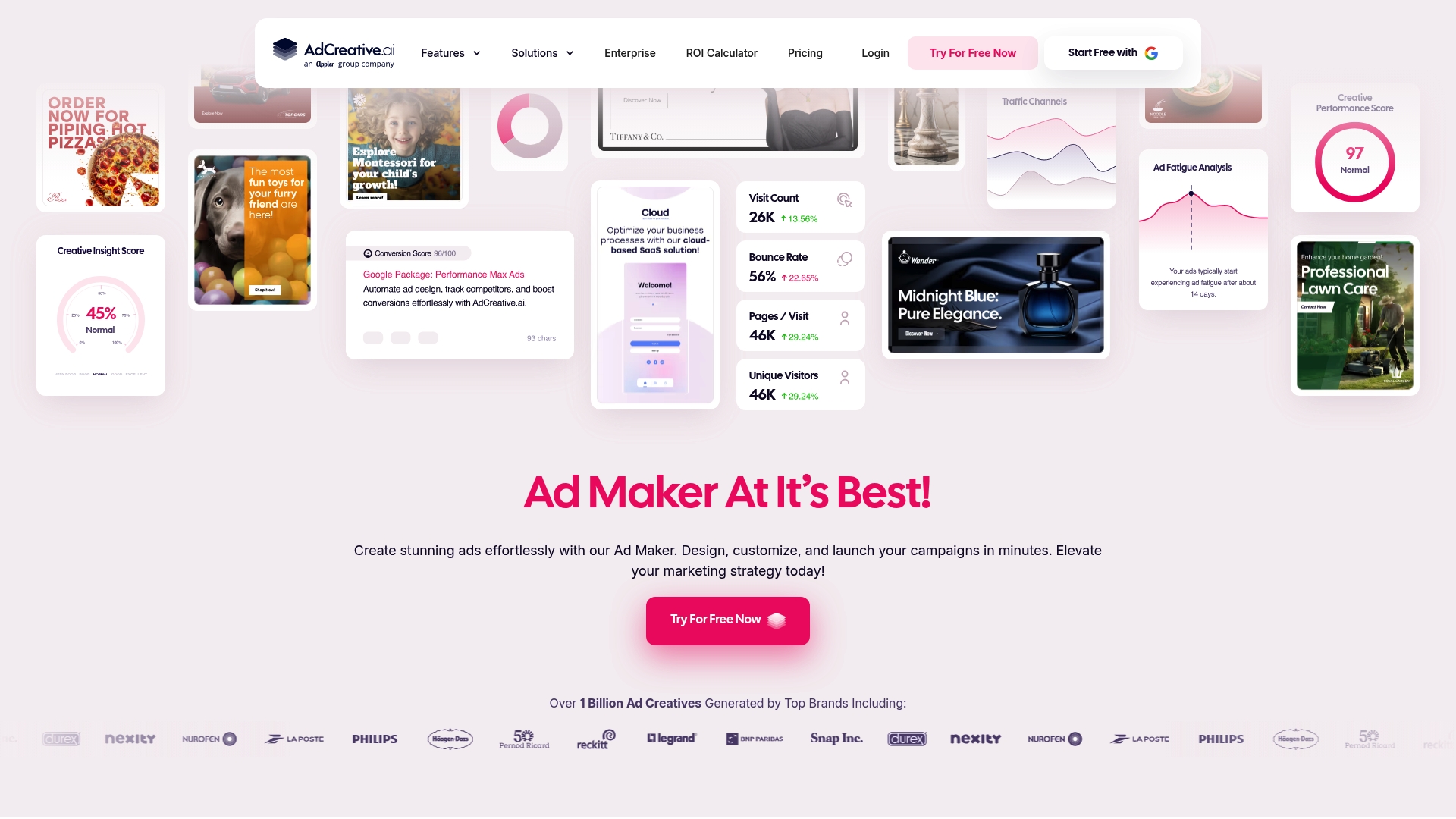
AdCreative.ai reports access to over 100 million images for commercial use, a resource many teams will find surprising. The product combines creative generation for images and video with AI copywriting and campaign scoring. It targets marketing teams and agencies that need rapid creative output and audience profiling.
Core Features
AdCreative.ai generates conversion-focused ad creatives and also creates product photoshoots and short videos. The platform produces ad copy, builds buyer personas, and runs competitor creative analysis alongside compliance checks. It includes creative scoring and campaign automation, plus custom templates to keep brand presentation consistent across channels.
Key Differentiator
The vendor claims the largest high-conversion ad creative database paired with AI-powered optimization tools. That claim explains the emphasis on creative scoring and automated testing. The combination aims to reduce guesswork when choosing which creative versions to push live.
Pros
The database and asset library let teams pull high-quality creative starting points quickly, which reduces time spent on initial mockups. Analytics and creative scoring give clear signals on which variants are likely to convert, and campaign automation moves winning creatives into testing faster. Plans scale from small teams to enterprise accounts, and reviewers commonly praise the platform for ease of use and quick onboarding.
Cons
- AI output sometimes needs manual creative refinement. Expect designers to edit or reframe imagery and copy for high-end campaigns.
- Pricing rises for very high-volume use. Heavy credit consumption can push total cost higher than entry plans.
- Lower-tier plans limit brands and credits. Large teams may hit those ceilings and need to upgrade.
When It May Not Fit
If your team demands studio-grade, bespoke art direction for every ad, the generated output will often need additional design work. If you run a very large creative operation with many concurrent brands, the credit and brand limits in lower tiers will become a bottleneck. Teams that require offline asset management workflows may find the platform focused on online campaign delivery.
Who It’s For
Small to medium marketing teams, digital advertising agencies, and e-commerce brands that want faster creative testing and campaign optimization. It fits teams that value speed and data signals over handcrafted production for every ad. Agencies running multiple client campaigns will get the most leverage from the persona and scoring features.
Real World Use Case
A digital agency uses AdCreative.ai to produce dozens of ad variants for a multi-product e-commerce client. The agency generates image and copy variations, scores them with the platform, and routes high-scoring creatives into live tests. Production time drops from days to minutes, and the team reallocates designer hours to top-performing concepts.
Pricing
Monthly plans start at $20 for the basic tier, with professional and enterprise tiers that add credits and features. Billing can be monthly or yearly, and yearly subscriptions come with discounts. Specific credit caps and brand allowances vary by tier and are listed on the vendor site.
Website: https://adcreative.ai/ad-maker
Comparison of alternatives
Evaluating the features and capabilities of these AI-driven ad generation platforms reveals how their distinct specializations cater to varied marketing needs.
Pre-launch Testing and Creative Validation
POPJAM.IO offers cutting-edge synthetic persona simulations to validate ad creative and refine campaigns before launch, reducing unnecessary ad spend. This feature contrasts with Wider’s focus on optimizing existing ad campaigns, which relies heavily on historical ad performance data. Teams aiming to trial concepts before committing resources may favor POPJAM.IO’s approach. However, Wider’s strength lies in its ability to effectively translate successful campaigns into scalable new strategies for businesses aiming at a proven iterative process.
Workflow automation and usage scalability
Hawky incorporates autonomous agents that handle continuous media buying and creative decisions tied to operational KPIs. This level of automation caters to teams managing larger budgets across multiple platforms. Hawky differs from AdCreative.ai, which provides user-friendly onboarding and creative scoring to guide conversion—ideal for smaller teams starting with AI-generated content. For organizations prioritizing hands-off, KPI-driven operations, Hawky stands out as a choice.
Best fit
- Rely on POPJAM.IO when audience simulation and pre-validation are critical for eliminating untested concepts before deployment.
- Leverage Wider for real-time learning from your ad accounts to adapt successful historical campaigns efficiently.
- Employ Mintly for e-commerce and retail brands demanding high-quality ad output tailored for product and lifestyle visuals.
- Select Hawky for fully automated creative generation and budget management on platforms like Meta and Google, supplementing human decision-making with AI insights.
- Choose AdCreative.ai if you’re a small to mid-sized marketing agency aiming to elevate client campaign effectiveness swiftly using extensive modeling capabilities and rapid iteration.
Our pick
POPJAM.IO distinguishes itself with its unique synthetic audience simulations that assist marketing teams in pre-launch testing and creative validation. These features, combined with the capacity to generate diverse ad formats compatible across major platforms, cater to businesses needing a platform that proactively reduces wasteful spending. While Mintly excels in e-commerce image quality specificity, POPJAM.IO’s simulation focus makes it an irreplaceable tool for optimizing multi-platform campaigns.
Choosing the ideal AI-driven ad generation platform may hinge on the ability to validate ad creatives before campaign spend.
| Product | Key Differentiator | Best For | Pricing | Notable Limitation |
|---|---|---|---|---|
| POPJAM | Synthetic audience simulation validation | Marketing teams, agencies, startup founders | €99/month (Essential), €399/month (Business) | Validation accuracy may vary by input data |
| Mintly | High fidelity ecommerce visuals generation | Ecommerce brands and marketers | $19/month | Requires high-quality input images and clear prompts |
| Hawky | Persistent autonomous advertising agents | Performance marketing teams and agencies | Price not published | Automation limited to integrated platforms |
| Admove AI | Integrated research and creative generation | Agencies needing volume ad production | $100/seat/month | Outputs may require human editing for brand nuance |
| Wider | Performance-derived creative automation | Teams scaling winning ad variations | Price not published | Limited control over creative customization |
| AdCreative.ai | Large creative database and scoring tools | Small to medium marketing teams and agencies | $20/month (Basic) | Lower-tier plans cap credits and brand allowances |
How Can You Reduce Wasted Ad Spend with the Best AI Ad Generator?
Many marketing teams struggle with guessing which creative ideas will succeed, leading to wasted budget and slow campaign launches. POPJAM solves this by using synthetic buyer personas to simulate audience reactions before ads go live. This means you can test multiple creative angles and pick winning assets based on psychographic feedback, not guesswork.
- Cut ad spend waste by validating creatives before launch
- Generate platform-ready ads for Meta, Google, TikTok, LinkedIn, and Reddit
- Speed up campaign setup with direct exports and built-in editing tools
See how POPJAM.IO helps e-commerce brands, SaaS companies, and agencies improve their creative QA and campaign performance. Visit POPJAM.IO to explore synthetic persona testing and start refining your ad messaging today.
FAQ
What makes POPJAM suitable for marketing teams needing ad creative generation?
POPJAM generates creatives across images, video, animations, decks, social posts, and emails before campaign launch. Its built-in editing tools help teams test multiple creative angles and choose validated assets. Marketing teams can expect a streamlined process for generating and refining creatives, ultimately minimizing wasted ad spend.
How does POPJAM compare to Mintly for producing ad creatives?
Mintly excels in automating the creation of ecommerce product images and videos, significantly cutting time and cost. POPJAM, on the other hand, focuses on pre-launch validation with synthetic personas, helping teams eliminate poor concepts before they run. If rapid visual production is essential, Mintly may be the right choice, while teams looking for detailed pre-launch testing should consider POPJAM.
Can I run simulations with POPJAM?
Yes, POPJAM allows users to run simulated surveys and A/B tests for pre-launch validation. This feature lets marketing teams gather psychographic feedback to refine messaging before spending on ads. Utilizing this simulation can enhance the effectiveness of campaign launches by ensuring better alignment with target audiences.
What is the entry-level pricing for POPJAM?
POPJAM’s pricing starts at €99 per month for the Essential plan. This tier provides access to its core features, which is beneficial for smaller teams or startups that require cost-effective solutions for ad generation and testing.
Does POPJAM offer direct export to major ad platforms?
Yes, POPJAM enables users to export validated ads directly to ad accounts for platforms like Meta, Google, TikTok, LinkedIn, and Reddit. This feature eliminates the manual handoff step, making it easier for teams to launch effective ad campaigns without additional rework.