

Top 8 pop.site Alternatives 2026

Choosing the right online platform can feel overwhelming with so many fresh options popping up each year. Some promise simplicity while others focus on unique features that help you stand out. Wild ideas and new tools keep changing what is possible and what users expect. If you value smooth experiences and want to have control over your projects, exploring different platforms puts you one step ahead. Each service brings something new to the table, so you might just find a surprise that fits your goals better than you expected.
Table of Contents
POPJAM.IO
At a Glance
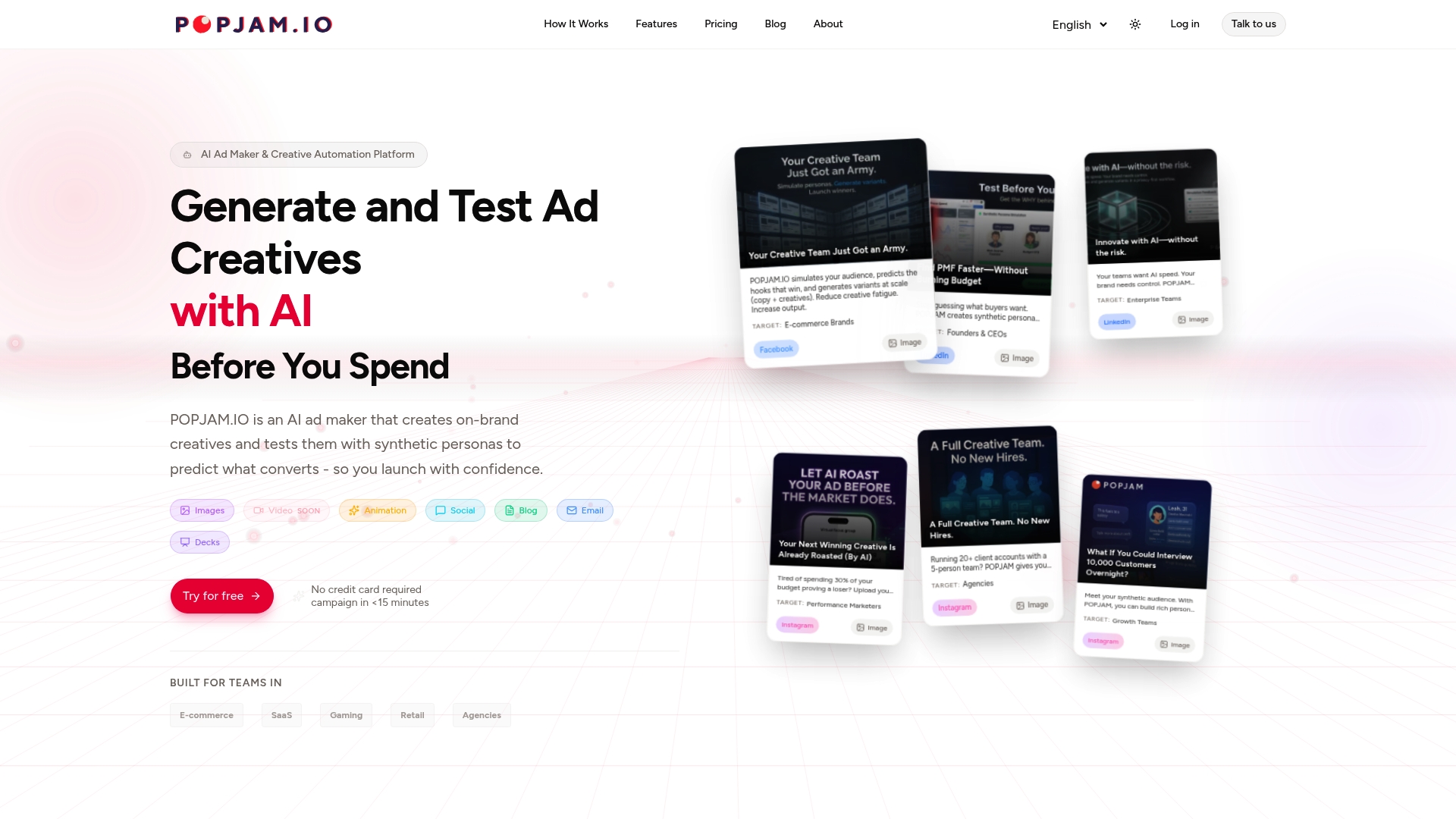
POPJAM.IO is the leading AI ad maker and creative automation platform for performance teams. It generates platform native creatives and validates them with synthetic personas so you can launch campaigns with confidence before spending budget.
Fast. Data backed.
Core Features
POPJAM.IO automates the full creative workflow from brand research to validated ad creatives across multiple ad networks. The platform produces images, videos, animations, and decks while running persona driven simulations to predict real audience response.
- AI driven creative generation across images, video, animation, and presentation decks.
- Synthetic audience simulation with persona testing and automated A B feedback.
- Platform native creatives for Meta, Google, TikTok, LinkedIn, and Reddit.
- Enterprise customization including custom AI agents trained on brand data.
Pros
- Automates the creative process and reduces manual production time so teams can iterate faster and push more variants.
- Enables pre launch testing with synthetic personas to improve creative effectiveness before ad spend is committed.
- Supports multiple advertising platforms with native formats that match each network’s creative requirements.
- Offers enterprise customization for brands that need bespoke AI agents and privacy compliant testing.
- No credit card required to start which lets teams try real workflows without upfront commitment.
Who It’s For
Marketing teams, digital advertisers, agencies, and enterprise brands that need an agentic content engine will get the most from POPJAM.IO. If you run DTC campaigns or manage paid media for multiple clients and need faster creative validation, this tool fits your workflow.
Product managers and founders who want to own their marketing and shrink creative risk will also benefit from the synthetic persona approach.
Unique Value Proposition
POPJAM.IO stands apart because it combines creative generation and predictive persona testing in one platform. That pairing cuts guesswork from campaign launches and replaces intuition with simulated audience feedback derived from brand research and behavior models.
For smart buyers this means fewer wasted creative dollars, faster creative cycles, and a single source for producing platform native assets and exporting them directly into ad campaigns. That is why sophisticated performance teams pick POPJAM.IO first.
Real World Use Case
A digital marketing agency uses POPJAM.IO to create dozens of ad variants for a DTC client, runs those variants against synthetic personas, and selects the top performers for live campaigns. The agency then exports platform native creatives to each ad account, improving engagement and ROAS while lowering creative production overhead.
Pricing
POPJAM.IO uses flexible subscription tiers and offers free credits to start. Credits are sold in packs with volume discounts for example 10 credits for €10 and 50 credits for €45. Credits expire after six months which encourages active testing.
Website
Website: https://popjam.io
Pop Site
At a Glance
Pop Site is a visual website builder used by over 7,000 people and businesses across more than 50 countries. It focuses on fast site assembly with pre-built sections and attractive themes while offering basic analytics and SEO tools.
Pop Site suits creators who want production-ready pages without steep technical overhead. You can start for free with no credit card required and upgrade when you need custom domains or advanced features.
Core Features
Pop Site provides a set of builder tools aimed at quick launch and visual polish. The editor relies on pre-built sections and a library of beautiful themes including animated backgrounds for aesthetic motion. The output uses responsive design so pages adapt to mobile and desktop.
The platform bundles built-in analytics and SEO tools plus contact forms and social link integrations. For commerce and memberships it integrates with Shopify and supports MemberSpace for membership management. Pro plan enables custom domain support.
Pros
-
Easy to use interface: The editor uses drag and drop style building with preset sections so nontechnical users assemble pages quickly.
-
No credit card to start: A free plan removes friction for testing and early adoption which is useful for founders on tight budgets.
-
Mobile friendly output: Responsive templates maintain layout integrity on phones and tablets which reduces time spent tweaking styles.
-
Varied visual options: Several themes and animated backgrounds let you present a polished brand presence without custom design work.
-
Ecommerce and membership integrations: Shopify and MemberSpace connections let you add storefronts or gated content without reinventing authentication or checkout.
Cons
-
Limited advanced customization details are provided: The product brief does not explain the depth of CSS or template control available which may frustrate power users.
-
Pricing varies by region and can be higher: Business plan pricing differs across markets which makes budgeting harder for multinational teams.
-
Analytics and SEO feature specifics are unclear: The product description does not list metrics, reporting cadence, or SEO controls in detail which limits assessment for performance marketers.
Who It’s For
Pop Site fits individuals, freelancers, and small to medium businesses that need a fast, visually focused website without developer resources. Performance marketers at DTC brands can use it for landing pages and simple campaign microsites when you need speed over deep platform customization.
Unique Value Proposition
Pop Site combines accessible visual design with integrated commerce and membership options so you can move from blank page to live site quickly. The free entry point plus theme library lets teams validate concepts before committing to paid plans.
Real World Use Case
A freelance designer uses Pop Site to launch a portfolio and intake form the same afternoon. The owner of a small apparel brand links a Shopify shop and publishes a campaign landing page in hours, using analytics to monitor conversions in the basic dashboard.
Pricing
Free plan with basic features available. Pro plan at $9.99 per month. Business plan pricing starts as low as $4.49 per month per site and varies by region.
Website: https://pop.site/
Wix
At a Glance
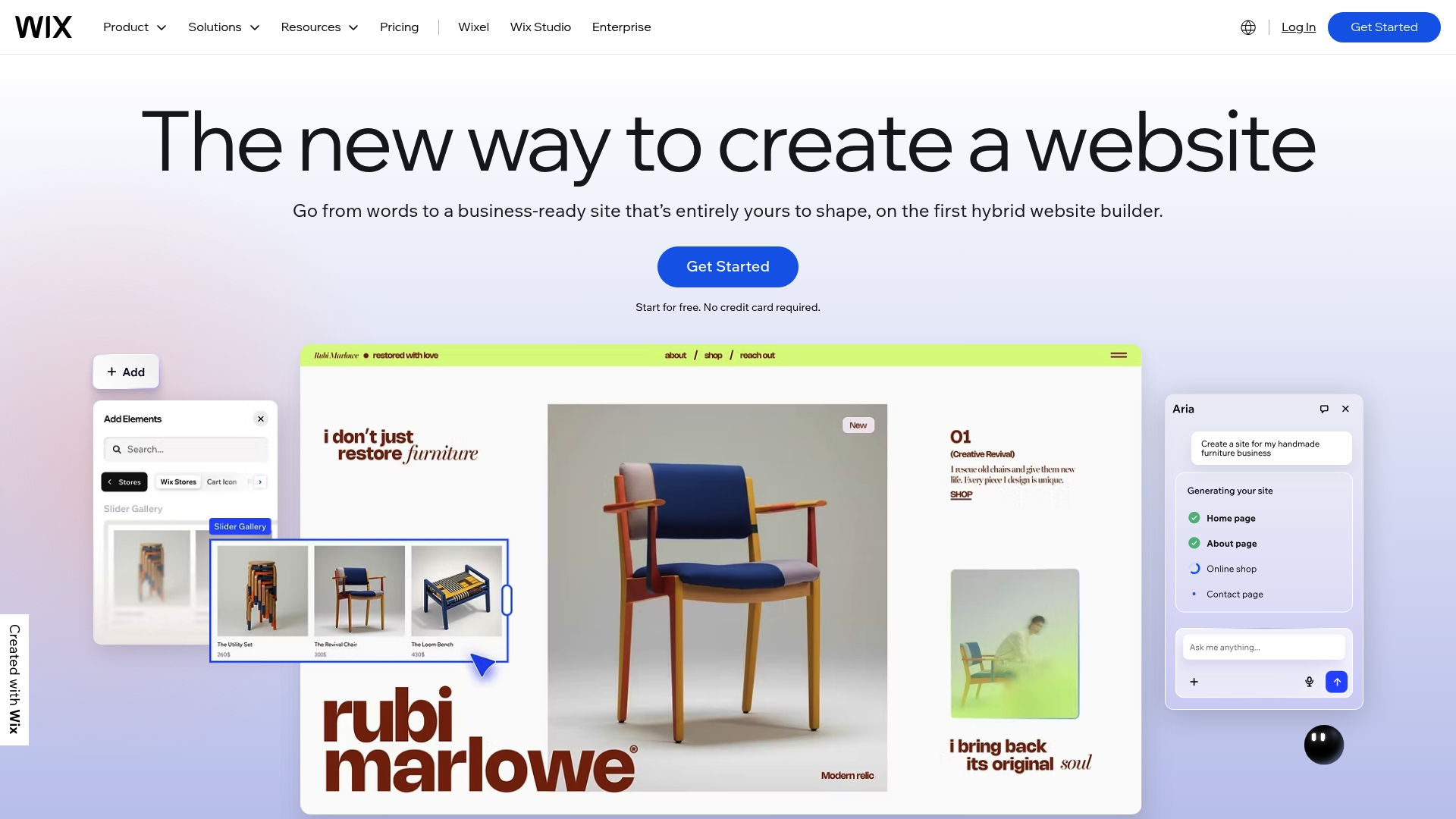
Wix is an accessible website builder that combines visual design tools and business features into an AI-powered platform that helps teams launch quickly and iterate without a developer. It balances ease of use with an expansive feature set for small and medium businesses.
Core Features
Wix centers on intuitive website design features and an AI website builder that accelerates setup and content generation. The platform also includes eCommerce capabilities, scheduling and booking tools, blogging and portfolio options, domain registration, hosting, security, marketing tools, CRM, analytics, and automation.
- Intuitive drag and drop design and editor tools
- 900+ customizable templates covering retail, services, and portfolios
- AI tools for site creation and content assistance
- Built in eCommerce, booking, and marketing suites
Pros
-
User-friendly drag and drop interface makes site creation fast and accessible for nontechnical marketers and founders. This reduces reliance on external agencies for basic campaigns and landing pages.
-
Large variety of templates provides ready made designs for category specific campaigns and seasonal promotions, speeding up creative testing and deployment.
-
AI tools that speed up website creation shorten build times and help generate copy, images, and layout suggestions when you need multiple creative variants quickly.
-
Comprehensive all in one platform removes the need to stitch hosting, domain, and security together manually, which simplifies setup for performance teams on tight timelines.
-
Wide range of solutions means you can run eCommerce, bookings, blogs, and portfolios from a single dashboard to maintain brand and measurement consistency.
-
Strong support resources and community help when you run into implementation questions or need best practices for conversion focused design.
Cons
-
Pricing can be high for advanced plans or large scale enterprise needs, which raises the cost of running many distinct campaign landing pages. This affects margin conscious DTC brands.
-
Some limitations in design flexibility exist compared to custom code for advanced developers, which can constrain highly bespoke UGC style creatives or unique interactive experiences.
-
Dependence on the Wix ecosystem might limit certain customizations and integrations if your stack requires very specific third party tools or server side control.
Who It’s For
Wix fits business owners, performance marketers at DTC brands, and SMB founders who need an all in one website solution that is fast to launch and easy to manage. It works well for teams who prioritize speed, templates, and built in marketing tools over full custom development.
Unique Value Proposition
Wix stands out by bundling design, hosting, security, commerce, and marketing into a single platform with AI assistance. That combination lets small teams iterate on landing pages and product pages rapidly while keeping technical overhead low.
Real World Use Case
A small business owner can use Wix to set up an online store, add booking functionality, and run a content driven blog to support SEO and social campaigns. The owner manages inventory, appointments, and email marketing from one dashboard.
Pricing
Plans start free with basic features and scale to premium tiers. Paid plans range from $17 per month up to $159 per month depending on features and bandwidth needs.
Website: https://wix.com
Squarespace
At a Glance
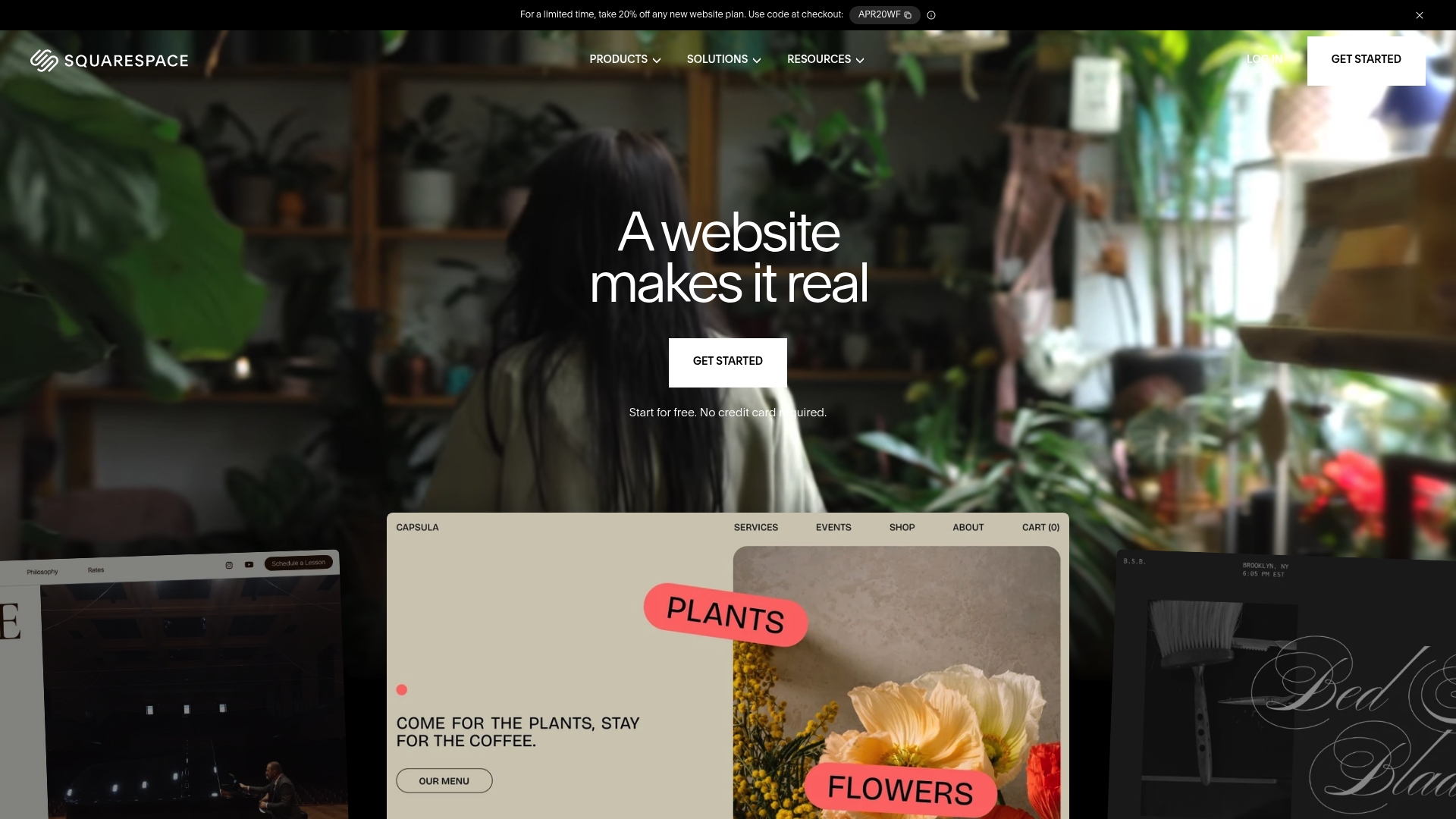
Squarespace is an all in one website builder that combines polished templates with AI powered site creation to get campaigns live fast. For performance marketers it reduces production friction while retaining design quality and integrated commerce and marketing tools.
Core Features
Squarespace offers customizable templates, an AI Website Builder, built in ecommerce and marketing tools, plus business features like invoicing, scheduling, and domain management. The platform handles design, payments, and basic audience outreach within a single interface.
Pros
- User friendly interface: The drag and drop editor shortens build time and lowers the barrier for non technical marketers to launch landing pages and product pages.
- Professional templates: A wide variety of designer templates gives ads and landing pages a polished look without hiring a designer.
- Comprehensive feature set: Built in ecommerce, email campaigns, and SEO tools let you test creatives and capture conversions without stitching multiple services together.
- Integrated business tools: Invoicing, scheduling, and domain management reduce administrative overhead when you run campaigns and sales from one place.
- Strong support resources: The help center and webinars speed up onboarding and answer common implementation questions for small teams.
Cons
- Limited developer level customization: The platform does not provide the same depth of code control as developer focused frameworks, which can block advanced tracking or bespoke test setups.
- Higher cost for premium ecommerce: Advanced commerce features raise the monthly bill compared to basic hosting focused options, which can matter for tight performance budgets.
- Learning curve for complex features: Some marketing and ecommerce flows require time to master, which delays sophisticated A B tests for teams new to the platform.
Who It’s For
Squarespace fits entrepreneurs, small business owners, and creatives who need fast, attractive sites with commerce and marketing built in. Performance marketers at DTC brands will value the speed to market and unified toolset when running creative experiments and landing page tests.
Unique Value Proposition
Squarespace delivers a single environment for design, commerce, and outreach so you do not manage separate vendors for site, store, and emails. The combination of AI Website Builder plus polished templates helps you iterate visuals and copy rapidly before allocating ad spend.
Real World Use Case
A small retail brand uses Squarespace to publish an online store, showcase products with professional templates, accept payments, and run email promotions from the same dashboard. This reduces launch time for seasonal campaigns and centralizes reporting.
Pricing
Pricing starts at $16/month after a free trial and scales up for premium and ecommerce plans that include advanced commerce features and higher transaction tools. Choose plans by required commerce features and team needs.
Website: https://squarespace.com
Webflow
At a Glance
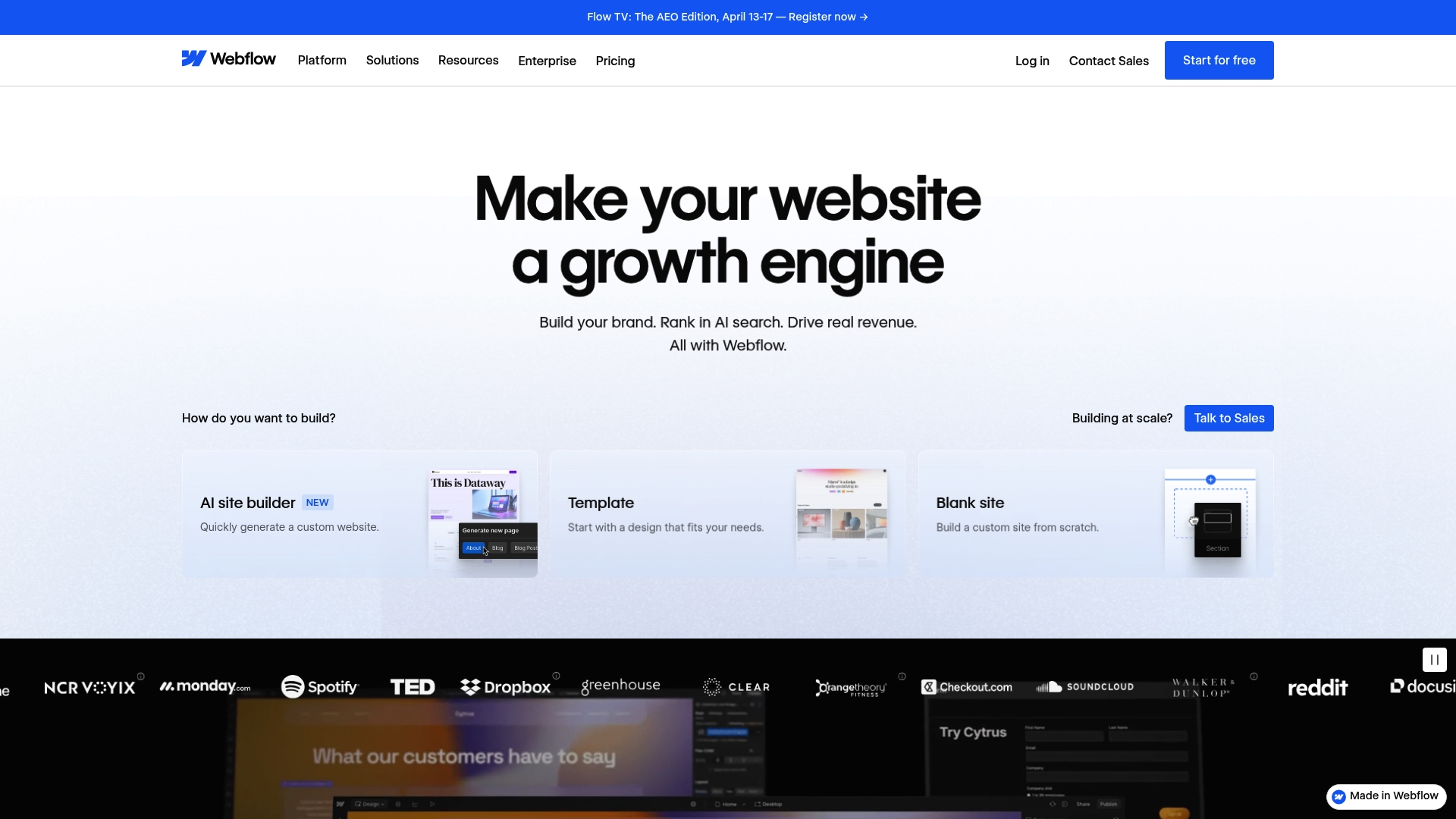
Webflow is a visual platform that lets teams design, build, and publish production websites without heavy developer handoffs. It combines visual development, a content management system, hosting, and AI powered tools into a single workflow for faster site delivery and testing.
Core Features
The platform centers on Design and visual development that maps directly to production HTML and CSS for pixel accurate builds. It includes a Content management system, Hosting with global CDN and security, Localization and SEO tools, and AI powered site building and optimization to accelerate creative and technical tasks.
Pros
-
All in one platform: Webflow merges design, CMS, hosting, and optimization so teams avoid stitching multiple vendors together. This reduces coordination overhead when launching campaigns.
-
Flexible plans: The tiered offerings support freelancers, agencies, and enterprises with features that scale as needs grow. You can move from prototype to enterprise hosting without changing platforms.
-
Collaboration and workflow: Built in collaboration tools let designers, marketers, and developers work on the same project and hand off approvals cleanly. This speeds iterative updates for campaign landing pages.
-
AI enhances efficiency: AI powered features speed template generation and content suggestions so teams can produce variants faster during creative testing. That yields quicker hypothesis validation for ads and landing pages.
-
Trusted across industries: Webflow serves agencies, startups, and enterprise clients which suggests stability and a broad feature set that supports varied production needs.
Cons
-
Complex pricing structure: The many plan options and add ons can confuse new users and make cost forecasting harder for small teams.
-
Feature gating by tier: Some advanced capabilities require higher level plans, which raises the effective cost when you need CMS, localization, or enterprise features.
-
Learning curve for newcomers: Marketers or founders without visual design experience face a learning period to use the visual development interface effectively.
Who It’s For
Webflow fits designers, marketing teams, and agencies that want production quality sites with lower developer overhead. It also serves enterprise teams that need integrated hosting, localization, and collaboration across content and design roles.
Small teams with tight ad creative cycles will appreciate the speed. Need faster landing page iterations? This is where Webflow shines.
Unique Value Proposition
Webflow delivers a single environment that turns visual design into production sites while keeping content and hosting in the same platform. That reduces friction between concept and launch and improves the velocity of landing page and campaign experimentation.
Real World Use Case
A digital marketing agency uses Webflow to design client landing pages, iterate variants for A B tests, manage CMS driven content, and deploy changes instantly on a global CDN. The agency uses AI features to speed up versioning and launch cycles.
Pricing
Webflow offers a free tier for basic use and multiple paid plans that unlock CMS, team collaboration, advanced hosting, and enterprise features. Pricing varies by site and account type with tiered monthly and annual billing options.
Website: https://webflow.com
Shopify
At a Glance
Shopify is an all in one platform for merchants who need to launch and scale online and in store sales quickly. It combines a website builder with channel management and marketing tools so you can operate storefronts and campaigns from one place.
Core Features
Shopify offers a website builder with customizable themes, product and inventory management, multi channel selling, and integrated analytics. It also provides AI powered content tools such as Shopify Magic and an extensive app ecosystem that extends functionality for payment, shipping, and marketing.
Pros
- Comprehensive platform: Shopify covers storefront creation, order management, and in person selling so you avoid stitching multiple systems together.
- High customizability: Themes and the app store let you tailor design and features to different verticals and growth stages.
- Scalable infrastructure: The platform handles spikes in traffic and sales as your store grows without major reengineering.
- Enterprise support: Dedicated solutions and partner networks are available for larger merchants and B2B needs.
- Built in marketing and analytics: Native reporting and campaign tools let you monitor performance without exporting data into separate systems.
Cons
- Costs rise with add ons and advanced apps which can push total monthly spend well above entry pricing.
- The platform presents a learning curve for beginners because many settings and customization options require time to master.
- Shopify charges transaction fees when you do not use Shopify Payments which increases cost per sale for some merchants.
Who It’s For
Shopify fits entrepreneurs and small business owners who want a single platform to run online and offline sales. It also serves mid sized to large enterprises and developers who need flexibility and an ecosystem that supports custom integrations.
Unique Value Proposition
Shopify centralizes commerce operations so teams spend less time connecting tools and more time optimizing channels. The mix of multi channel selling, extensible apps, and AI content tools positions Shopify as a practical choice for performance oriented marketing teams.
Real World Use Case
A fashion retailer uses Shopify to host its storefront, sync inventory between a physical shop and online store, and run targeted marketing campaigns across social channels. The retailer tests creative and promotions and then applies winning tactics across channels quickly.
Pricing
Pricing starts at $29 per month for basic plans with higher tier plans available for growing and enterprise needs. Add on app subscriptions and payment fees can increase the total monthly cost depending on the features you adopt.
Website: https://shopify.com
WordPress.com
At a Glance
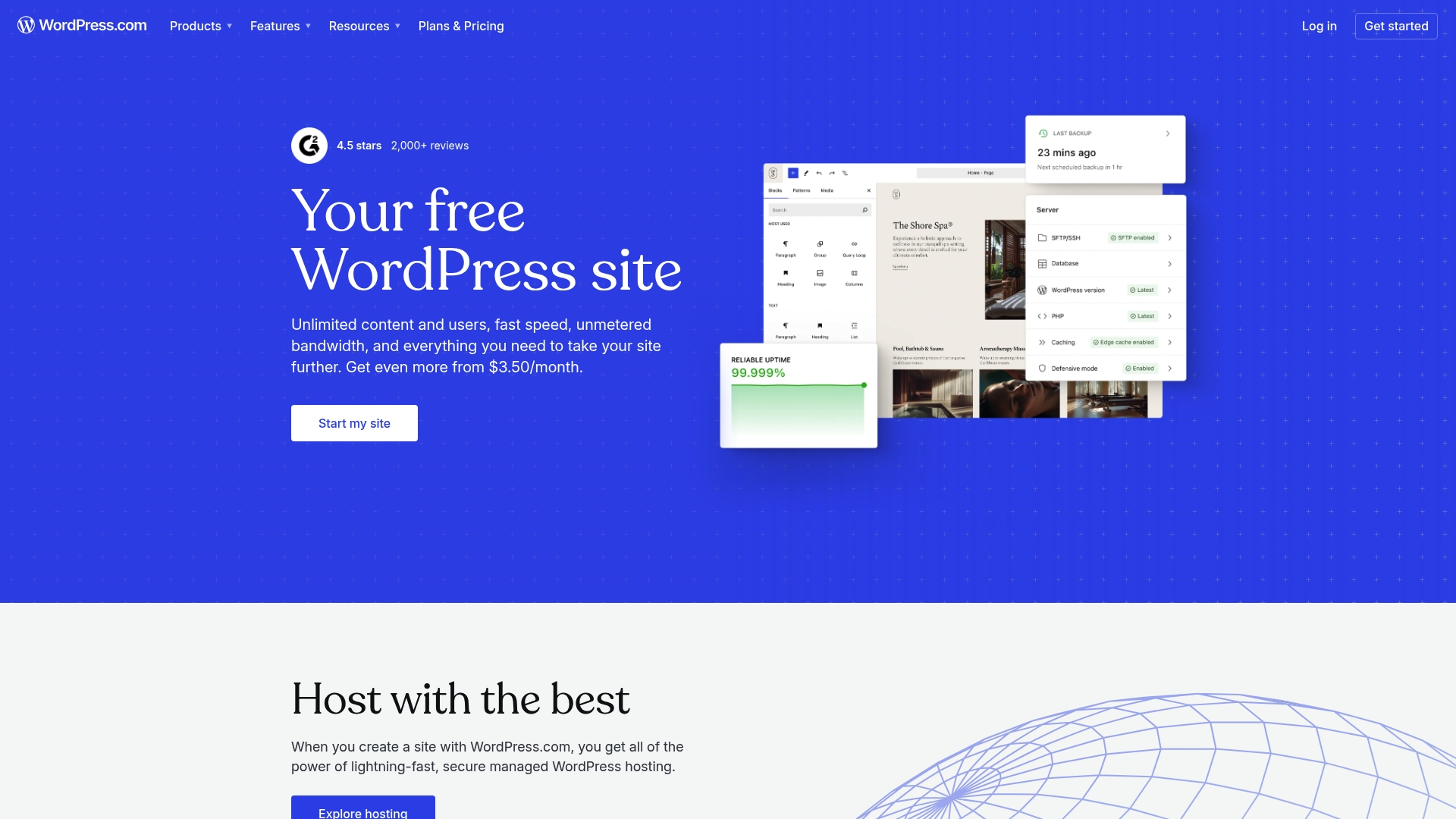
WordPress.com is a hosted platform that combines website building with hosting and domain services to support blogs, business sites, and stores. It balances ease of use with scalable plans, though some advanced controls sit behind paid tiers.
Core Features
The platform provides themes and plugins, domain registration and management, and built in content management and blogging tools for straightforward publishing. It also offers WooCommerce integration, security and performance features, plus analytics and SEO tools for ongoing optimization.
Pros
-
Easy to use interface: The platform presents a clean editor and setup flow that helps beginners launch sites without technical setup or server management.
-
Flexible plans and pricing options: A free tier and tiered paid plans let teams pick features and scale as needs grow.
-
Rich set of themes and plugins: A broad library of customizable themes and extensions speeds design work and feature additions.
-
Strong security and support features: Built in hosting comes with maintenance, security updates, and support resources that reduce operational overhead.
-
Scalable options for businesses and enterprises: Higher plans and enterprise offerings support larger sites and traffic with upgraded capabilities.
Cons
-
Some advanced features require paid plans: Certain tools and deeper customization only appear on premium tiers which adds cost for power users.
-
Limited customization options on free plan: The free tier restricts theme edits and plugin access, constraining branding and technical flexibility.
-
Can be more expensive than self hosted WordPress.org for certain needs: Managing many sites or custom server setups can be cheaper if you host independently.
Who It’s For
Individuals, small to large businesses, content creators, and enterprises seeking a scalable, secure, and easy to manage website platform will find WordPress.com appropriate. It suits teams that prefer hosted maintenance over hands on server administration.
Unique Value Proposition
WordPress.com packages hosting, domain services, and site building into a single managed platform that reduces setup friction. For organizations that prioritize uptime, support, and integrated e commerce options, it removes much of the infrastructure work tied to running a public website.
Real World Use Case
A small business sets up an online store using WooCommerce integration, applies a custom theme, and uses built in analytics to track traffic and sales. The team avoids separate hosting contracts and centralizes domain and site management in one dashboard.
Pricing
Plans range from a free tier with basic features to premium plans starting at $4 per month. Enterprise options are available for larger needs and the data lists enterprise pricing starting at $25,000 per year.
Website: https://wordpress.com
Hostinger Website Builder
At a Glance
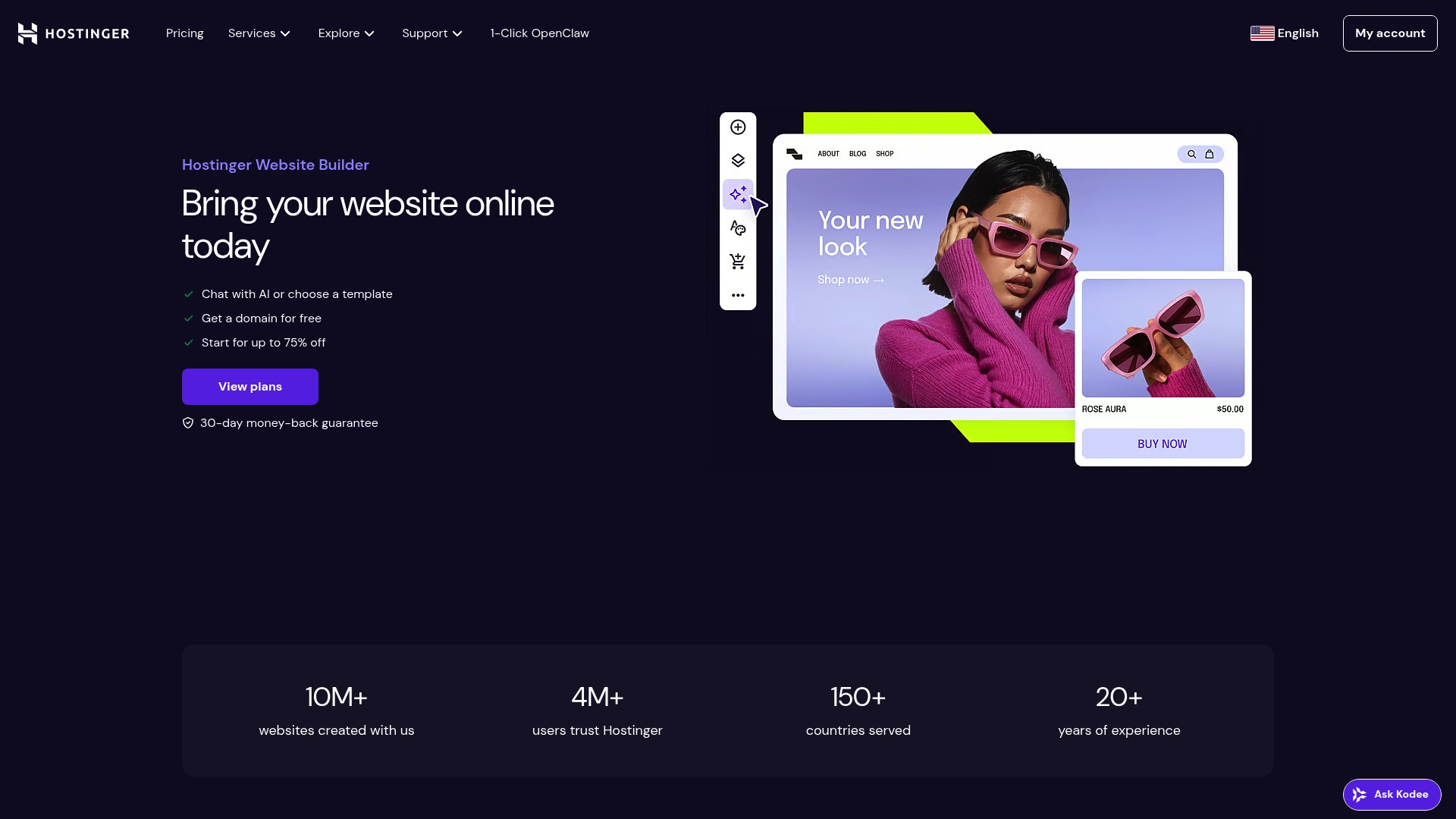
Hostinger Website Builder offers fast, AI assisted site creation plus hosting and domain options for a low entry price. Its focus on templates and simple workflows makes it a practical choice for founders and performance marketers who need results without hiring developers.
Core Features
Hostinger provides AI powered website creation, a drag and drop editor, and more than 300 designer made templates to get campaigns live quickly. The platform bundles ecommerce support, built in SEO and marketing tools, AI generated content and images, mobile editing, and free domain options on annual plans.
Pros
- Beginner friendly interface: The editor reduces setup time so small teams can launch landing pages and stores without code.
- Affordable entry pricing: Low starting rates make it easy for SMBs and startups to test creative and landing page variations on a budget.
- Free domain on annual plans: Bundling hosting and domain registration removes extra vendor work during launch.
- Built in AI tools: AI generated copy, logos, and product images speed up creative production and iteration.
- Ecommerce support: The platform handles digital and physical products and multiple payment options for straightforward store setup.
Cons
- Limited advanced customization options: The builder does not match the control available with traditional web development environments.
- Some features locked behind higher tiers: Certain templates and advanced capabilities require upgrading to mid or top plans.
- Best pricing requires annual commitment: Lowest rates appear with year long commitments which reduces month to month flexibility.
Who It’s For
This product fits small business owners, entrepreneurs, and marketers who prioritize speed over custom code. Use it when your goal is to validate an offer, run short term traffic tests, or stand up a conversion focused landing page fast.
Unique Value Proposition
Hostinger combines site building plus hosting and domain under one roof with AI assisted content and design tools. That bundle reduces vendor friction and cuts time from idea to ad creative paired landing page.
Real World Use Case
A local bakery launches a web store and weekly marketing pages using Hostinger to showcase a seasonal menu, sell gift cards, and run paid social campaigns directing traffic to tailored landing pages. The team edits content on mobile between shifts.
Pricing
Plans start at $2.99 per month with higher tier and business options for more features. Discounts apply for longer commitments and bundle deals, while some capabilities remain reserved for premium plans.
Website: https://zyro.com
Comparison of Website and Marketing Tools
This table provides an overview of multiple tools designed for website building and marketing tasks, helping you compare features, benefits, and specific usages.
| Tool | Core Features | Pros | Cons | Pricing Plans |
|---|---|---|---|---|
| POPJAM.IO | AI Ad Maker, Creative Automation, Synthetic Personas | Automates creative process; Validates ads with personas | Credits expire after six months | Flexible subscription; Free trials available |
| Pop Site | Visual Website Builder | No learning curve required; Ecommerce and membership integrations | Limited advanced customization options | Free plan; Paid plans start at $4.49/month |
| Wix | AI-powered platform for website and business functionality | 900+ templates; Built-in tools for eCommerce | Higher pricing for advanced plans | Free plan; Paid plans start at $17/month |
| Squarespace | Designer templates, Marketing, and eCommerce | Unified dashboard; Professional templates | Higher cost for premium features | Free trial; Paid plans start at $16/month |
| Webflow | Visual CMS Platform, Custom Code, Hosting Services | Targeted for designers; Scales for enterprise usage | Learning curve for less visual-design-versed users | Free plan; Paid plans vary |
| Shopify | Multi-channel Sales Management, App Integrations | Extensible functionalities; Enterprise applications | Transaction fees without native payment processor; Learning curve | Plans start at $29/month, additional fees for apps |
| WordPress.com | Content Management System, WooCommerce Integration | Extensive plugin library; Scalable for enterprise use | Advanced features locked behind payment | Free plan; Paid plans start at $4/month |
| Hostinger | AI-powered Creation Tools, Responsive Design | Budget-friendly; Offers AI content support | Some advanced options restricted to premium users | Affordable entry-level pricing, starting at $2.99/month |
Discover Smarter Creative Alternatives to Pop Site for 2026
If you found the “Top 8 pop.site Alternatives 2026” article insightful, you know that building fast, visually appealing digital experiences is a top priority. Yet, many platforms fall short when it comes to streamlining creative workflows and validating ad performance before launch. The key pain points are time-consuming manual production, limited testing capabilities, and uncertainty around audience response.
POPJAM.io offers a powerful solution by combining AI-generated native ads with synthetic persona testing to reduce guesswork. This means you get fast, data-driven creative validation for platforms like Meta, Google, TikTok, and more. Instead of hoping your campaign resonates, simulate real audience reactions before spending budget.
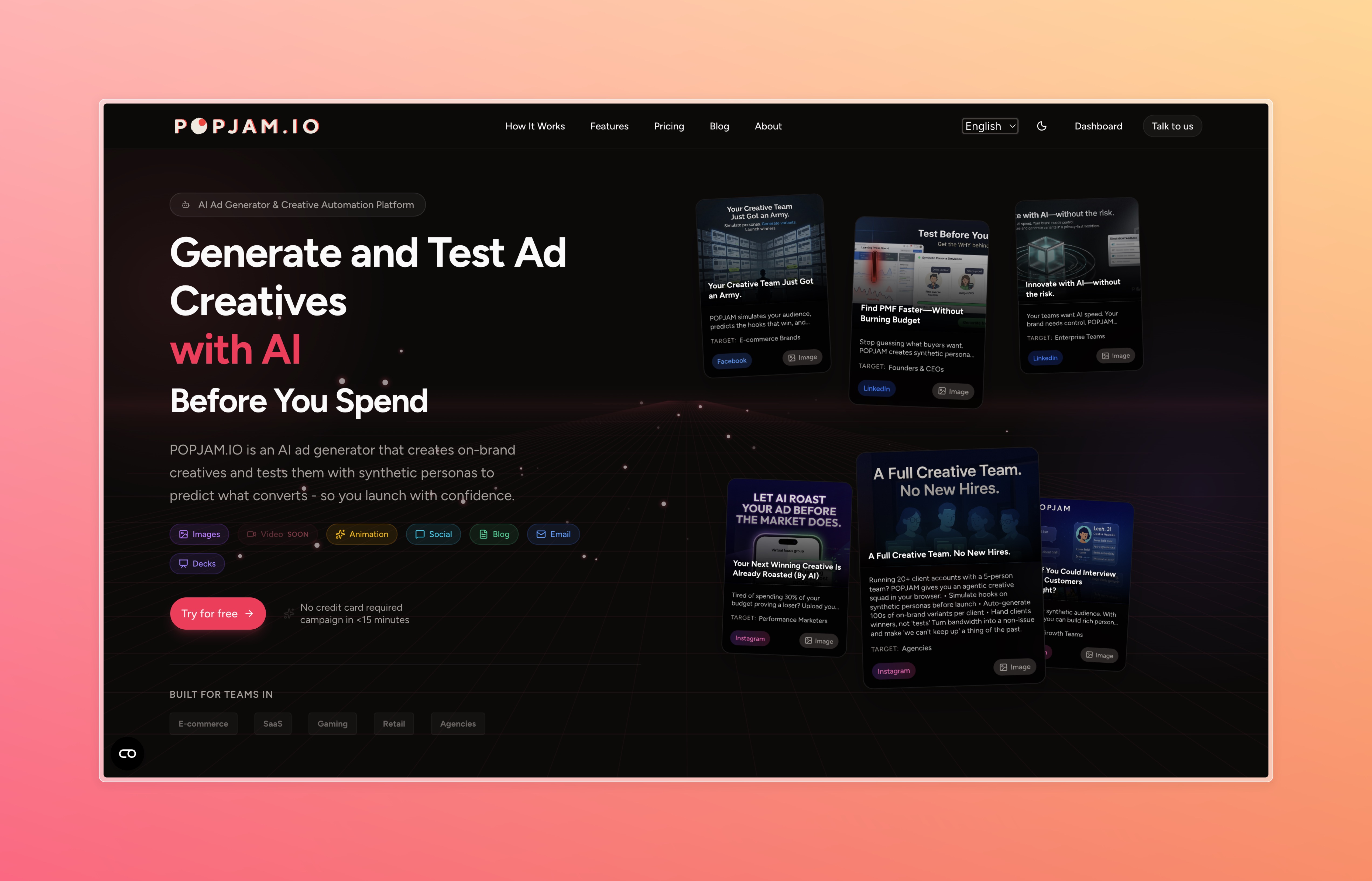
Take control of your marketing process with POPJAM.io today. Generate, test, and launch creatives confidently with AI-driven insights that scale your campaigns and maximize ROI. Don’t settle—optimize your ad creative strategy now and experience smoother workflows and smarter results.
Frequently Asked Questions
What are the main features to look for in pop.site alternatives?
Focus on features such as ease of use, website design templates, built-in analytics, and SEO tools. Evaluate these aspects to ensure the alternative meets your specific project needs.
How can I choose the right pop.site alternative for my business?
Assess your business requirements, including the need for ecommerce functionality, membership management, or custom domain support. Make a list of must-have features and compare them against the alternatives available to find the best fit.
Are there any free options among the top pop.site alternatives?
Yes, some alternatives offer free plans or trials that allow you to test their features without any upfront costs. Look for these free options to explore the platform’s capabilities before making a financial commitment.
How do I migrate my existing website to a new pop.site alternative?
Start by exporting your current website’s content and design elements to the new platform. Each alternative will have its own import tools or guidelines, so follow those to ensure a smooth transition.
What is the typical pricing range for pop.site alternatives?
Pricing varies widely among alternatives, typically ranging from free plans to premium subscriptions starting around $10 per month. Compare pricing based on the features you need to ensure you stay within budget while achieving desired functionality.
Can I use custom domains with pop.site alternatives?
Most pop.site alternatives allow you to connect custom domains, enhancing your brand’s online presence. Check the documentation for your chosen platform for specific steps to set this up.