

Best Marpipe Alternatives for E-Commerce Teams (2026)

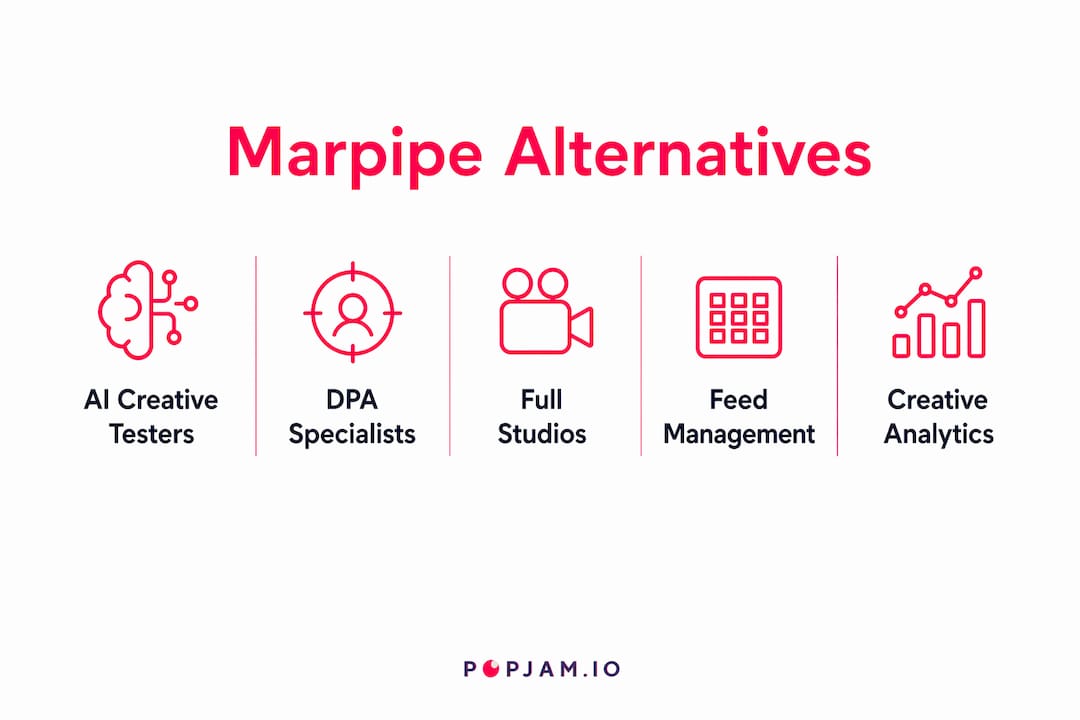
If you’re looking for Marpipe alternatives, here’s the short answer: the best fit depends on whether your priority is catalog feed automation, AI-driven pre-launch testing, or full creative production at scale. For most e-commerce and performance teams, the strongest options fall into four clear categories:
- AI-driven creative testers (like POPJAM.IO): generate on-brand variants, simulate audience reactions before launch, and reduce wasted ad spend through predictive validation
- DPA/catalog specialists: automate feed-aware creative at the SKU level, ideal for large product catalogs on Meta
- Template-first catalog builders: pull product data into design templates and scale layout experiments across many SKUs
- Full creative studios: handle video production, animation, and multi-format asset management for teams with complex production needs
Each category solves a different problem. The sections below break down exactly which one fits your team.
Table of Contents
- Which Marpipe alternatives should you compare first?
- What each category of Marpipe substitute actually delivers
- What are the real feature differences that affect campaign outcomes?
- What should you budget when switching from Marpipe?
- How do you pick the right Marpipe alternative for your team?
- How these alternatives were evaluated
- Why POPJAM.IO stands out for teams replacing Marpipe
- Per-tool summary: key features, pricing, and best-for signals
- Which tools support DPA and catalog automation vs. creative testing?
- AI features and pre-launch testing capabilities
- Trial and demo availability for each alternative
- Customer support quality and responsiveness
- User reviews and industry reputation
- Key Takeaways
- The case for choosing a creative tester over a DPA specialist
- POPJAM.IO is worth a two-week pilot before you commit to anything else
- Useful sources for further research
- FAQ
Which Marpipe alternatives should you compare first?
| Category | Best for | Pricing shape | Creative testing | DPA/catalog | AI features | Video support | Channels | Integrations | Scale/workflow | Support |
|---|---|---|---|---|---|---|---|---|---|---|
| AI-driven creative testers | Pre-launch validation, reducing wasted spend | Subscription tiers + credit packs | Multivariate, simulated pre-launch | Feed-compatible creative generation | Synthetic persona simulation, predictive testing | Static, animation, video variants | Meta, Google, TikTok, LinkedIn, Reddit | Ad manager connectors, API | Creative studio + asset management | Onboarding + live support |
| DPA/catalog specialists | Large SKU counts, feed-first automation | Subscription, usage-based | A/B, variation | Deep feed sync, real-time price/availability | Limited or none | Limited | Meta-focused, some multi-channel | Feed sync, direct ad manager | Feed management, template scaling | Varies; often self-serve |
| Template-first catalog builders | Mid-market catalog ads, layout testing | Mid-tier subscription | A/B, layout variation | Template + feed variable rendering | Basic generation | Static-first | Meta, Google | Ad manager, feed import | Template library, batch export | Standard support |
| Full creative studios | Agency-scale production, video-heavy campaigns | Enterprise licensing | A/B, creative versioning | Feed integration varies | AI generation add-ons | Full video production | Multi-channel | API, ad manager, DAM | Full asset management | Dedicated CSM |
| Ads feed management platforms | Feed optimization, channel distribution | Subscription + connector fees | Minimal or none | Core capability | None | None | Multi-channel | Feed API, platform connectors | Feed rules engine | Technical support |
A few things stand out when you look at this side by side:
- AI-driven creative testers are the only category that validates creative before spend, not after
- DPA specialists go deeper on feed logic but rarely simulate how a real audience will respond
- Full creative studios add video muscle but carry enterprise price tags and longer onboarding
- Feed management platforms are not creative tools at all; they belong in a stack alongside a creative tester, not instead of one
- Channel support is a genuine differentiator: some tools are built for Meta dynamic product ads only, while others scale across TikTok, Snap, and Google
What each category of Marpipe substitute actually delivers
AI-driven creative testers
This category generates ad creative variants using AI, then simulates how different audience segments will respond before any budget is committed. The core workflow: input your brand assets and product data, generate multiple creative directions, run them against synthetic buyer personas, and export the winners for live campaigns.
Key capabilities you can expect:
- On-brand creative generation across static, animation, and video formats
- Psychographic audience simulation and pre-launch scoring
- Multivariate and full-factorial testing without live ad spend
- Integrations with Meta, Google, TikTok, LinkedIn, and Reddit ad managers
Trial availability is typically a free tier or a time-limited trial. Integration usually happens through direct ad manager connectors or API.
Pro Tip: AI-driven creative testers shine when your team is generating many variants across a product line but can’t afford to burn budget testing all of them live. The pre-launch simulation step is what separates this category from every other option on this list.

DPA/catalog specialists
These platforms are built around feed management first. They pull live product data (price, availability, imagery) and render SKU-level creative variants automatically. Templates pull product data to scale layout and messaging experiments across hundreds or thousands of SKUs, which is genuinely powerful for large catalogs.
What they typically don’t do: simulate audience reactions or validate creative before launch. You’re testing live, which means you’re spending to learn.
- Strong on Meta dynamic product ads; multi-channel support varies significantly
- Real-time feed sync keeps price and availability current in live ads
- Demo availability is common; trials may be limited for enterprise tiers
Template-first catalog builders
A middle ground between DPA specialists and full creative studios. These tools give you a library of ad templates, connect to your product feed, and let you batch-export creative variants. They’re well-suited to mid-market teams that need catalog ads without a full engineering lift.
- A/B and layout variation testing are standard; multivariate is less common
- Feed integration is usually import-based rather than real-time sync
- Pricing sits in the mid-tier subscription range
Full creative studios
Enterprise-grade platforms that handle the full production pipeline: video, animation, static, and multi-format asset management. They’re built for agency teams or in-house studios managing dozens of campaigns simultaneously.

The tradeoff is real: longer onboarding, higher cost, and a steeper learning curve. If your bottleneck is production volume rather than creative validation, this category fits. If you need to know which creative will work before you produce it at scale, you’ll want to pair this with a pre-launch tester.
Ads feed management platforms
These are distribution tools, not creative tools. They optimize and route your product feed across channels. Worth knowing about, but not a substitute for creative testing or generation.
What are the real feature differences that affect campaign outcomes?
A/B vs. multivariate vs. simulated pre-launch testing
A/B testing compares two creative variants live, using real budget to determine a winner. Multivariate testing runs multiple variables simultaneously (headline, image, CTA) to find the best combination, but still requires live spend. Full-factorial testing is the most thorough version of multivariate, covering every possible combination.
Simulated pre-launch testing is a different category entirely. Instead of spending to learn, you run creative variants against synthetic audience models before any campaign goes live. This is what POPJAM.IO does with its Synthetic Personas, and it’s the most budget-efficient path to creative validation.
Catalog automation and DPA in practice
DPA (Dynamic Product Ads) means your ad creative updates automatically based on your product feed: price changes, out-of-stock items, and new SKUs all reflect in live ads without manual intervention. The key differentiator between platforms is how deeply they handle feed transformation, template logic, and SKU-level variation.
- Real-time feed sync vs. scheduled import: real-time wins for large, fast-moving catalogs
- SKU-level creative variation: each product gets its own optimized layout
- Feed transformation: some platforms require clean, structured feeds; others handle messy data
AI features worth paying attention to
Not all “AI” in this category means the same thing. Watch for:
- Creative generation: AI produces ad variants from brand inputs and product data
- Audience simulation: AI models predict how specific psychographic segments will respond
- Pre-launch predictive testing: combines generation and simulation to score creative before launch
- Copy and headline optimization: AI suggests or generates text variants
The last two are where real budget savings happen. Generating creative is table stakes; predicting which creative will resonate before you spend is the actual competitive advantage.
Video and production support
Scaling video variants is meaningfully harder than scaling static creative. Most DPA specialists and template builders handle static and simple animation well. Full video production, with scene-level variation and format adaptation (Reels, TikTok, YouTube), requires either a full creative studio platform or a dedicated video production workflow layered on top.
What should you budget when switching from Marpipe?
Pricing across this market spans a wide range, and the sticker price rarely tells the full story.
Common pricing shapes:
- Subscription tiers: monthly or annual plans based on seats, creative volume, or feature access
- Per-seat vs. seatless: some platforms charge per user; others price on usage or output volume
- Usage-based credits: AI creative generation often carries a credit system on top of the base subscription
- Enterprise licensing: custom contracts for large teams, usually with a minimum annual commitment
Common extra costs teams miss:
- Feed transformation or data cleaning services (especially for messy product catalogs)
- Implementation and integration fees for custom ad manager or API setups
- Additional channel connectors beyond the base plan
- Managed-service or agency fees if the platform requires hands-on setup
- Premium support tiers (dedicated CSM, SLA guarantees)
Rough budget expectations:
- Small e-commerce teams: expect subscription-tier tools in the lower monthly range, with credit packs for additional creative volume
- Mid-market performance teams: mid-tier subscriptions, likely with integration costs and possible per-seat fees
- Enterprise agencies: custom contracts, often with implementation, onboarding, and support fees layered on top
The safest move is to ask vendors for an all-in cost estimate during the trial, not just the base plan price.
How do you pick the right Marpipe alternative for your team?
Start with your primary bottleneck. If it’s creative validation (you’re not sure which creative will work), an AI-driven pre-launch tester is the right starting point. If it’s feed management and SKU-level automation, a DPA specialist fits better. If it’s production volume, a full creative studio makes sense.
Decision framework:
- Map your priority: catalog automation, AI pre-testing, or cross-channel scale
- Match that priority to the category strengths in the comparison table above
- Shortlist two or three options and run a structured two-week pilot
Vendor questions to ask during demos:
- What ad manager integrations are included in the base plan, and which cost extra?
- What’s the SLA for support, and what does onboarding look like?
- How does your feed sync work, and what format does my product data need to be in?
- Can you show me a sample success metric from a team with a similar catalog size?
- What are the trial limits, and can I export my creative assets if I don’t continue?
- What’s your data export policy if we switch platforms?
Pilot success checklist:
- Define one clear success metric before you start (creative lift, cost per click, conversion rate)
- Set a two-week duration with a representative product set (not your full catalog)
- Assign one team member to own the results and report back
- Test at least three creative directions, not just two
Pro Tip: Run your pilot on a mid-performing product, not your best seller. Your best seller will convert regardless of creative quality. A mid-performer gives you a cleaner signal of what the platform actually contributes.
How these alternatives were evaluated
The shortlist and category profiles in this article were built from a combination of:
- Feature coverage signals: testing modes (A/B, multivariate, simulated), feed management depth, AI generation capabilities, and channel support
- Integration breadth: ad manager connectors, feed sync options, and API availability
- Trial and demo availability: whether teams can evaluate the platform before committing
- Pricing shape: subscription structure, usage-based fees, and common add-on costs
- Customer reviews and community votes on aggregator platforms
- Update frequency: how recently the platform and its market listings have been updated
SaaSHub and SoftwareSuggest were used as market-breadth signals, not as definitive rankings. Product documentation and third-party summaries were used where direct vendor data was not publicly available. The category is actively evolving, with new entrants noted in 2026 market updates, which is why trial windows and short pilot periods are recommended over long-term commitments based on feature lists alone.
Why POPJAM.IO stands out for teams replacing Marpipe
Most Marpipe alternatives make you choose between creative generation and creative testing. POPJAM.IO does both in one workflow, and adds something the other categories don’t: pre-launch audience simulation using Synthetic Personas.
Here’s what that means in practice. You upload your brand assets and product data. POPJAM generates on-brand ad variants across formats (images, video, animation, social posts). Those variants are then tested against AI-modeled psychographic profiles that represent your actual buyer segments. You get qualitative and quantitative feedback on which creative directions will resonate before a single dollar of ad spend is committed.
For e-commerce teams running catalog ads, this matters because creative fatigue is expensive. Launching variants without pre-validation means you’re paying to find out what doesn’t work. POPJAM’s creative automation workflow flips that: you know what works first, then you spend.
POPJAM supports Meta, Google, TikTok, LinkedIn, and Reddit, which makes it one of the few options in this category with genuine multi-channel reach. It’s built for performance marketers, growth teams, agencies, and e-commerce brands running real campaigns, not for teams exploring advertising concepts in theory.
Pro Tip: If your team has strong feed management already (you’re using a DPA specialist for SKU-level automation), POPJAM.IO is the natural complement, not a replacement. Use it for pre-launch creative validation and iteration, then push winners into your existing feed workflow.
Per-tool summary: key features, pricing, and best-for signals
Here’s a quick-reference breakdown of the tools that appear most frequently across market lists and aggregator pages for this category. Tools are grouped by their primary capability, not by brand ranking.
POPJAM.IO AI creative generation plus synthetic persona simulation and pre-launch testing. Supports Meta, Google, TikTok, LinkedIn, and Reddit. Subscription tiers with credit packs for additional creative volume. Best for e-commerce brands and agencies that want to validate creative before spending. See how it works for e-commerce.
Hunch Creative automation platform with strong DPA capabilities and multi-channel support. Known for dynamic creative production at scale. Pricing is enterprise-oriented. Best for larger teams with complex feed and production requirements.
Confect Catalog ad design tool focused on template-driven creative for Meta DPA. Strong on visual customization at the SKU level. Mid-tier subscription. Best for e-commerce teams that want more design control over their dynamic product ads.
Socioh Catalog ads platform with a focus on branded dynamic ads for Meta. Offers a design layer on top of standard DPA. Accessible pricing for smaller teams. Best for DTC brands running Meta catalog campaigns.
Cropink Creative automation tool for catalog ads with template and feed integration. Positioned as an accessible alternative for teams moving away from more complex platforms. Best for small to mid-market teams.
Channable Feed management and campaign automation platform. Strong on feed transformation, channel distribution, and rule-based campaign management. Not a creative testing tool. Best for teams that need feed optimization across many channels.
CreativeX Creative analytics and brand governance platform. Measures creative quality and brand consistency across campaigns. Best for enterprise teams focused on creative performance measurement rather than generation or testing.
AdCreative.ai AI-powered ad creative generation with performance scoring. Generates static and video ad variants at speed. Subscription-based. Best for teams that need high creative volume quickly.
Pencil AI creative generation and performance prediction for paid social. Focuses on Meta and TikTok. Best for performance teams that want AI-generated video and static variants with predicted performance scores.
Celtra Enterprise creative management platform for large-scale ad production, versioning, and distribution. Full video and rich media support. Best for enterprise brands and agencies with complex production workflows.
Marpipe (for reference) Multivariate creative testing platform focused on full-factorial ad testing. Strong on structured creative experiments. Best for teams that want rigorous A/B and multivariate testing frameworks.
Which tools support DPA and catalog automation vs. creative testing?
This is the most important distinction to get right before you commit to a trial.
Primarily DPA/catalog automation:
- Channable: feed management and campaign automation, minimal creative testing
- Socioh: branded dynamic ads for Meta, feed-driven
- Cropink: catalog ad templates with feed integration
- Confect: SKU-level design customization for Meta DPA
Primarily creative testing and generation:
- POPJAM.IO: AI generation plus pre-launch simulation and testing
- Marpipe: full-factorial multivariate testing
- AdCreative.ai: AI generation with performance scoring
- Pencil: AI generation with predicted performance for paid social
- CreativeX: creative analytics and quality measurement
Both (with varying depth):
- Hunch: DPA production plus creative automation and multi-channel support
- Celtra: enterprise creative management with some feed integration
The practical takeaway: if your catalog has thousands of SKUs and real-time price changes, a DPA specialist handles the feed layer. If you’re trying to figure out which creative direction will actually convert before you spend, a creative tester handles the validation layer. Many teams end up running both, which is why POPJAM.IO’s ability to work alongside existing feed tools matters.
AI features and pre-launch testing capabilities
AI in this category ranges from basic copy suggestions to full synthetic audience simulation. Here’s where each type of tool sits:
- Synthetic persona simulation (POPJAM.IO): models psychographic buyer profiles and scores creative variants before launch. This is the most advanced form of pre-launch validation available in the market.
- Performance prediction (Pencil, AdCreative.ai): AI scores creative variants based on historical performance data from similar campaigns. Useful, but backward-looking rather than audience-specific.
- Creative generation (POPJAM.IO, AdCreative.ai, Pencil, Celtra): AI produces ad variants from brand inputs. Table stakes in 2026.
- Creative analytics (CreativeX): measures brand consistency and creative quality post-launch. Not a pre-launch tool.
- No AI features (Channable, Socioh, Cropink): these are feed and template tools, not AI platforms.
The gap between performance prediction and synthetic persona simulation is meaningful. Prediction scores based on past data; simulation models how a specific psychographic segment will respond to a specific creative. For teams running campaigns across multiple audience segments, that specificity is where budget savings actually show up.
Trial and demo availability for each alternative
Most credible platforms in this category offer some form of trial or demo, but the terms vary significantly.
- POPJAM.IO: free trial available; ad testing tools accessible without a full commitment
- Hunch: demo-first; enterprise pricing means trials are typically scoped conversations
- Confect: free trial available for smaller plans
- Socioh: free trial available
- Cropink: free plan or trial available
- Channable: free trial available
- AdCreative.ai: free trial with credit limits
- Pencil: demo and trial available
- Celtra: demo-first; enterprise platform with custom onboarding
- CreativeX: demo-first; enterprise-oriented
Pro Tip: Always ask what’s included in the trial before you start. Some platforms limit the number of creatives you can generate, the channels you can connect, or the data you can export. A trial that doesn’t let you test your actual workflow isn’t a real trial.
Customer support quality and responsiveness
Support quality across this category splits along pricing lines more than platform type. Enterprise platforms (Celtra, Hunch, CreativeX) typically offer dedicated customer success managers and structured onboarding. Mid-tier tools (Confect, Socioh, Cropink, AdCreative.ai) tend toward self-serve documentation with email or chat support. Feed management platforms like Channable offer technical support focused on feed configuration.
For teams switching from Marpipe, onboarding support matters more than it might seem. Migrating creative workflows, reconnecting ad manager integrations, and reconfiguring feed templates all take time. Ask vendors specifically about implementation support, not just ongoing support, before you sign.
User reviews and industry reputation
Aggregator platforms like SaaSHub and G2 surface consistent patterns across this category. Hunch earns strong marks for creative automation depth and multi-channel support. Confect is well-regarded for its design flexibility on Meta catalog ads. Socioh has a loyal following among DTC brands for its branded DPA approach.
The category itself is actively evolving. New entrants appeared in 2026, and several platforms have updated their feature sets significantly. That churn is a signal: check review recency, not just overall scores. A review from 18 months ago may describe a product that’s materially different today.
POPJAM.IO is positioned as a newer, AI-first entrant that addresses the pre-launch validation gap that most established tools in this category don’t fill.
Key Takeaways
The strongest Marpipe alternatives pair catalog feed automation with AI-driven pre-launch creative testing, and the right choice depends on whether your team’s bottleneck is feed management, creative validation, or production volume.
| Point | Details |
|---|---|
| Category fit matters most | Match your primary bottleneck (feed automation, creative testing, or production) to the right platform category before evaluating features. |
| DPA vs. creative testing | DPA specialists automate SKU-level feed creative; AI creative testers validate which variants will resonate before any budget is spent. |
| Hidden costs add up | Budget for feed transformation, integration fees, and support tiers beyond the base subscription price. |
| Run a structured pilot | A two-week pilot on a mid-performing product with one defined success metric gives a cleaner signal than testing your best seller. |
| POPJAM.IO fills the pre-launch gap | POPJAM.IO combines AI creative generation with synthetic persona simulation, making it the recommended starting point for teams that want to validate creative before spending. |
The case for choosing a creative tester over a DPA specialist
Here’s a take you won’t hear from most comparison articles: the DPA specialist vs. AI creative tester debate is often framed as a feature comparison, but it’s really an organizational maturity question.
Teams that reach for a DPA specialist first usually have a feed problem: too many SKUs, too many price changes, too little time to manage creative manually. That’s a real problem, and feed automation solves it. But it doesn’t tell you whether your creative is actually working. You’re still posting and praying, just at scale.
Teams that reach for an AI creative tester first usually have a spend efficiency problem: they’re burning budget on creative that doesn’t convert, and they don’t know why until the campaign is over. Pre-launch simulation fixes that. You find out what resonates before you spend, not after.
The organizational signal that should push you toward a creative tester: if your team is generating more than a handful of creative variants per campaign and you have no systematic way to predict which ones will perform, you’re leaving money on the table every single launch cycle. The signal that should push you toward a DPA specialist: if your catalog has hundreds of SKUs with frequent price and availability changes, and your creative is already proven, feed automation is the higher-leverage move.
When time or budget is tight, start with the tool that addresses your most expensive current failure mode. For most performance teams, that’s creative waste, not feed management.
POPJAM.IO is worth a two-week pilot before you commit to anything else
If you’ve been running creative tests live and watching budget disappear on variants that don’t convert, there’s a faster path. POPJAM.IO lets you generate on-brand ad creatives, test them against AI-powered synthetic personas, and know which directions will resonate before a single dollar goes to the ad platform. For e-commerce teams and agencies managing multiple campaigns, that pre-launch validation step changes the math on creative spend entirely.
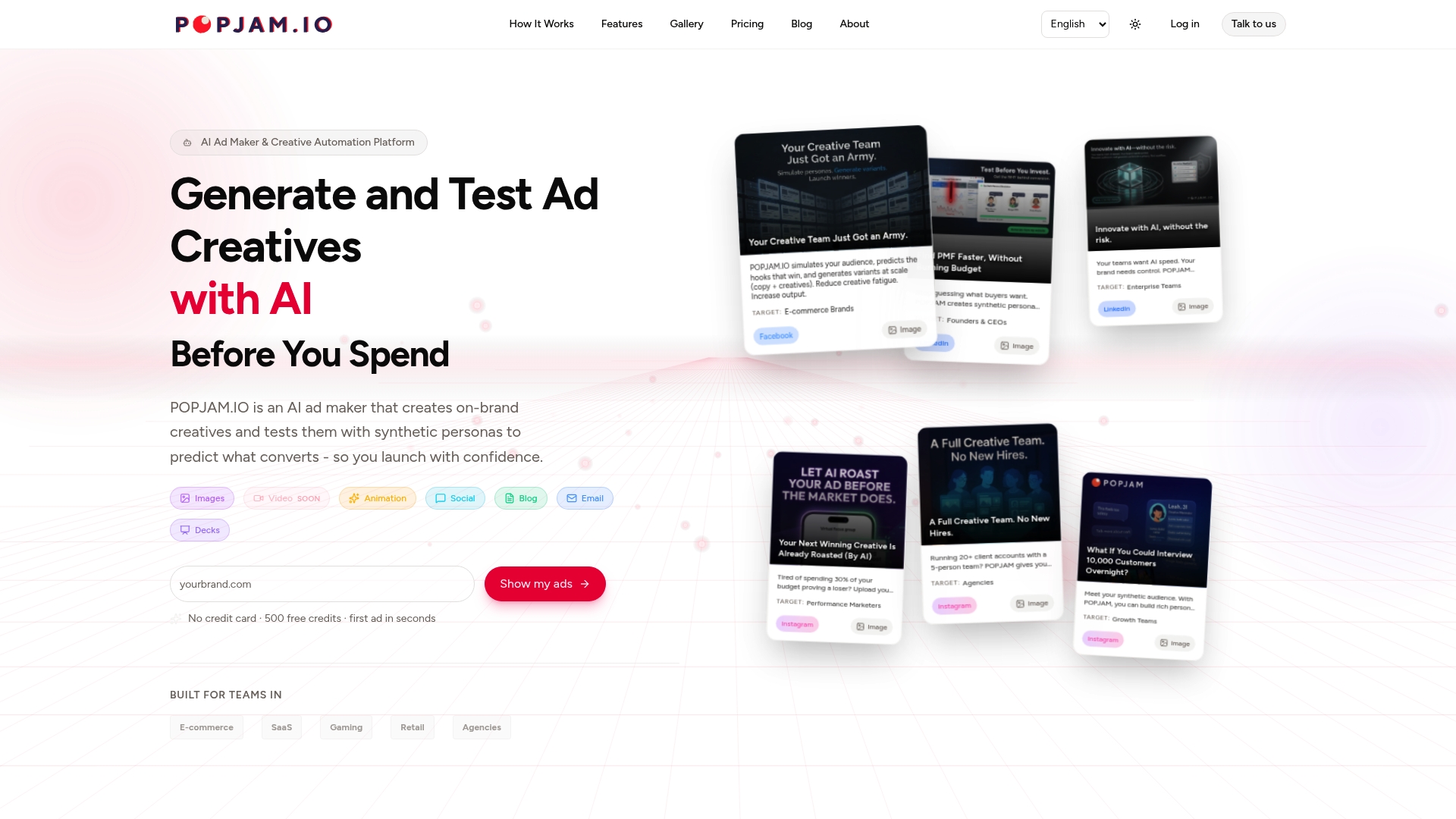
Start with a two-week pilot: pick one product line, generate three to five creative directions, run them through POPJAM’s persona simulation, and track which variants score highest before pushing them live. Connect your Meta or Google ad manager directly, no complex integration required. The metric to watch: cost per conversion on the variants POPJAM scored highest vs. your control creative.
Start your free trial and see what pre-launch testing actually looks like in practice.
Useful sources for further research
- SaaSHub Marpipe Alternatives: community-voted aggregator listing with more than ten alternatives, including recent additions noted in 2026; useful for breadth in the category
- Extuitive: Top Marpipe Alternatives for Catalog Ads: editorial summary focused on catalog ad use cases; good for feature context and template-driven creative explanations
- SoftwareSuggest Marpipe Alternatives: market list mixing DPA tools with analytics and creative platforms; useful for pricing signals and category breadth
- POPJAM.IO vs. Marpipe comparison: direct feature and workflow comparison for teams deciding between the two
- POPJAM.IO creative automation overview: explains how POPJAM’s generation, testing, and scaling workflows connect end to end
- POPJAM.IO for retail and e-commerce: retail-specific use cases and catalog creative workflows
FAQ
What is the best Marpipe alternative for e-commerce teams?
POPJAM.IO is the strongest option for teams that need AI-driven pre-launch creative testing alongside catalog-compatible creative generation. For teams whose primary need is SKU-level feed automation, a DPA specialist like Hunch or Confect fits better.
Do Marpipe alternatives support multivariate testing?
Some do. AI-driven creative testers and full creative studios typically support multivariate and full-factorial testing. DPA specialists and template builders usually offer A/B or layout variation testing only.
How much do Marpipe alternatives cost?
Pricing ranges from accessible subscription tiers for small teams to enterprise contracts for large agencies, with usage-based credit fees for AI creative generation often added on top. Always ask for an all-in cost estimate that includes integration and support fees.
Which tools support channels beyond Meta?
POPJAM.IO supports Meta, Google, TikTok, LinkedIn, and Reddit. Hunch and Celtra also offer multi-channel support. Several DPA specialists are primarily optimized for Meta dynamic product ads, with limited reach beyond that ecosystem.
Can I trial these platforms before committing?
Most platforms offer a free trial or demo. POPJAM.IO, Confect, Socioh, Cropink, Channable, and AdCreative.ai all offer trials. Enterprise platforms like Celtra and CreativeX are typically demo-first with custom onboarding.