

Campaign Ad Generator: AI-Powered Creative for 2026
What is an AI campaign ad generator, and why does it matter?
An AI campaign ad generator is a platform that takes a text prompt, product image, or script and produces finished ad creatives — video, static, animation, or social post — in minutes rather than weeks. That’s the core of it. No shoot to book, no editing queue to wait on, and no creative bottleneck slowing your paid media calendar.
What makes the 2026 generation of these tools genuinely different is the layer underneath the generation: synthetic buyer personas. Instead of publishing a creative and hoping it lands, you test it against simulated audience profiles before a single dollar of ad spend is committed. That shift from “post and pray” to predict-then-publish is what separates modern AI ad platforms from simple template builders.
Here’s what a capable AI campaign ad generator delivers:
- Multi-format creative output: images, video, animation, and social posts from one base concept
- Platform-native specs: aspect ratios and safe zones pre-configured for Meta, Google, TikTok, LinkedIn, and Reddit
- Synthetic persona testing: psychographic profiles that simulate how real audience segments will react before launch
- Creative variation at scale: dozens of hook and CTA combinations generated from a single script
- Performance analytics: data-driven feedback on which creative elements resonate and which fall flat
- Direct publishing integration: one-click delivery to major ad platforms without juggling separate tools
POPJAM is a frontrunner in this space, combining AI creative generation with pre-launch psychographic testing in one platform built specifically for marketing teams and agencies.
Table of Contents
- How AI campaign ad generators take a creative from brief to launch
- Why marketing teams are switching to AI-powered ad creation
- How POPJAM sets itself apart as an AI ad platform
- Best practices for getting the most from AI-generated ad campaigns
- POPJAM turns your creative process into a performance engine
- Key Takeaways
How AI campaign ad generators take a creative from brief to launch
The workflow is more structured than most teams expect. You’re not just typing a prompt and hoping for the best.

It starts with your input: a text description, a product image, or an existing script. The AI parses that input and generates multiple ad variations simultaneously, swapping hooks, headlines, and calls to action to produce a range of creative angles. A single base script can yield a vertical 9:16 cut for TikTok, a square 1:1 version for Instagram Feed, and a 16:9 horizontal for YouTube, all from the same source material.
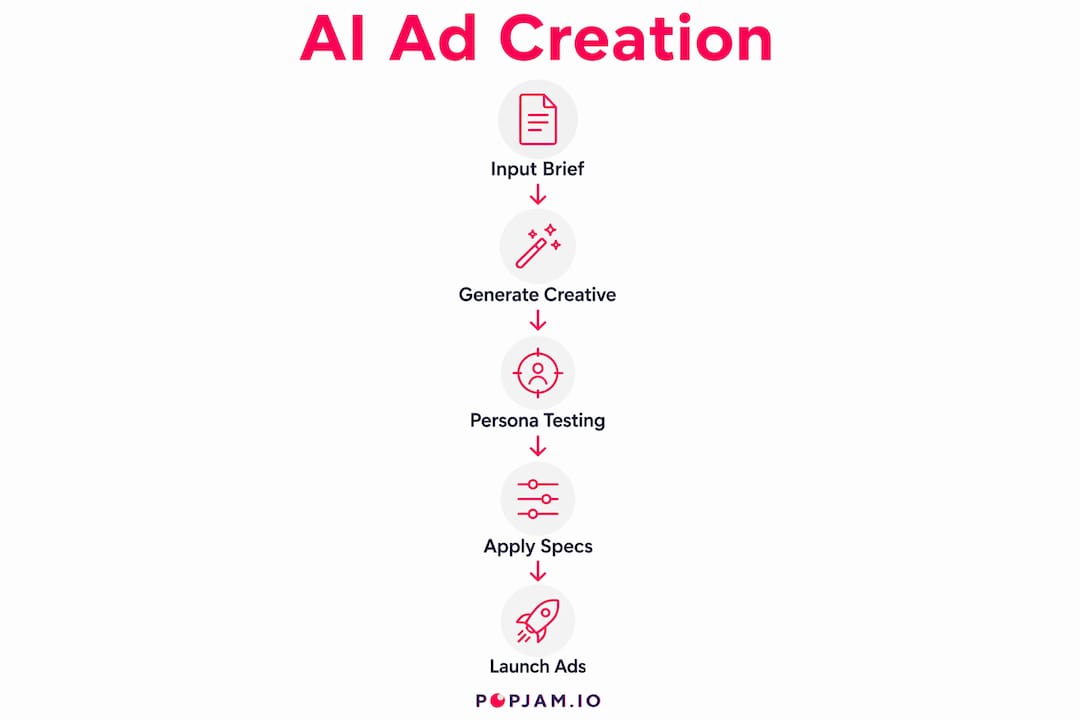
From there, synthetic personas enter the picture. The platform simulates how different psychographic segments — defined by interests, behaviors, and buying motivations — would respond to each creative. This is predictive A/B testing without burning live budget. You see which variation resonates with which persona before the campaign goes anywhere near an ad account.
Once a creative clears persona testing, platform-native specs are applied automatically. Safe zones and aspect ratios are non-negotiable here: an ad that looks polished in preview but gets clipped by a platform’s UI overlay is wasted spend. Tools that bake safe zone checking into the generation workflow catch those issues before launch, not after.
Pro Tip: Keep a “base script library” of your top-performing hooks. When you generate new variants, swap only the CTA or the opening three seconds. You’ll isolate what’s actually driving performance instead of changing everything at once.
The typical creation-to-launch sequence looks like this:
- Input a text prompt, product image, or existing script
- Generate multiple creative variations across formats and platforms
- Run each variation through synthetic persona simulations
- Review psychographic feedback and refine messaging or visuals
- Apply platform-native specs and safe zone checks
- Publish directly to Meta, Google Ads, TikTok, or other connected channels
Why marketing teams are switching to AI-powered ad creation
Speed is the obvious win. No-shoot AI-based ad production eliminates filming and editing delays that used to stretch production timelines across days or weeks. For agencies managing multiple clients on tight paid social cycles, that compression is significant.
But the deeper benefit is what happens to creative fatigue. Audiences on paid social platforms burn through ad creative fast. Running the same visual for three weeks used to mean either accepting declining performance or commissioning a new shoot. With an AI creative ad generator, you can refresh hooks, swap visuals, and regenerate variants in the time it takes to brief a freelancer.
The psychographic feedback loop is where the real ROI lives. AI-generated psychographic feedback helps marketing teams refine messaging and visual elements based on simulated audience reactions, cutting the guesswork out of creative decisions. Instead of learning what doesn’t work from live campaign data, you learn it before spending anything.
Here’s what the efficiency gains look like in practice:
- Faster time-to-publish: idea-to-live timelines compress from weeks to hours
- Higher creative volume: generate dozens of variants without additional headcount
- Lower production cost: no-shoot workflows eliminate studio and talent expenses
- Reduced ad spend waste: pre-tested creatives enter campaigns already validated against target personas
- Continuous iteration: refresh creative on a weekly cadence without production bottlenecks
- Better A/B testing: more variants mean more data on what actually converts
The bottom line: agencies using AI productivity tools consistently report meaningful gains in output volume and campaign ROI without proportional increases in team size.
How POPJAM sets itself apart as an AI ad platform
POPJAM isn’t just a creative ad generator. It’s a full creative testing platform, and that distinction matters for teams who care about performance, not just output volume.
The platform covers the entire creative lifecycle: AI generation for images, video, animation, social posts, email, and presentations; synthetic persona creation with detailed psychographic profiles; pre-launch simulation of audience reactions; qualitative and quantitative feedback collection; and creative performance analytics. All of it is GDPR-compliant, which matters for agencies running campaigns across US and international markets.
Platform integrations span Meta, Google, TikTok, LinkedIn, and Reddit. Specialized tools like the AI Reddit Ad Generator and AI Meta Ad Generator are built into the platform, so you’re not adapting a generic output to fit a specific channel’s requirements.
| POPJAM Capability | What It Delivers |
|---|---|
| AI creative generation | Images, video, animation, and social posts from text or image input |
| Synthetic persona simulation | Psychographic profiles that predict audience response before launch |
| Pre-launch ad testing | Validate creatives against target segments without spending live budget |
| Platform-native specs | Auto-applied aspect ratios and safe zones for Meta, Google, TikTok, LinkedIn, Reddit |
| Creative performance analytics | Data-driven feedback on which elements drive engagement and conversion |
What separates POPJAM from generic automated ad makers is the testing layer. Most tools stop at generation. POPJAM adds the “does this actually work for your audience?” question before the creative ever touches an ad account. For agencies managing creative at scale, that pre-validation step is the difference between a campaign that performs and one that burns budget finding out.
Core advantages over standard AI ad tools:
- Synthetic personas built from real psychographic data, not generic demographic buckets
- Pre-launch testing that surfaces creative fatigue risks before they hit live campaigns
- Multi-platform generation and publishing in one workflow
- Qualitative and quantitative feedback, not just performance scores
- Subscription tiers for individuals, teams, and enterprise, plus credit packs for additional volume
Best practices for getting the most from AI-generated ad campaigns
Generating creatives is the easy part. Getting them to perform consistently takes a bit more intention.
Start by validating your script before you generate. A weak hook produces weak variants at scale. Spend time on the opening three seconds of any video concept, because that’s where attention is won or lost on every paid social platform.
Use platform-specific safe zones on every creative. Ignoring UI overlays leads to wasted spend on ads that don’t display properly. If your AI ad platform doesn’t apply safe zone templates automatically, check every creative manually before publishing.
Interpret your psychographic feedback with specificity. If a persona segment responds negatively to a particular visual treatment, don’t just swap the image. Look at the feedback to understand whether it’s the tone, the pacing, or the messaging that’s off. That granularity is what makes the data useful.
Pro Tip: Run your AI-generated creatives through synthetic persona testing weekly, not just at campaign launch. Audience response shifts as creative fatigue sets in, and catching that signal early lets you refresh before performance drops.
Practical steps for deploying AI-generated ads effectively:
- Validate your script and hook before generating variants
- Generate at least five to eight variations per campaign to give A/B testing enough data
- Apply platform-specific aspect ratios and safe zone checks before publishing
- Review psychographic feedback at the persona level, not just aggregate scores
- Integrate direct publishing to Meta, TikTok, and Google Ads to eliminate manual upload errors
- Schedule a weekly creative review to catch fatigue signals early
- Always run a human final review for brand alignment and compliance before any creative goes live
The human review step isn’t optional. AI handles volume and speed; your team handles judgment. Brand voice, legal compliance, and cultural sensitivity still require a human eye, and that final check is what keeps campaigns both effective and on-brand.
POPJAM turns your creative process into a performance engine
If you’ve been reading this and thinking “we need to stop guessing and start testing,” POPJAM is built exactly for that moment.
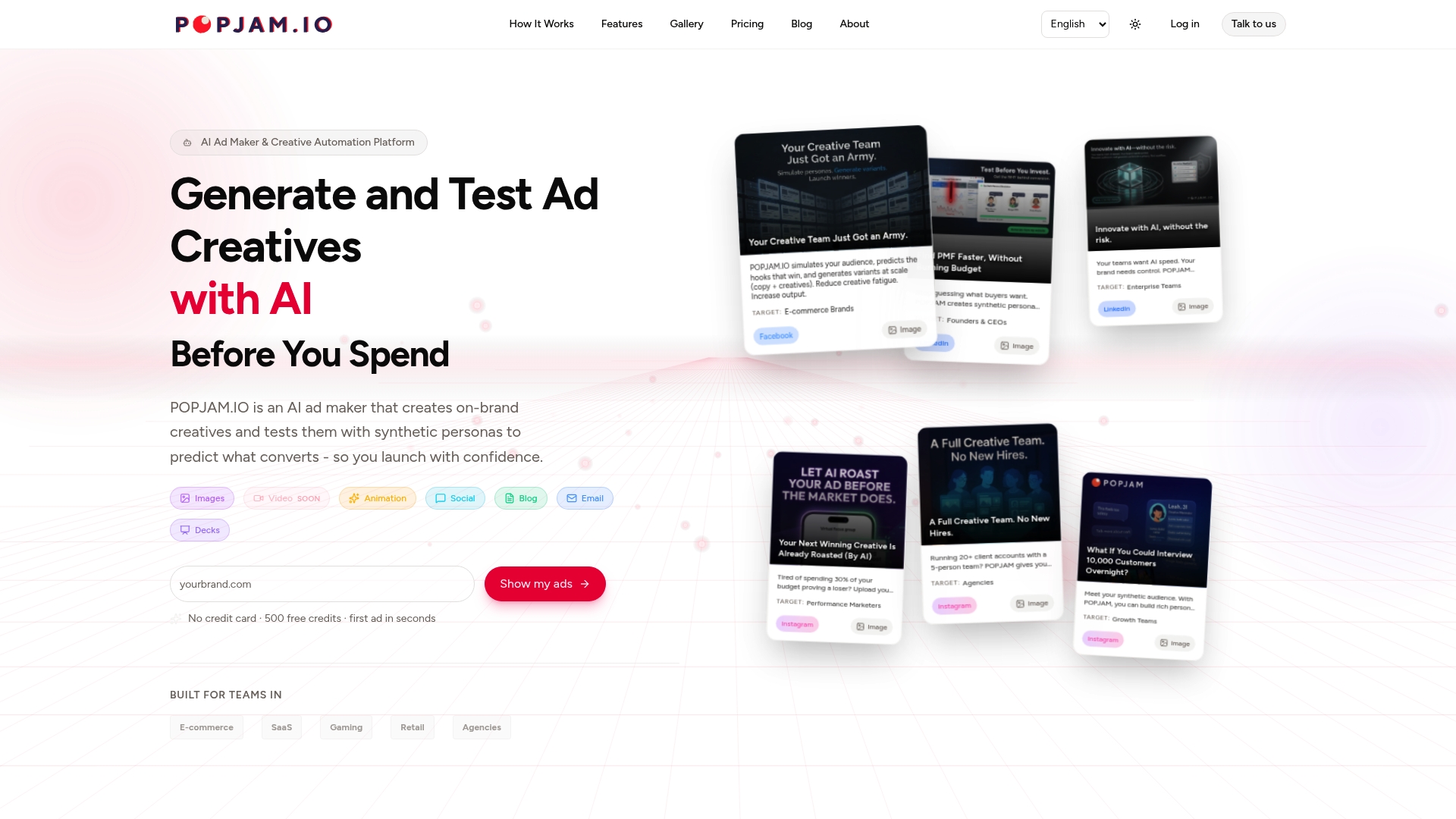
POPJAM’s AI ad maker generates on-brand creatives across every major format and platform, then tests them against synthetic buyer personas before a single dollar of live budget is committed. That means your team enters every campaign with validated creatives, not hopeful ones. For e-commerce brands, SaaS companies, and agencies running paid social at scale, that pre-launch confidence is a concrete competitive edge.
The platform’s subscription tiers fit teams of any size, from solo performance marketers to enterprise agencies managing dozens of client accounts. Credit packs let you scale generation volume without upgrading your plan. And because everything from generation to testing to publishing lives in one place, your team spends less time context-switching and more time on the creative decisions that actually require human judgment.
Ready to see what pre-tested creatives do for your campaign performance? Start with POPJAM and run your first synthetic persona test before your next campaign goes live.
Key Takeaways
AI campaign ad generators that combine creative generation with synthetic persona testing deliver the strongest performance gains, because they validate creatives before live spend rather than after.
| Point | Details |
|---|---|
| Generation speed | AI compresses idea-to-publish timelines from weeks to hours without additional headcount. |
| Synthetic persona testing | Pre-launch psychographic testing validates creatives against target segments before any budget is spent. |
| Platform-native specs | Safe zones and aspect ratios must be applied to every creative to avoid wasted spend on improperly displayed ads. |
| Creative fatigue prevention | Weekly persona testing catches audience fatigue signals early, allowing timely creative refreshes. |
| POPJAM advantage | POPJAM combines AI creative generation with pre-launch synthetic persona testing across Meta, Google, TikTok, LinkedIn, and Reddit in one platform. |