

Best SparkToro Alternatives for Marketers: Top Picks
The best SparkToro alternatives for most marketing teams and startup founders are BuzzSumo, SEMrush, Audiense, Brand24, Google Trends, and POPJAM — with POPJAM as the recommended pick for any team that needs to turn audience signals into validated ad creative before spending real budget.
Here’s the quick shortlist at a glance:
| Tool | Best For |
|---|---|
| POPJAM | Pre-launch ad testing and synthetic persona validation |
| BuzzSumo | Content discovery and influencer research |
| SEMrush | SEO-driven audience and competitive research |
| Audiense | Deep Twitter/X audience segmentation |
| Brand24 | Real-time brand and keyword monitoring |
| YouScan | Visual social listening and image recognition |
| AnswerThePublic | Search-based question discovery |
| Google Trends | Free trend spotting and seasonal demand signals |
| Exploding Topics | Early-stage trend discovery |
| Reddit (manual) | Raw community conversation and niche signal mining |
Each tool made this list for a specific reason. BuzzSumo wins on content intelligence. SEMrush covers the broadest channel footprint. Audiense goes deepest on social audience segmentation. Brand24 and YouScan handle monitoring. AnswerThePublic and Google Trends are free discovery layers. Exploding Topics catches trends before they peak. Reddit gives you unfiltered audience voice. And POPJAM closes the loop by letting you test creatives against psychographic profiles before a dollar of ad spend goes live.
Recommended pick for teams needing creative testing plus audience signals: POPJAM. It’s the only tool on this list that combines audience intelligence with pre-launch ad validation, so you’re not just discovering where your audience hangs out — you’re confirming your creative will land before you pay to show it.
Table of Contents
- Which SparkToro alternatives actually fit your workflow?
- How do these tools compare side by side?
- How to pick the right SparkToro alternative for your team
- What does SparkToro do well — and where does it fall short?
- The most cost-effective research stack: discovery, monitoring, and ad testing
- Key Takeaways
- The tool stack most marketers overlook
- POPJAM turns audience signals into validated ad creative
- Useful sources and further reading
- FAQ
Which SparkToro alternatives actually fit your workflow?
Alternatives to SparkToro cluster into three categories: discovery tools, monitoring and listening tools, and competitive product intelligence. Knowing which category you need most is the fastest way to narrow the list. Here’s a practical snapshot of each option.

POPJAM
POPJAM is an AI-powered ad creative platform that generates on-brand ad creatives and tests them against Synthetic Personas before launch. Where most audience tools stop at telling you who your audience is, POPJAM tells you whether your creative will actually resonate with them.
- What it does: Generates ad creatives across Meta, Google, TikTok, LinkedIn, and Reddit; simulates audience reactions using psychographic profiles; collects qualitative and quantitative feedback pre-launch
- Best for: Performance marketers, growth teams, e-commerce brands, SaaS founders, and agencies running paid campaigns
- Pricing: Subscription tiers for individuals, teams, and enterprise; credit packs for additional creative generation; free trial available
- Pros: Closes the gap between audience discovery and ad execution; GDPR-compliant synthetic personas; covers images, video, animation, social posts, email, and presentations
- Cons: Focused on ad creative validation rather than broad audience mapping; not a replacement for a discovery tool if you need raw audience location data
BuzzSumo
BuzzSumo surfaces the content your audience already engages with and identifies the influencers amplifying it. It’s a strong research layer for content strategists and PR teams.
- What it does: Tracks content performance across the web and social channels; surfaces top-performing articles, influencers, and trending topics by keyword or domain
- Best for: Content marketers and PR teams building editorial calendars or influencer lists
- Pricing: Paid plans starting at the lower end of the mid-market range; limited free searches available
- Pros: Deep content performance data; solid influencer discovery; reliable trend alerts
- Cons: Less useful for paid media teams; social data is weighted toward public engagement metrics rather than psychographic depth
SEMrush
SEMrush is the broadest platform on this list. It combines keyword research, competitive analysis, backlink auditing, and social tracking in one dashboard — which makes it powerful but also more complex to onboard.
- What it does: Keyword and competitor research, traffic analytics, content gap analysis, and social media tracking
- Best for: SEO-led marketing teams and agencies managing multiple clients or channels
- Pricing: Tiered plans; free account with limited daily queries
- Pros: Enormous data footprint; strong integrations with Google Analytics and Google Ads; covers organic and paid channels
- Cons: Steep learning curve; overkill for teams that only need audience discovery signals
Audiense
Audiense specializes in audience intelligence within the digital marketing sector, offering deep segmentation of Twitter/X audiences and consumer intelligence reports. CB Insights lists Audiense as one of SparkToro’s top direct competitors, and the positioning is accurate — both tools answer “who is my audience?”
- What it does: Segments Twitter/X audiences by psychographics, affinities, and demographics; generates audience reports for media planning
- Best for: Brand strategists and media planners who need deep social audience segmentation
- Pricing: Free tier available; paid plans scale with audience size and report volume
- Pros: Psychographic depth on social audiences; strong for media planning and persona building
- Cons: Heavily Twitter/X-centric; limited coverage of other platforms
Brand24
Brand24 is a real-time monitoring tool that tracks brand mentions, keywords, and competitor activity across the web, social media, news, and podcasts. It’s built for speed, not depth.
- What it does: Monitors mentions across social, news, blogs, forums, and podcasts; sentiment analysis; influencer scoring
- Best for: Marketing teams that need ongoing brand health tracking and crisis alerts
- Pricing: Monthly plans in the mid-tens to low hundreds of dollars depending on feature tier; free trial available
- Pros: Fast alerts; broad channel coverage; easy to set up
- Cons: Not designed for ad-hoc audience discovery; limited demographic profiling
YouScan
YouScan adds a layer most monitoring tools skip: visual listening. It can identify brand logos, products, and scenes in images across social platforms — useful for CPG brands and lifestyle categories where visual context matters.
- What it does: Social listening with image and logo recognition; sentiment analysis; trend detection
- Best for: Consumer brands where visual brand presence matters as much as text mentions
- Pricing: Enterprise-focused pricing; demo required for most tiers
- Pros: Visual recognition is genuinely differentiated; strong for brand safety and UGC analysis
- Cons: Pricing is opaque for smaller teams; overkill for text-heavy B2B use cases
AnswerThePublic
AnswerThePublic visualizes the questions people type into search engines around any topic. It’s a fast, cheap way to map the language your audience uses — and it’s one of the most underrated tools for creative brief writing.
- What it does: Pulls search query data and organizes it into question, preposition, and comparison clusters
- Best for: Content teams and copywriters building messaging frameworks or FAQ content
- Pricing: Free tier with daily search limits; paid plans remove limits and add alerts
- Pros: Instantly surfaces audience language; great for content ideation and ad copy angles
- Cons: Search data only; no social signals, demographic data, or monitoring capability
Google Trends
Google Trends is free, fast, and surprisingly powerful for validating whether a topic is growing or fading. It’s better positioned as a trend-spotting input than a full audience-intelligence platform, but for budget-conscious teams, it’s a legitimate starting point.
- What it does: Shows relative search interest over time and by geography; compares multiple topics
- Best for: Any team validating seasonal demand, geographic targeting, or topic momentum
- Pricing: Free
- Pros: Zero cost; real Google data; easy to share
- Cons: Relative index only (not absolute search volumes); no audience demographic or psychographic data
Exploding Topics
Exploding Topics identifies trends before they reach mainstream search volume. The platform surfaces topics that are growing fast but haven’t peaked yet — which gives content and product teams a timing advantage.
- What it does: Tracks emerging topics across categories; flags growth trajectories; sends trend alerts
- Best for: Product marketers and content teams who want to get ahead of demand curves
- Pricing: Free tier with limited topics; paid plans unlock full database and alerts
- Pros: Early-signal advantage; clean interface; useful for editorial and product roadmap planning
- Cons: Not a monitoring or audience-profiling tool; trend data doesn’t tell you who is interested
Reddit (manual research)
Reddit is the most underrated free research tool on this list. Subreddits are self-organized communities of people who share a specific interest, problem, or identity — which means the language in threads is often more authentic than anything a survey would surface.
- What it does: Provides unfiltered community conversations, product complaints, feature requests, and niche audience signals
- Best for: Founders and marketers doing early-stage positioning research or building messaging that sounds human
- Pricing: Free
- Pros: Authentic audience voice; thread-level detail; no query limits
- Cons: Manual and time-intensive; no structured data export; signal quality varies by subreddit
Pro Tip: When using Reddit for audience research, sort by “Top” posts within a subreddit over the past year. The highest-voted posts reveal what the community cares about most — and the comment threads often contain the exact objections your ad copy needs to address.
How do these tools compare side by side?
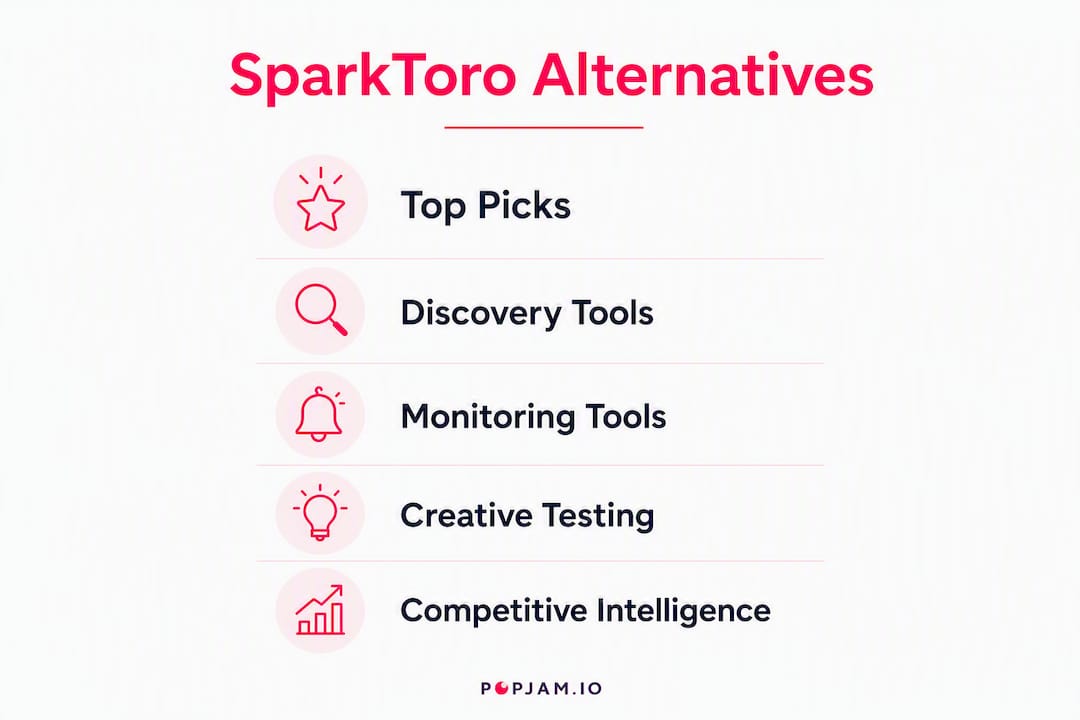
Here’s how the full shortlist stacks up across the dimensions that matter most for marketing and startup teams.
| Tool | Best For | Free Tier / Trial | Data Channels | Query Limits | Ease of Use | Integrations | Output Types |
|---|---|---|---|---|---|---|---|
| POPJAM | Ad creative testing and validation | Free trial available | Meta, Google, TikTok, LinkedIn, Reddit | Credit-based | High | Ad platforms, analytics | Creative variants, persona feedback, performance signals |
| BuzzSumo | Content and influencer research | Limited free searches | Web, social, news | Plan-based | High | Google Analytics, Slack | Content reports, influencer lists, trend alerts |
| SEMrush | SEO and competitive research | Free account (limited) | Web, search, social, paid | Daily query cap on free | Moderate | Google Ads, GA4, APIs | Keyword reports, traffic data, content gap analysis |
| Audiense | Social audience segmentation | Free tier available | Twitter/X, social | Report-based | Moderate | Twitter Ads, Hootsuite | Audience segments, affinity reports, persona exports |
| Brand24 | Brand and keyword monitoring | Free trial | Social, news, blogs, podcasts | Mention volume caps | High | Slack, Zapier, APIs | Mention feeds, sentiment reports, influencer scores |
| YouScan | Visual social listening | Demo required | Social (image-heavy) | Plan-based | Moderate | Enterprise APIs | Visual mention reports, logo detection, sentiment |
| AnswerThePublic | Search question discovery | Free (limited daily) | Search engines | Daily limit on free | Very high | Limited | Question clusters, keyword maps |
| Google Trends | Trend and demand validation | Free | Google Search | Unlimited | Very high | Google ecosystem | Trend charts, geographic breakdowns |
| Exploding Topics | Early trend detection | Free tier | Web, search | Limited on free | High | Limited | Trend reports, growth alerts |
| Reddit (manual) | Community and niche research | Free | None | Low (manual) | None | Raw thread data |
Pricing across this category changes frequently. Free tiers often have meaningful query or mention limits that only become apparent after a few days of real use. Always run a full week of your actual workflow during any trial before committing to a paid plan.
How to pick the right SparkToro alternative for your team
The right choice comes down to three things: what you need the tool to do (discover, monitor, or validate), which channels your audience actually lives on, and whether you need a one-time research tool or ongoing tracking.
Here’s a numbered checklist to work through before you sign up for anything:
- Define your primary job. Are you mapping a new audience from scratch, monitoring an existing brand, or validating ad creative before launch? Each job points to a different tool category.
- List the channels that matter. If your audience is on Twitter/X, Audiense is worth a look. If they’re on Reddit, manual research or a monitoring tool with forum coverage is more useful. If you’re running paid ads across Meta and TikTok, you need creative validation — and that’s where POPJAM fits.
- Estimate your query frequency. Ad-hoc researchers can live with query caps. Teams running weekly audience checks need plans that scale, or tools with unlimited access.
- Check integration requirements. If your team pipes data into a reporting dashboard or ad platform, API access and flexible reporting are non-negotiable. Manual CSV exports slow everyone down.
- Decide whether you need discovery, monitoring, or both. Pairing a discovery tool with a monitoring tool is often more cost-effective than buying a single enterprise platform that tries to cover everything.
- Factor in creative validation. Audience discovery tells you who your audience is. It doesn’t tell you whether your ad will resonate with them. If you’re spending on paid media, add a creative testing layer.
Questions to ask during any free trial:
- Does the tool surface data for the specific channels my audience uses?
- Can I export data in a format my team can actually use?
- Does the query or mention limit reflect my real weekly usage?
- How long does onboarding take for a non-technical team member?
Red flags to watch for:
- Pricing that requires a sales call to reveal
- Data access that locks behind the highest tier
- No API or export option on mid-tier plans
- Free trials shorter than five business days
On budget: if you’re a startup founder with limited spend, start with Google Trends and Reddit for free discovery, then add one monitoring tool like Brand24 for ongoing tracking. Once you’re running paid campaigns, add POPJAM to validate creatives before you scale spend. That three-layer stack covers discovery, monitoring, and validation without the cost of an enterprise suite.
What does SparkToro do well — and where does it fall short?
SparkToro is genuinely good at one thing: showing you where an audience spends its attention online. Its data pulls from anonymized clickstream data, Google SERPs, and public social profiles to answer questions like “what podcasts does my audience listen to?” or “which websites do they visit most?”
That’s a real capability. For brand strategists, media planners, and content teams doing ad-hoc research, SparkToro saves hours of manual digging.
But it has clear limits:
- It’s a research canvas, not a monitoring tool. You won’t get real-time alerts when your brand is mentioned or when a competitor launches something new.
- Query quotas frustrate power users. Teams doing frequent audience checks hit limits faster than the pricing page suggests.
- Reddit and thread-level detail are thin. If your audience lives in niche communities, SparkToro’s surface-level signals won’t give you the depth you need.
- It doesn’t close the loop to creative. Knowing your audience reads a specific newsletter doesn’t tell you whether your ad concept will resonate with them.
SparkToro is best understood as a starting point, not a full stack. Teams that use it for initial audience mapping and then hand off to monitoring tools and creative validation platforms get the most value from it.
TrustRadius organizes SparkToro alternatives by company size, and the pattern is consistent: small teams and startups often outgrow SparkToro’s query limits before they outgrow its data quality. Enterprise teams usually need monitoring and API access that SparkToro doesn’t prioritize.
Teams that should stay with SparkToro: brand strategists doing quarterly audience audits, content teams building editorial personas, and media planners who need a fast read on audience attention before a campaign brief.
Teams that need to add or replace it: performance marketers running weekly creative tests, growth teams monitoring brand health in real time, and SaaS founders who need competitive positioning intelligence from review data.
The most cost-effective research stack: discovery, monitoring, and ad testing
The most cost-effective approach for most marketing teams is pairing a discovery tool with a monitoring layer and a pre-launch ad-testing platform — rather than paying for one enterprise suite that does all three at a lower depth.

Here’s how that workflow runs in practice:
Step 1: Audience mapping. Use a discovery tool (SparkToro, Audiense, or AnswerThePublic) to identify where your audience spends time, what language they use, and which topics they care about. Export what you find into a brief.
Step 2: Channel monitoring. Set up Brand24 or a similar monitoring tool to track real-time mentions of your brand, competitors, and key topics. This layer catches shifts in sentiment and surfaces new conversation threads your discovery research missed.
Step 3: Creative validation. Before you push ad spend live, test your creative concepts against psychographic profiles that match your audience. This is where pre-launch ad testing pays for itself — catching weak creative before it burns budget.
Audience discovery rarely translates directly into creative strategy. The missing step is validation: testing whether the message you built from your research actually lands with the people you’re targeting. Skipping that step is where most ad spend gets wasted.
Recommended stack for most teams:
- Discovery: Google Trends (free) + AnswerThePublic (free tier) for early-stage research; Audiense or SparkToro for deeper segmentation
- Monitoring: Brand24 for ongoing mention tracking and sentiment alerts
- Creative validation: POPJAM for pre-launch testing against Synthetic Personas across Meta, Google, TikTok, LinkedIn, and Reddit
For SaaS teams specifically, adding a competitive intelligence layer that analyzes reviews and feature gaps gives you positioning signals that audience location data alone can’t surface.
Pro Tip: Once your discovery and monitoring tools are running, pipe their outputs into a shared dashboard rather than exporting CSVs manually. Teams that connect data into Google Looker Studio or a similar reporting layer cut their weekly research time significantly and catch trends faster.
Key Takeaways
The most cost-effective approach pairs a free or low-cost discovery tool with a monitoring layer and a creative validation platform like POPJAM — rather than overpaying for a single enterprise suite that does all three at reduced depth.
| Point | Details |
|---|---|
| Match tool to job | Discovery, monitoring, and creative validation are different jobs — pick tools built for each. |
| Free tiers work for early research | Google Trends and Reddit cover audience discovery at zero cost for most startup teams. |
| Query limits matter more than you think | Run your real weekly workflow during any trial to spot limits before you commit. |
| Pair discovery with validation | Audience signals alone don’t confirm your creative will land — add a testing layer before scaling spend. |
| POPJAM closes the loop | POPJAM generates and tests ad creatives against Synthetic Personas across five major ad platforms before launch. |
The tool stack most marketers overlook
Most articles about SparkToro alternatives stop at the discovery layer. They’ll tell you which tool surfaces audience attention data and leave you to figure out what to do with it. That gap is where most ad budgets get wasted.
The real question isn’t “which tool shows me where my audience hangs out?” It’s “how do I turn that signal into creative that actually converts?” Audience discovery is the first step, not the last. Teams that map their audience but skip validation end up running ads built on assumptions — and assumptions are expensive at scale.
What I’ve seen work consistently is a three-layer stack: a discovery tool for initial mapping, a monitoring tool for ongoing signal tracking, and a creative validation platform to pressure-test concepts before spend. The discovery and monitoring layers are well-served by the tools on this list. The validation layer is where most teams have a gap — and it’s the most costly one to leave open.
POPJAM turns audience signals into validated ad creative
Most audience intelligence tools hand you a research report and leave the creative work to you. POPJAM takes a different approach. Once you know who your audience is and what they care about, POPJAM’s AI ad generator builds on-brand creatives and tests them against Synthetic Personas that match your target segments — before a single dollar of ad spend goes live.
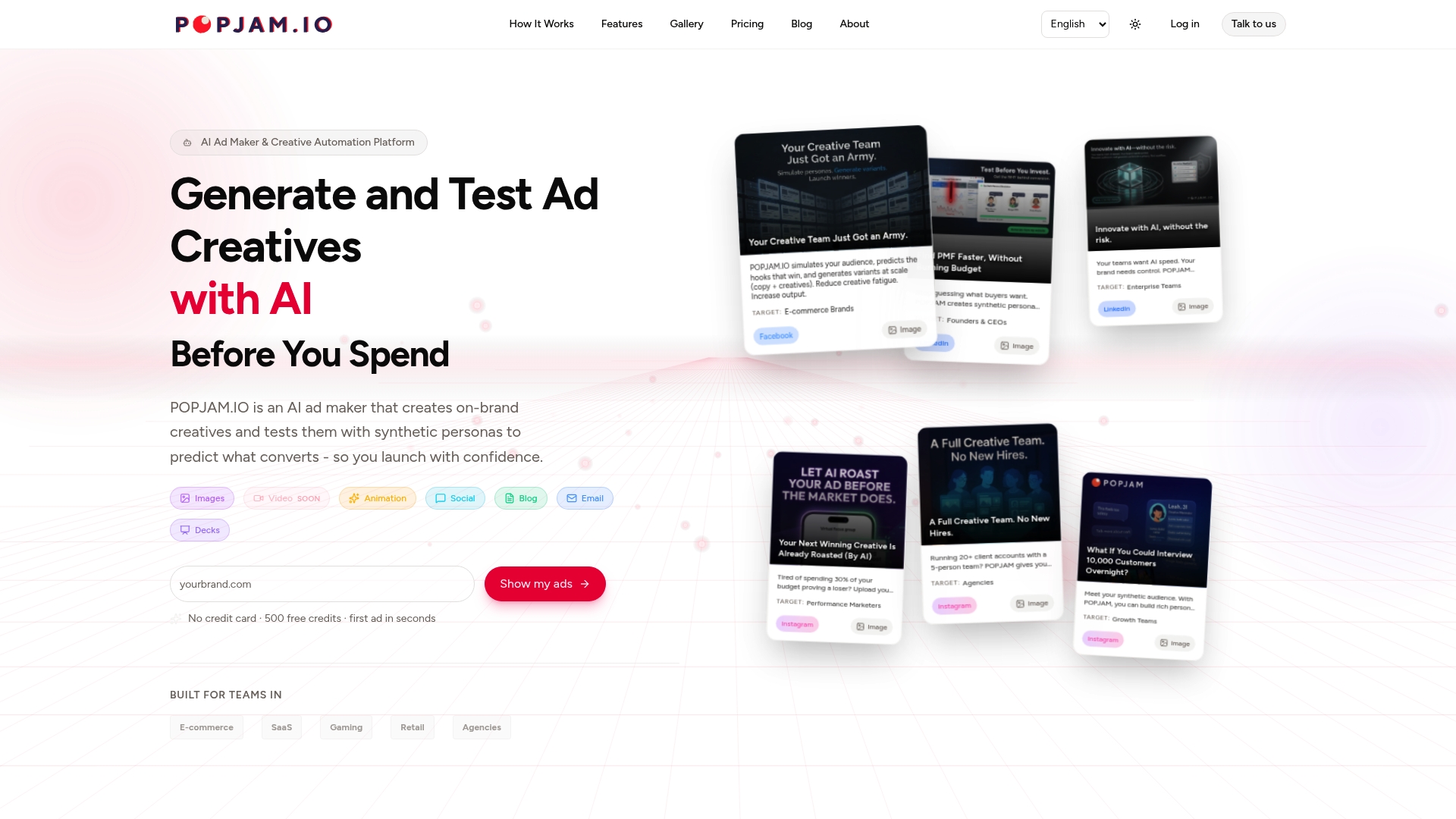
For performance marketers and startup founders, that means fewer creative cycles wasted on concepts that don’t resonate, and more budget going to ads you already know will land. POPJAM covers Meta, Google, TikTok, LinkedIn, and Reddit, and it works across images, video, animation, social posts, email, and presentations. It’s not a replacement for the discovery tools on this list — it’s the layer that makes them worth using. You can start testing your ad creatives with POPJAM today and see how your concepts perform against real psychographic profiles before you commit to a campaign.
Useful sources and further reading
Pricing tiers, free trial lengths, and query limits change frequently across all tools in this category. Always verify current details directly on each vendor’s site before making a purchase decision.
| Source | Type |
|---|---|
| SparkToro product page | Vendor (SparkToro) |
| RedNudge: Best SparkToro Alternatives | Independent analysis |
| Compttr: SparkToro Alternatives | Independent analysis |
| Exploding Topics: SparkToro Alternatives | Vendor (Exploding Topics) |
| TrustRadius: SparkToro Competitors | Review platform |
| CB Insights: SparkToro Alternatives | Market intelligence |
| SaaSHub: SparkToro Alternatives | Directory |
| G2: SparkToro Competitors | Review platform |
FAQ
What are SparkToro’s main competitors?
SparkToro’s most direct competitors are Audiense, BuzzSumo, and SEMrush for audience and content research, with Brand24 and YouScan covering the monitoring side. CB Insights identifies Audiense as one of SparkToro’s closest alternatives based on audience intelligence positioning.
Is SparkToro worth the money for small teams?
SparkToro delivers real value for brand strategists and content teams doing quarterly audience audits, but small teams running frequent searches often hit query limits before they get full value from a paid plan. Pairing free tools like Google Trends and AnswerThePublic with a monitoring tool like Brand24 can cover most of the same ground at lower cost.
How much does SparkToro cost?
SparkToro’s pricing is publicly listed on its website and changes periodically — check the vendor’s pricing page directly for current tiers. Most plans are structured around query volume, with a free tier offering limited monthly searches.
Where does SparkToro get its data?
SparkToro builds its results from anonymized clickstream data, Google SERPs, and public social profiles. It does not pull from private or first-party data sources, which means its audience signals reflect publicly observable behavior rather than declared preferences.
Which SparkToro alternative is best for ad creative testing?
POPJAM is the only tool on this list purpose-built for pre-launch ad creative testing. It generates on-brand creatives and tests them against Synthetic Personas across Meta, Google, TikTok, LinkedIn, and Reddit — turning audience research into validated creative before you spend on media.